From collection Creating Acadia National Park: The George B. Dorr Research Archive of Ronald H. Epp


Page 1
Page 2
Page 3
Page 4
Page 5
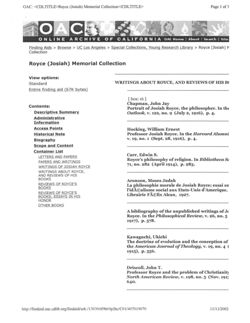
Page 6
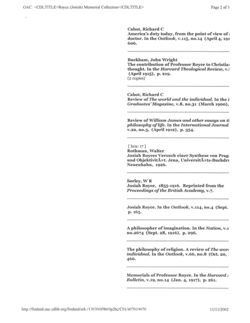
Page 7
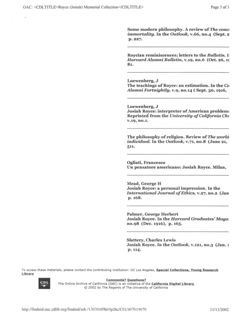
Page 8
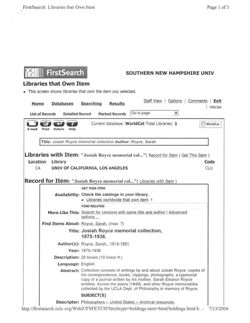
Page 9
Page 10
Page 11
Page 12
Page 13
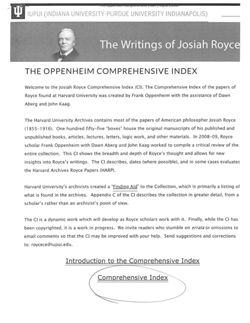
Page 14
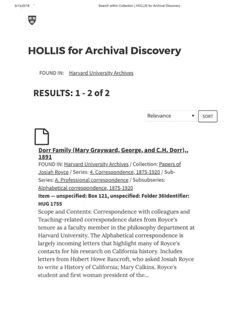
Page 15
Page 16
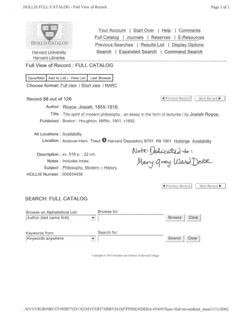
Page 17
Page 18
Page 19
Page 20
Page 21
Page 22
Page 23
Page 24
Page 25
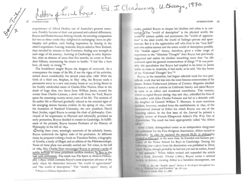
Page 26
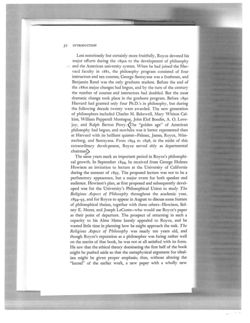
Page 27
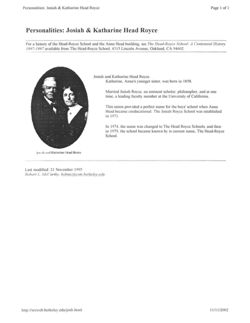
Page 28
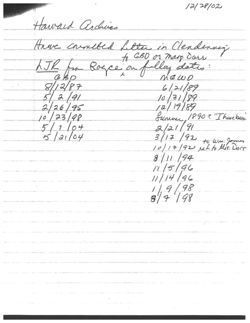
Page 29
Page 30
Page 31
Page 32
Page 33
Page 34
Page 35
Page 36
Page 37
Page 38
Page 39
Page 40
Page 41
Page 42
Page 43
Page 44
Page 45
Page 46
Page 47
Page 48
Page 49
Page 50
Page 51
Page 52
Page 53
Page 54
Page 55
Page 56
Page 57
Page 58
Page 59
Page 60
Page 61
Page 62
Page 63
Page 64
Page 65
Page 66
Page 67
Page 68
Page 69
Page 70
Page 71
Page 72
Page 73
Page 74
Page 75
Page 76
Page 77
Page 78
Page 79
Page 80
Page 81
Page 82
Page 83
Page 84
Page 85

Page 86
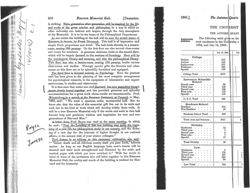
Page 87
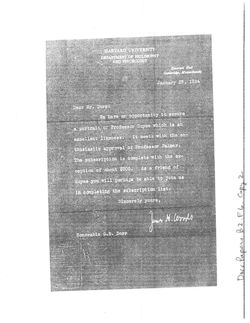
Page 88
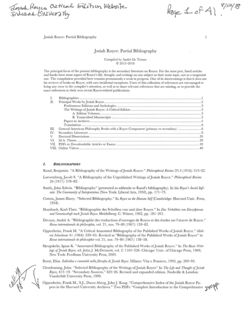
Page 89
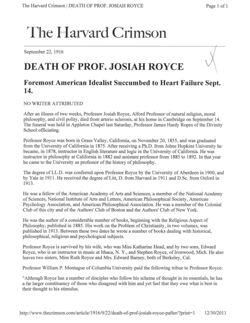
Page 90
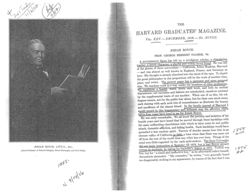
Page 91
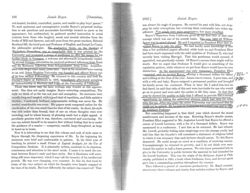
Page 92
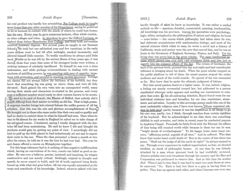
Page 93
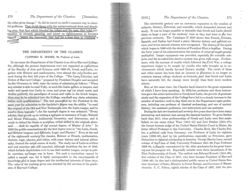
Page 94
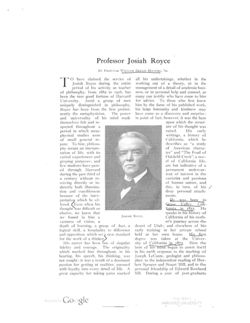
Page 95
Page 96
Page 97
Page 98
Page 99
Page 100
Page 101
Page 102
Page 103
Page 104
Page 105
Page 106
Page 107
Page 108
Page 109
Page 110
Page 111
Page 112
Page 113
Page 114
Page 115
Page 116
Page 117
Page 118
Page 119
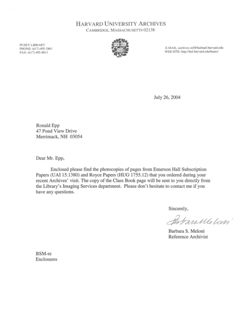
Page 120
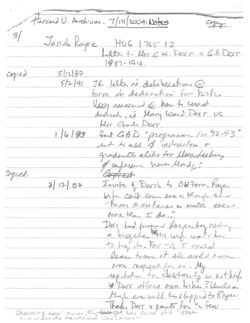
Page 121
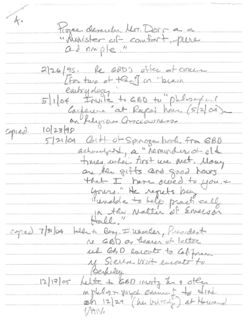
Page 122
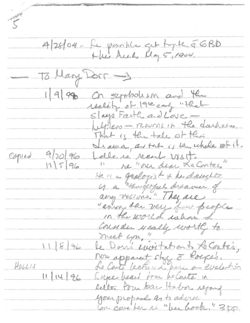
Page 123
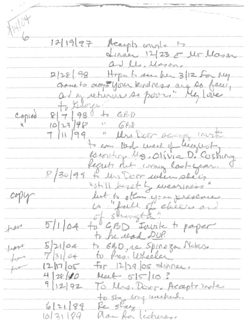
Page 124
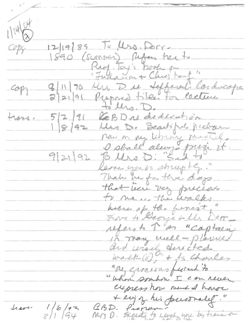
Page 125
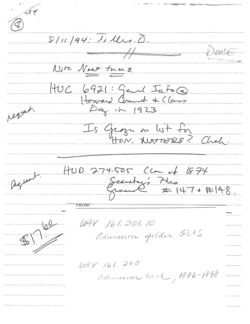
Page 126
Page 127
Page 128
Page 129
Page 130
Page 131
Page 132
Search
results in pages
[Series II] Royce, Josiah
Royce,-Josical
OAC: Royce (Josiah) Memorial Collection
Page 1 of 1
ONLINE ARCHIVE OF CALIFORNIA DAC Home About AND Search I Site
Finding Aids > Browse > UC Los Angeles > Special Collections, Young Research Library > Royce (Josiah) M
Collection
Royce (Josiah) Memorial Collection
View options:
Descriptive Summary
Standard
Entire finding aid (67K bytes)
Title:
Josiah Royce Memorial Collection, 1875-1936
Collection number:
Contents:
253
Descriptive Summary
Administrative
Origination:
Information
Collection was originally assembled by UCLA Dept. of Philosophy.
Access Points
Transferred from Royce Hall, 1954.
Historical Note
Extent:
Biography
20 boxes (10 linear ft.)
Scope and Content
Container List
Repository:
LETTERS AND PAPERS
University of California, Los Angeles. Library. Department of
PAPERS AND WRITINGS
Special Collections.
WRITINGS OF JOSIAH ROYCE
Los Angeles, California 90095-1575
WRITINGS ABOUT ROYCE,
AND REVIEWS OF HIS
Shelf location:
BOOKS
REVIEWS OF ROYCE'S
Held at SRLF; use MC4795476 for paging purposes.
BOOKS
REVIEWS OF ROYCE'S
BOOKS; ESSAYS IN HIS
HONOR
OTHER BOOKS
To access these materials, please contact the contributing institution: UC Los Angeles, Special Collections, Young Research
Library
Comments? Questions?
CDL
The Online Archive of California (OAC) is an initiative of the California Digital Library
© 2002 by The Regents of The University of California
http://findaid.oac.cdlib.org/findaid/ark:/13030/tf9b69p2bc
11/11/2002
Full Text:
Page 1 of 24
OACHO
ONLINE ARCHIVE OF CALIFORNIA DAC Home I About CARD Search I Site
Finding Aids > Browse > UC Los Angeles > Special Collections, Young Research Library >
View options:
Standard
Entire finding aid (67K bytes)
Finding Aid for the Josiah Royce Memorial Collection, 1875-1936
Manuscript Collection number: 253
This online finding aid is not edited. A copy of the edited paper finding aid is available at the UCLA Departme
Special Collections for in-house consultation and may be obtained for a fee. See Contact Information below.I
Library, Department of Special Collections
Manuscripts Division
Los Angeles, CA
Contact Information
Manuscripts Division
UCLA Library, Department of Special Collections
Room A1713, Charles E. Young Research Library
Box 951575
Los Angeles, CA 90095-1575
Telephone: 310/825-4988 (10:00 a.m.-4:45 p.m., - Pacific Time)
Email: spec-coll@library.ucla.edu
URL: http://www.library.ucla.edu/libraries/special/scweb/
Processed by:
Grace BertalotDate Completed:
November 1965Encoded by:
Caroline CubA©Text converted and initial container list EAD tagging by:
Apex Data ServicesLast update:
June 1999
 1999 The Regents of the University of California. All rights reserved.
Descriptive Summary
Title:
Josiah Royce Memorial Collection, 1875-1936
Collection number:
253
Origination:
Collection was originally assembled by UCLA Dept. of Philosophy. Transferred from Royce Hall, 1954.
Extent:
20 boxes (10 linear ft.)
.../findaid-idx?type=boolean:c=tranoacX:view=text:subview=fulltext:drgn=item:id=ark%3A%2F13030%2Ftf9b611/11/2002
Full Text:
Page 2 of 24
Repository:
University of California, Los Angeles. Library. Department of Special Collections.
Los Angeles, California 90095-1575
Shelf location:
Held at SRLF; use MC4795476 for paging purposes.
Administrative Information
Source of Acquisition/Provenance
Collection was originally assembled by UCLA Dept. of Philosophy. Transferred from Royce Hall, 1954.
Restrictions on Access
COLLECTION STORED OFF-SITE: Advance notice required for access.
Restrictions on Use
Copyright has not been assigned to the Department of Special Collections, UCLA. All requests for permission t
or quote from manuscripts must be submitted in writing to the Manuscripts Librarian. Permission for publica
given on behalf of the Department of Special Collections as the owner of the physical items and is not intended
or imply permission of the copyright holder, which must also be obtained.
Preferred Citation
[identification of item], Josiah Royce Memorial Collection, 1875-1936 (Collection 253). Department of Special
Collections, University Research Library, University of California, Los Angeles.
Additional Physical Form Available
This online finding aid is not edited. A copy of the edited paper finding aid is available at the UCLA Departmen
Special Collections for in-house consultation and may be obtained for a fee. Please contact:
Public Services Division
UCLA Library, Department of Special Collections
Room A1713, Charles E. Young Research Library
Box 951575
Los Angeles, CA 90095-1575
Telephone: 310/825-4988 (10:00 a.m. - 4:45 p.m., Pacific Time)
Email: spec-coll@library.ucla.edu
Access Points
Royce, Josiah, 1855-1916--Archives.
Philosophers--United States--Archival resources.
Manuscripts for publication.
Other Names
Royce, Sarah, 1819-1891.
.../findaid-idx?type=boolean:c=tranoacX:view=text:subview=fulltext:drgn=item:id=ark%3A%2F13030%2Ftf9b611/11/2002
Full Text:
Page 3 of 24
Historical Note
In 1927 the Regents of the University of California approved a recommendation that the main classroom build
new Westwood campus of the University be named Royce Hall in honor of the great American scholar and phi.
Josiah Royce. The Department of Philosophy on this campus undertook the task of assembling a Josiah Royce
Collection to be placed in a designated alcove of the building, known as the Josiah Royce Alcove.
Through the generosity of Royce's family and friends, books and articles by and about Royce, originals and cop
some of his correspondence, his master's and doctor's thesis, as well as pictures, clippings and other Royce me:
were acquired for this collection. His own large and stately walnut bookcase was used to house the collection.
The Royce Memorial remained in Royce Hall under the care of the Philosophy Department until December, 19
time, because of the program for remodeling Royce Hall, it was transferred to the University Library's Departn
Special Collections.
Biography
Royce was born on Nov. 20, 1855 in Grass Valley, CA; AB, UC Berkeley, 1875; studied at Leipzig and GAgttinge
Universities (1875-76), and then entered Johns Hopkins Univ., where he received his Ph.D in 1878; instructor
literature and logic (1878-82), UC Berkeley; instructor in philosophy (1882-85), asst. professor (1885-92) prc
the history of philosophy (1892-1914), and in 1914 was named Alford professor of natural religion, moral philo
and civil polity, Harvard Univ.; published works include: Primer of Logical Analysis for the Use of Composition
(1881), The Religious Aspect of Philosophy (1885), The Spirit of Modern Philosophy (1892), The Conception O
(1895), The World and the Individual (1899, 1901), and The Problem of Christianity (2 vols., 1913); he died on
1916 in Cambridge, MA.
Organization and Arrangement
Arranged in the following series:
Letters (box 1)
Papers and writings (box 2)
Writings of Josiah Royce (boxes 3-6, 8-17)
Other books (boxed 6-7)
Reviews of Royce's books (boxes 16-19)
Essays in honor of Royce (box 20).
Scope and Content
Collection consists of writings by and about Josiah Royce, copies of his correspondence, books, clippings, phot
typescript copy of a journal written by his mother, Sarah Eleanor Royce entitled, Across the Plains (1849), and
Royce memorabilia collected by the UCLA Dept. of Philosophy in memory of Royce.
Container List
The following online container list has not yet been edited.
LETTERS AND PAPERS
box: 1]
[ folder:
.../findaid-idx?type=boolean:c=tranoacX:view=text:subview=fulltext;drgn=item:id=ark%3A%2F13030%2Ftf9b611/11/2002
OAC: Royce (Josiah) Memorial Collection
Page 1 of 3
OACHESTIC
ONLINE ARCHIVE OF CALIFORNIA DAC Home About SUB Search I Site
Finding Aids > Browse > UC Los Angeles > Special Collections, Young Research Library > Royce (Josiah) M
Collection
Royce (Josiah) Memorial Collection
View options:
Standard
WRITINGS ABOUT ROYCE, AND REVIEWS OF HIS B
Entire finding aid (67K bytes)
[ box: 16 ]
Chapman, John Jay
Contents:
Portrait of Josiah Royce, the philosopher. In the
Descriptive Summary
Outlook, V. 122, no. 9 (July 2, 1916), p. 4.
Administrative
Information
Access Points
Hocking, William Ernest
Historical Note
Professor Josiah Royce. In the Harvard Alumni
Biography
V. 19, no. 1 (Sept. 28, 1916), p. 4.
Scope and Content
Container List
LETTERS AND PAPERS
Carr, Edwin S.
PAPERS AND WRITINGS
Royce's philosophy of religion. In Bibliotheca S
71, no. 282 (April 1914), p. 283.
WRITINGS OF JOSIAH ROYCE
WRITINGS ABOUT ROYCE,
AND REVIEWS OF HIS
BOOKS
Aronson, Moses Judah
REVIEWS OF ROYCE'S
La philosophie morale de Josiah Royce; essai su
BOOKS
l'idACalisme social aux Etats-Unis d'Amerique.
REVIEWS OF ROYCE'S
BOOKS; ESSAYS IN HIS
Librairie FÃOlix Alcan, 1927.
HONOR
OTHER BOOKS
A bibliography of the unpublished writings of Jo
Royce. In the Philosophical Review, V. 26, no. 5
1917), p. 578.
Kawaguchi, Ukichi
The doctrine of evolution and the conception of
the American Journal of Theology, V. 19, no. 4 (
1915), p.556.
Driscoll, John T.
Professor Royce and the problem of Christianity
North American Review, V. 198, no. 5 (Nov. 1913
640.
http://findaid.oac.cdlib.org/findaid/ark:/13030/tf9b69p2bc/C01/407019070
11/11/2002
OAC: Royce (Josiah) Memorial Collection
Page 2 of 3
Cabot, Richard C
America's duty today, from the point of view of i
doctor. In the Outlook, v.115, no.14 (April 4, 191
606.
Buckham, John Wright
The contribution of Professor Royce to Christia
thought. In the Harvard Theological Review, v.
(April 1915), p. 219.
(2 copies)
Cabot, Richard C
Review of The world and the individual. In the 1
Graduates' Magazine, v.8, no.31 (March 1900),
Review of William James and other essays on tl
philosophy of life. In the International Journal
v.22, no.3, (April 1912), p. 354.
[ box: 17 ]
Rothman, Walter
Josiah Royces Versuch einer Synthese von Prag
und ObjektivitAxt. Jena, UniversitAxts-Buchdru
Neuenhahn, 1926.
Sorley, W R
Josiah Royce, 1855-1916. Reprinted from the
Proceedings of the British Academy, V.7.
Josiah Royce. In the Outlook, v.114, no.4 (Sept.
p. 165.
A philosopher of imagination. In the Nation, V.1
no.2674 (Sept. 28, 1916), p. 296.
The philosophy of religion. A review of The wori
individual, In the Outlook, v.66, no.8 (Oct. 20, :
466.
Memorials of Professor Royce. In the Harvard t
Bulletin, v.19, no.14 (Jan. 4, 1917), p. 261.
http://findaid.oac.cdlib.org/findaid/ark:/13030/tf9b69p2bc/C01/407019070
11/11/2002
OAC: Royce (Josiah) Memorial Collection
Page 3 of 3
Some modern philosophy. A review of The conc
immortality. In the Outlook, v.66, no.4 (Sept. 2
p. 227.
Roycian reminiscences; letters to the Bulletin. I
Harvard Alumni Bulletin, v.19, no.6 (Oct. 26, 10
81.
Loewenberg, J
The teachings of Royce: an estimation. In the Ca
Alumni Fortnightly, v.9, no.14 ( Sept. 30, 1916,
Loewenberg, J
Josiah Royce: interpreter of American problems
Reprinted from the University of California Clu
v.19, no.1.
The philosophy of religion. Review of The world
individual. In the Outlook, v.71, no.8 (June 21,
:
511.
Ogliati, Francesco
Un pensatore americano: Josiah Royce. Milan,
Mead, George H
Josiah Royce: a personal impression. In the
International Journal of Ethics, v.27, no.2 (Jan
p. 168.
Palmer, George Herbert
Josiah Royce. In the Harvard Graduates' Maga:
no.98 (Dec. 1916), p. 165.
Slattery, Charles Lewis
Josiah Royce. In the Outlook, v.121, no.3 (Jan. 1
p. 114.
To access these materials, please contact the contributing institution: UC Los Angeles, Special Collections, Young Research
Library
Comments? Questions?
CDL
The Online Archive of California (OAC) is an initiative of the California Digital Library
© 2002 by The Regents of The University of California
http://findaid.oac.cdlib.org/findaid/ark:/13030/tf9b69p2bc/C01/407019070
11/11/2002
FirstSearch: Libraries that Own Item
Page 1 of 3
2800
FirstSearch
SOUTHERN NEW HAMPSHIRE UNIV
Libraries that Own Item
This screen shows libraries that own the item you selected.
Staff View
Options
Comments
Exit
Home
Databases
Searching
Results
Hide tips
List of Records
Detailed Record
Marked Records
Go to page
Current database: WorldCat Total Libraries: 1
WorldCat
E-mail Print Return Help
Title: Josiah Royce memorial collection Author: Royce, Sarah
Libraries with Item: "Josiah Royce memorial col " ( Record for Item I Get This Item )
Location
Library
Code
CA
UNIV OF CALIFORNIA, LOS ANGELES
CLU
Record for Item: "Josiah Royce memorial col "( " Libraries with Item )
GET THIS ITEM
Availability: Check the catalogs in your library.
Libraries worldwide that own item: 1
FIND RELATED
More Like This: Search for versions with same title and author Advanced
options
Find Items About: Royce, Sarah, (max: 7)
Title: Josiah Royce memorial collection,
1875-1936.
Author(s): Royce, Sarah,; 1819-1891.
Year: 1875-1936
Description: 20 boxes (10 linear ft.)
Language: English
Abstract: Collection consists of writings by and about Josiah Royce, copies of
his correspondence, books, clippings, photographs, a typescript
copy of a journal written by his mother, Sarah Eleanor Royce
entitled, Across the plains (1849), and other Royce memorabilia
collected by the UCLA Dept. of Philosophy in memory of Royce.
SUBJECT(S)
Descriptor: Philosophers -- United States -- Archival resources.
http://firstsearch.oclc.org/WebZ/FSFETCH?fetchtype=holdings:next=html/holdings.html:b...
7/13/2004
FirstSearch: Libraries that Own Item
Page 2 of 3
Named Person: Royce, Josiah, 1855-1916 -- Archives.
Genre/Form: Manuscripts for publication.
Note(s): Bio/History: Royce was born on Nov. 20, 1855 in Grass Valley, CA;
AB, UC Berkeley, 1875; studied at Leipzig and Göttingen
Universities (1875-76), and then entered Johns Hopkins Univ.,
where he received his Ph.D in 1878; instructor in English literature
and logic (1878-82), UC Berkeley; instructor in philosophy (1882-
85), asst. professor (1885-92), professor of the history of philosophy
(1892-1914), and in 1914 was named Alford professor of natural
religion, moral philosophy, and civil polity, Harvard Univ.; published
works include: Primer of logical analysis for the use of composition
students (1881), The religious aspect of philosophy (1885), The
spirit of modern philosophy (1892), The conception of God (1895),
The world and the individual (1899, 1901), and The problem of
Christianity (2 vols., 1913); he died on Sept. 14, 1916 in Cambridge,
MA.
General Info: COLLECTION STORED OFF-SITE:/ Advance notice required for
access./ Copyright has not been assigned to the Department of
Special Collections, UCLA. All requests for permission to publish or
quote from manuscripts must be submitted in writing to the
Manuscripts Librarian. Permission for publication is given on behalf
of the Dept. of Special Collections as the owner of the physical
items and is not intended to include or imply permission of the
copyright holder, which must also be obtained./ Organization:
Arranged in the following series: 1. Letters (box 1); 2. Papers and
writings (box 2); 3. Writings of Josiah Royce (boxes 3-6, 8-17); 4.
Other books (boxed 6-7); 5. Reviews of Royce's books (boxes 16-
19); 6. Essays in honor of Royce (box 20). / Preferred citation: Cite
as: Josiah Royce Memorial Collection (Collection 253). Department
of Special Collections, University Research Library, University of
California, Los Angeles./ Unpublished finding aid available; inquire
at Dept. of Special Collections reference desk./ Collection was
originally assembled by UCLA Dept. of Philosophy. Transferred
from Royce Hall, 1954.
Entry: 19980905
Update: 20040411
Document Type: Archival Material
Accession No: OCLC: 39813093
Database: WorldCat
Current database: WorldCat Total Libraries: 1
WorldCat
E-mail Print Return Help
English
Español
Français
Options
Comments
Exit
http://firstsearch.oclc.org/WebZ/FSFETCH?fetchtype=holdings:next=html/holdings.html:b... 7/13/2004
AMC[dorr georgebucknam[1,1017,2,3,3,3,4,6,5,100,6,1]] (2-1)
Page 1 of 1
Records 2 through 2 of 2 returned.
Author:
Royce, Josiah, 1855-1916.
Title:
Papers of Josiah Royce, 1882-1916 (inclusive).
Description:
25 linear ft. of mss.
Notes:
Newspapers are on negative microfilm.
Royce received an honorary degree from Harvard in
1911 and taught philosophy at Harvard.
Includes manuscripts of writings and lectures,
notes, and personal and professional correspondence,
1887-1915. Also course notebooks and letters of Royce's
students. Related publications and reference material also
available in repository.
Dorr letters from G.P. Dorr bequest, 1945.
Student materials were gift of Grover Smith,
1963.
Access may be restricted. Details at the
repository.
Unpublished shelflist available in repository.
Josiah Royce Papers, Harvard University
Archives.
Subjects:
Royce, Josiah, 1855-1916.
Costello, Harry Todd, 1885-
Dorr, George Bucknam, 1853-
Harvard University. Dept. of Philosophy --
Faculty.
Harvard University. Dept. of Philosophy --
Students.
Lectures. ftamc
Location:
Harvard University Archives, Pusey Library,
Harvard University, Cambridge, MA 02138.
Control No. :
MHVV86-A467
Tagged display I Previous Record | Brief Record Display | New Search
This display was generated by the CNIDR Web-Z39.50 gateway, version 1.08, with Library of
Congress Modifications.
http://lcweb.loc.gov/cgi-bin/zgate?pre.../rlinamc3.html,zinc.rlg.org,200%26AUTH%3drlinam 2/24/2003
Comprehensive Index
of the Josiah Royce papers
in the Harvard University Archives
by
Frank M. Oppenheim, S.J.,
Dawn Aberg and John J. Kaag
Copyright © 2010 by Frank M. Oppenheim, S.J.
All Rights Reserved
i
INTRODUCTION
This Index has been made possible by the concurrence and support of the Josiah Royce
Society and of the Society for the Advancement of American Philosophy, along with the
support of Cincinnati's Xavier University, the Xavier University Philosophy Department,
and the Chicago Province of the Society of Jesus. Beyond the generosity of these
institutions, many individuals convinced of the need to 'dig' into the Harvard Archives
Royce Papers (HARP) have lent their aid and encouragement to our work.
Direct engagement in the project began in July 2008 and closed with a semi-final draft in
September 2009. The final draft was created after members of the Royce Society's
Critical Edition Committee reviewed and offered suggestions for revision in 2010. The
long-range aim of the project has been to prepare a document to support application to
the National Endowment for the Humanities for financial support of a Critical Edition of
Royce's writings.
The goal of the comprehensive 2008-2009 review of the entire Harvard Archives Royce
collection has been to describe and date (if possible) the documents, and to evaluate
whether a particular Roycean writing merits inclusion in the Critical Edition. That
extensive review is reflected in this Index. The Index not only embellishes on the
Harvard Archives' "Finding Aid" to the Royce Papers. It provides more detailed
information than was possible for the Harvard archivists to include in their document.
This Index also offers a historical and philosophical context within which to consider the
Royce Papers. Along with the "Appendix to the Harvard Archives' Finding Aid"
(included here as Appendix C), it is our hope that the present work will act as a road map
for scholars in their work with Royce. All these tools are available on-line. Scholars are
encouraged to make use of these resources, with the proviso that proper citation be given
both to the copyrighted Index and to the Harvard University Archives as sources.
This Index is divided into three main sections. Part I includes Royce's book-length
works. Part II organizes his shorter texts, both published and unpublished, in
chronological order. (To the degree dates are not certain, they have been estimated and
noted as such.) These shorter works include individual articles, essays, and lectures. Part
1
III reviews the work contained in the Harvard Archives Royce Papers Boxes 99 and up.
While Boxes 1-98 consist of bound folio volumes, with Royce manuscripts mounted on
pages (see Appendix C for a complete description), the boxes described by Part III
contain loose sheets, notebooks, correspondence and memorabilia, with documents
roughly grouped as follows:
1 The number of boxes in the collection is currently 155, but box numbers are held in reserve, and the top
number may vary.
ii
TTC Comprehensive
IUPUI (INDIANA UNIVERSITY-PURDUE UNIVERSITY INDIANAPOLIS)
The Writings of Josiah Royce
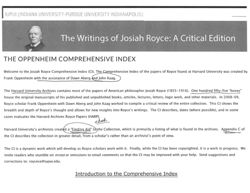
THE OPPENHEIM COMPREHENSIVE INDEX
Welcome to the Josiah Royce Comprehensive Index (CI). The Comprehensive Index of the papers of
Royce found at Harvard University was created by Frank Oppenheim with the assistance of Dawn
Aberg and John Kaag.
The Harvard University Archives contains most of the papers of American philosopher Josiah Royce
(1855-1916). One hundred fifty-five "boxes" house the original manuscripts of his published and
unpublished books, articles, lectures, letters, logic work, and other materials. In 2008-09, Royce
scholar Frank Oppenheim with Dawn Aberg and John Kaag worked to compile a critical review of the
entire collection. This CI shows the breadth and depth of Royce's thought and allows for new
insights into Royce's writings. The CI describes, dates (where possible), and in some cases evaluates
the Harvard Archives Royce Papers (HARP).
Harvard University's archivists created a "Finding Aid" to the Collection, which is primarily a listing of
what is found in the archives. Appendix C of the CI describes the collection in greater detail, from a
scholar's rather than an archivist's point of view.
The CI is a dynamic work which will develop as Royce scholars work with it. Finally, while the CI has
been copyrighted, it is a work in progress. We invite readers who stumble on errata or omissions to
email comments so that the CI may be improved with your help. Send suggestions and corrections
to: roycece@iupui.edu.
Introduction to the Comprehensive Index
Comprehensive Index
9/13/2018
Search within Collection I HOLLIS for Archival Discovery
HOLLIS for Archival Discovery
FOUND IN: Harvard University Archives
RESULTS: 1 - 2 of 2
Relevance
SORT
Dorr Family_(Mary Grayward, George, and C.H. Dorr), "
1891
FOUND IN: Harvard University Archives / Collection: Papers of
Josiah Royce / Series: 4. Correspondence, 1875-1920 / Sub-
Series: A. Professional correspondence / Subsubseries:
Alphabetical correspondence, 1875-1920
Item - unspecified: Box 121, unspecified: Folder 36Identifier:
HUG 1755
Scope and Contents: Correspondence with colleagues and
Teaching-related correspondence dates from Royce's
tenure as a faculty member in the philosophy department at
Harvard University. The Alphabetical correspondence is
largely incoming letters that highlight many of Royce's
contacts for his research on California history. Includes
letters from Hubert Howe Bancroft, who asked Josiah Royce
to write a History of California; Mary Calkins, Royce's
student and first woman president of the.
9/13/2018
Search within Collection I HOLLIS for Archival Discovery
Correspondence, Josiah Royce to C.H. and G. B. Dorr,,
1887-1910
FOUND IN: Harvard University Archives / Collection: Papers of
Josiah Royce / Series: 4. Correspondence, 1875-1920 / Sub-
Series: B. Personal correspondence, 1884-1916
Item - unspecified: Box 124, unspecified: Folder 41Identifier:
HUG 1755
Scope and Contents: Consists of Royce's publishing and
personal correspondence. This correspondence was created
during Royce's tenure at Harvard.
FILTERED BY
Search term: Dorr X
Send Feedback I
Help
Powered by ArchivesSpace v2.3.1
HOLLIS FULL CATALOG - Full View of Record
Page 1 of 1
P
Your Account
Start Over
Help
Comments
Full Catalog
Journals
Reserves
E-Resources
HOLLIS CATALOG
Previous Searches I Results List Display Options
Harvard University
Search
I
Expanded Search
I
Command Search
Harvard Libraries
Full View of Record : FULL CATALOG
Save/Mail
Add to List I View List
Last Browse
Choose format: Full view I Short view
MARC
Record 88 out of 126
Previous Record
Next Record
Author : Royce, Josiah, 1855-1916.
Title : The spirit of modern philosophy : an essay in the form of lectures / by Josiah Royce.
Published : Boston : Houghton, Mifflin, 1901, c1892.
All Locations : Availability
Location : Andover-Harv. Theol
i
Harvard Depository B791 .R8 1901 Holdings Availability
Note: Dedicated to
Description : XV, 519 p. ; 22 cm.
Notes : Includes index.
Mary gray Ward DORR.
Subject : Philosophy, Modern -- History.
HOLLIS Number : 000834938
Previous Record
Next Record
SEARCH: FULL CATALOG
Browse an Alphabetical List:
Browse for:
Author (last name first)
Browse
Clear
Keywords from:
Search for:
Keywords anywhere
Search Clear
Copyright is 2002 President and Fellows of Harvard College
HVVV8UB99RC6T9SSB7VD13Q1HVCGFI7XRBVJ4IM7FPDIGNDEBA-05400?func=full-set-set&set_num11/11/200
HOLLIS FULL CATALOG - Full View of Record
Page 1 of 2
LET
Your Account
I
Start Over
Help
Comments
Full Catalog I Journals Reserves E-Resources
HOLLIS CATALOG
Previous Searches I Results List Display Options
Harvard University
Search I Expanded Search I Command Search
Harvard Libraries
Full View of Record : FULL CATALOG
Save/Mail
Add to List I View List
Last Browse
Choose format: Full view | Short view MARC
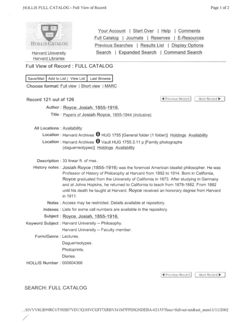
Record 121 out of 126
Previous Record
Next Record
Author : Royce, Josiah, 1855-1916.
Title : Papers of Josiah Royce, 1855-1944 (inclusive)
All Locations : Availability
Location : Harvard Archives
0
HUG 1755 [General folder (1 folder)] Holdings Availability
Location : Harvard Archives
i
Vault HUG 1755.3.11 p [Family photographs
(daguerreotypes)] Holdings Availability
Description : 33 linear ft. of mss.
History notes : Josiah Royce (1855-1916) was the foremost American idealist philosopher. He was
Professor of History of Philosophy at Harvard from 1892 to 1914. Born in California,
Royce graduated from the University of California in 1873. After studying in Germany
and at Johns Hopkins, he returned to California to teach from 1878-1882. From 1882
until his death he taught at Harvard. Royce received an honorary degree from Harvard
in 1911.
Notes : Access may be restricted. Details available at repository.
Indexes : Lists for some call numbers are available in the repository.
Subject : Royce, Josiah, 1855-1916.
Keyword Subject : Harvard University -- Philosophy.
Harvard University -- Faculty member.
Form/Genre : Lectures.
Daguerreotypes.
Photoprints.
Diaries.
HOLLIS Number : 000604366
4 Previous Record
Next Record
SEARCH: FULL CATALOG
../HVVV8UB99RC6T9SSB7VD13QIHVCGFI7XRBVJ41M7FPDIGNDEBA-02155?func=full-set-set&set_num11/11/200
HOLLIS FULL CATALOG - Full View of Record
Page 1 of 1
P
Your Account
I
Start Over
Help
Comments
Full Catalog
|
Journals
Reserves
E-Resources
HOLLIS CATALOG
Previous Searches
I
Results List
Display Options
Harvard University
Search I Expanded Search I Command Search
Harvard Libraries
Full View of Record : FULL CATALOG
Save/Mail
Add to List I View List
Last Browse
Choose format: Full view I Short view
MARC
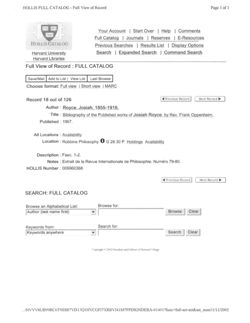
Record 18 out of 126
Previous Record
Next Record
Author : Royce, Josiah, 1855-1916.
Title : Bibliography of the Published works of Josiah Royce. by Rev. Frank Oppenheim.
Published : 1967.
All Locations : Availability
Location : Robbins Philosophy
i
G 28.30 P Holdings Availability
Description : Fasc. 1-2.
Notes : Extrait de la Revue Internationale de Philosophie. Numéro 79-80.
HOLLIS Number : 006960368
Previous Record
Next Record
SEARCH: FULL CATALOG
Browse an Alphabetical List:
Browse for:
Author (last name first)
Browse
Clear
Keywords from:
Search for:
Keywords anywhere
Search Clear
......
Copyright () 2002 President and Fellows of Harvard College
HVVV8UB99RC6T9SSB7VD13QIHVCGFI7XRBVJ4IM7FPDIGNDEBA-01401?func=full-set-set&set_num11/11/200
MS.029
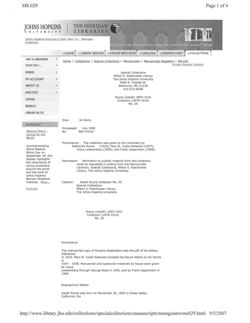
Page 1 of 4
JOHNS HOPKINS
THE SHERIDAN
U N I V E R S I T
LIBRARIES
THE
Johns Hopkins Acquires 6,000-Item H.L. Mencken
Collection
STAFF DIRECTORY PERSONSWITH DISABILITIES I CONTACT US SITE MAP HOURS
HOME
V LIBRARY SERVICES
ONLINE RESOURCES
V CATALOGS
7 RESEARCH HELP
COLLECTIONS
ASK A LIBRARIAN
Home > Collections > Special Collections > Manuscripts > Manuscripts Registers > MS.029
HOW DO
Printer-friendly Version
FORMS
Special Collections
Milton S. Eisenhower Library
MY ACCOUNT
The Johns Hopkins University
3400 N. Charles St.
ABOUT US
Baltimore, MD 21218
410-516-8348
INFO FOR
Royce (Josiah) 1855-1916
GIVING
Collection (1878-1916)
Ms. 29
SEARCH
LIBRARY BLOG
Size:
34 items
SPOTLIGHT
Processed:
July 1982
Medical Ethics -
By:
Ben Primer
Caring for the
World
Provenance: The collection was given to the University by
Commemorating
Katherine Royce (1923), Mary B. Coale Redwood (1937),
World Medical
Julius Loewenberg (1956), and Frank Oppenheim (1969).
Ethics Day on
September 18, this
display highlights
the importance of
Permission: Permission to publish material from this collection
caring physicians
must be requested in writing from the Manuscripts
around the world
Librarian, Special Collections, Milton S. Eisenhower
and the work of
Library, The Johns Hopkins University.
Johns Hopkins
Berman Bioethics
Institute. More
Citation:
Josiah Royce Collection Ms. 29
Special Collections
Archives
Milton S. Eisenhower Library
The Johns Hopkins University
Royce (Josiah) 1855-1916
Collection (1878-1916)
Ms. 29
Provenance
The manuscript copy of Royce's dissertation was the gift of his widow,
Katherine,
in 1923. Mary B. Coale Redwood donated the Royce letters to her family
in
1937 - 1938. Manuscript and typescript materials by Royce were given
by Julius
Loewenberg through George Boas in 1956, and by Frank Oppenheim in
1969.
Biographical Sketch
Josiah Royce was born on November 20, 1855 in Grass Valley,
California, the
http://www.library.jhu.edu/collections/specialcollections/manuscripts/msregisters/ms029.html9/5/2007
MS.029
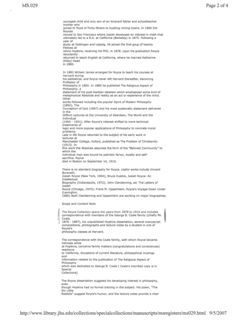
Page 2 of 4
youngest child and only son of an itinerant father and schoolteacher
mother who
joined th flood of Forty-Niners to bustling mining towns. In 1866 the
Royces
moved to San Francisco where Josiah developed an interest in math that
ultimately led to a B.A. at California (Berkeley) in 1875. Following a
year of
study at Gottingen and Leipzig, he joined the first goup of twenty
Fellows at
Johns Hopkins, receiving his PhD. in 1878. Upon his graduation Royce
reluctantly
returned to teach English at California, where he married Katherine
(Kitty) Head
in 1880.
In 1882 William James arranged for Royce to teach his courses at
Harvard during
his sabbatical, and Royce never left Harvard thereafter, becoming
Professor of
Philosophy in 1892. In 1885 he published The Religious Aspect of
Philosophy, a
statement of his post-Kantian idealism which emphasized some kind of
metaphysical Absolute and reality as an act or experience of the mind.
Other
works followed including the popular Spirit of Modern Philosophy
(1892), The
Conception of God (1897) and his most systematic statement delivered
in the
Gifford Lectures at the University of Aberdeen, The World and the
Individual
(1900 - 1901). After Royce's interest shifted to more technical
treatments of
logic and more popular applications of Philosophy to concrete moral
problems.
Late in life Royce returned to the subject of his early work in
lectures at
Manchester College, Oxford, published as The Problem of Christianity
(1913). In
this work the Absolute assumes the form of the "Beloved Community" to
which the
individual man was bound by patriotic fervor, loyalty and self-
sacrifice. Royce
died in Boston on September 14, 1916.
There is no standard biography for Royce. Useful works include Vincent
Buranelli,
Josiah Royce (New York, 1964); Bruce Kuklick, Josiah Royce: An
Intellectual
Biography (Indianapolis, 1972); John Clendenning, ed. The Letters of
Josiah
Royce (Chicago, 1970); Frank M. Oppenheim, Royce's Voyage Down Under
(Lexington,
1980) Both Clendenning and Oppenheim are working on major biographies.
Scope and Content Note
The Royce Collection spans the years from 1878 to 1916 and includes
correspondence with members of the George B. Coale family (chiefly Mr.
Coale,
1878 - 1887), his unpublished Hopkins dissertation, several manuscript
compositions, photographs and lecture notes by a student in one of
Royce's
philosophy classes at Harvard.
The correspondence with the Coale family, with whom Royce became
intimate while
at Hopkins, concerns family matters (congratulations and condolences)
reactions
to California, dicussions of current literature, philosophical musings
and
information related to the publication of The Religious Aspect of
Philosophy
which was dedicated to George B. Coale ( Coale's inscribed copy is in
Special
Collections)
The Royce dissertation suggests his developing interest in philosophy,
even
though Hopkins had no formal training in the subject. His poem, "The
Six Little
Realists" suggest Royce's humor, and the lecture notes provide a clear
http://www.library.jhu.edu/collections/specialcollections/manuscripts/msregisters/ms029.html 9/5/2007
MS.029
Page 3 of 4
picture
of his style in the classroom.
Related Collections - Other Royce letters are found in the following
collections: Daniel Gilman (30 letters to Gilman and 1 each to Thomas
Ball
(registrar), to J.M. Cross and to Edward H. Griffin); Arthur O.
Lovejoy (4);
Ira Remsen (3); Johns Hopkins Collection (2 to David Dewey); Basil
Gildersleeve
(1). The bulk of these letters are printed and all cited in John
Clendenning,
ed., The Letters of Josiah Royce. Biographical material on Royce is
available
in the vertical file of the Ferdinand Hamburger Archives, Johns
Hopkins
University. Reminiscenes of Royce by Mary Coale Redwood and Katherine
Royce
are in the Accession File for the Royce Papers.
The principal collection of Royce Papers is at Harvard University.
Other
institutions having Royce material include the Library of Congress and
the
University of California (Berkeley).
Series Description
I - CORRESPONDENCE, 1878 - 1887, 1906 - 22 items, .5 inches
Principally letters from Royce to george B. Coale arranged
chronologically. Also includes letters to Mrs. George B. (Caroline
Dorsey)
Coale and their daughter Mary Coale Redwood, and one letter fom
Katherine Royce
to Mrs. Coale enclosing a photo of her son Christopher
II - MISCELLANEOUS WRITINGS, 1878 - 1913 - 6 items, 2.5 inches
Includes manuscript copy of Royce's Johns Hopkins University
dissertation drafts for articles, poetry, critical comments --
arranged by
title
III - MISCELLANY - 5 items, .5 inches
Lecture notes by Harvard student in Royce's class, Philosophy 9,
"The
Logical Approach to Metaphysics: The World and the Individual" (Spring
1916)
and photographs of Royce
Container List
Box No. Folder No.
Contents
SERIES I - CORRESPONDENCE
1
1
Correspondence, 1878 - 1887, 1906
SERIES II - MISCELLANEOUS WRITINGS
1
2
Comments for Revision of
Dissertation of Julius
Loewenberg (1911)
1
3
Negation
1
4
Notes on Student's Opinions with
Comments (c. 1913)
Of the Interdependence of the
Principles of Knowledge (1878)
see Box 2
1
5
The Recent Psychotherapeutic
Movement in America (1909)
http://www.library.jhu.edu/collections/specialcollections/manuscripts/msregisters/ms029.ht 9/5/2007
MS.029
Page 4 of 4
1
6
Six Little Realists
SERIES III MISCELANY
1
7
Photographs
1
"Philosophy 9" - lecture notes by
Ralph W. Brown, 1916 (bound
volume)
2
Of the Interdependence of the
Principles of Knowledge (1878)
- bound copy of dissertation in
manuscript
The Josiah Royce Collection was arranged and described by Dr. Ben
Primer in
July 1982
STAFF DIRECTORY I PERSONS WITH DISABILITIES I CONTACT US SITE MAP HOURS
Sheridan Libraries
3400 North Charles Street, Baltimore, MD 21218
(410)-516-8335
Copyright 2004 I Disclaimer I Privacy Policy
http://www.library.jhu.edu/collections/specialcollections/manuscripts/msregisters/ms029.html 9/5/2007
Institute for American Thought Il Scholarly Editions
Page 1 of 2
IUPUI
INDIANA UNIVERSITY-PURDUE UNIVERSITY INDIANAPOLIS
IU SCHOOL
2/10/12.
OF LIBERAL ARTS
Search IUPUI
Go
give now
Institute for American Thought
The Center for Ray Bradbury Studies
School at Liberal expiration the nation's
of Ris Beadbury one of the best American Nutural figurs
exertieth central His work and influctice respects of modern American
and popular culture, including mainstream literature the highly popular were
fiction, fantasy, borror, and detective fiction and nearly all formx of dide
indive television. stage drama, for magazines. periodical and
graphic fiction. He n regarded as a cultural mentor in such widely
home
news
events
faculty/staff
scholarly editions
Peirce Edition Project
Santayana Edition
Frederick Douglass Papers
Josiah Royce Papers
research centers
Max H. Fisch Library
Ray Bradbury Center
Special Collections
Max Kade German-American Center
academic programs
Professional Editing
American Studies
American Philosophy
resources
Virtual Tours
Giving
site map
Josiah Royce Papers
First-Ever Critical Edition of Josiah Royce Begins at IUPUI
This summer another great American thinker is joining the ranks at the Institute for American
Thought (IAT). A critical edition of the works and papers of Josiah Royce (1855-1916) becomes the
fifth critical edition at the Institute and the first-ever for this American philosopher.
Royce is in good company at the IAT, a research unit of the Indiana University School of Liberal
Arts, with academic programs in Documentary Editing and American Studies. Of the five Classic
American Philosophers, the critical editions of three are now located at IUPUI: Charles Peirce,
George Santayana, and Josiah Royce. Editions of the works of the final two, William James and
John Dewey are completed.
"The Josiah Royce critical edition is digital from start to finish," said project director and IAT
director David Pfeifer. "It is unique both at the IAT and among the other editions on the Classic
American Philosophers that have been completed or in progress."
Josiah Royce was born in a mining camp in California, attended and taught at the University of
California, Berkeley, studied in Germany, received a Ph.D. from the first research doctoral university in the United States-The
Institute for American Thought Scholarly Editions
Page 2 of 2
Johns Hopkins University, and spent the bulk of his career at Harvard University as a colleague to William James and an instructor
and colleague of George Santayana. Royce's early work is associated with Idealism, but he was influenced greatly by the
Pragmatism of William James and Charles Peirce. The later works of Royce, with a focus on interpretation and community, are
now recognized as significant contributions to Pragmatism and the history of philosophy. A wider knowledge of Royce's later
works led to a re-birth in interest in his thought which led to the desire for a critical edition.
"A critical edition seeks to remain close to the author's intention while disclosing the principles for deciding what version of the
text to publish and any editorial changes made to it," explained Pfeifer.
Such editions provide an explanation and documentation of the compositional history of the text and its publication history. An
important element is to undo any changes that were made silently by previous publishers without the consent of the author. When
the text is in manuscript form, a list of the author's substantial alterations is created. Annotations-sometimes very long-are
provided which describe and define uncommon concepts and theories, identify individuals, and supply references for quotations
without citations.
Editing will take place at diverse locations, but all materials are posted to an IAT website. The General Editor is Randall Auxier of
Southern Illinois University at Carbondale. Text editing will be done by the John Dewey Center at Southern Illinois University.
Editors for the first volume are at Texas A & M University and the University of Massachusetts. The IAT is the repository for the
paper copies of texts and manuscripts and is the computer center for receiving, posting, and hosting all the materials of the edition.
The digital volumes that result will be online, hosted by Indiana University.
The Indiana University-Purdue University Indianapolis Office of the Vice-Chancellor for Research and the Office of the Dean of
the Indiana University School of Liberal Arts generously provided some initial funding to launch the edition. National Endowment
for the Humanities funding and other grant opportunities will be sought for the continued support of the critical edition of Royce's
work.
Copyright © 2012 The Trustees of Indiana University | Copyright Complaints | Privacy Notice
902 West New York Street
Education and Social Work 0010
Indianapolis, IN 46202
Ph: 317.278.3374 Fax: 317.274.2170 Email: iat@iupui.edu
http://liberalarts.iupui.edu/iat/index.php/editions/royce
2/6/2012
INTRODUCTION Letter Linick Royce.
Ed. J. Clendening u. Chicago, 1970.
28
INTRODUCTION
29
acquaintance of Alfred Deakin, one of Australia's greatest states-
reality enabled Royce to deepen his idealism and relate it to cos-
men. Possibly because of their vast personal and cultural differences,
mology The "world of description" is the physical world, the
Royce and Deakin became lifelong friends. As traveling companions
world of science-public and permanent; the "world of apprecia-
for two or three weeks they delighted in exchanging views on phi-
tion" is the ideal world, the world of feelings-private and spon-
losophy and politics, each finding inspiration by sharing in the
taneous. But it is the appreciative self who lives in the "true Self"
other's experience. Leaving Australia, Royce sailed to New Zealand,
and who makes science and the entire world of description possible.
then traveled by steamer to San Francisco, finding new strength at
The "double aspect" theory, therefore, gives a wider range of
each stage of his journey. Arriving in Cambridge in early Septem-
experience to the "Absolute Thought" than Royce had previously
ber, after an absence of more than five months, he wrote to Presi-
suggested and makes his idealism something more than "an idle
dent Gilman, announcing his return to health: "I feel like a bent
comment upon the general connectedness of things. "140 It was prob-
bow, all ready to twang.
ably this speculation that Royce had implied in his letter to James
The breakdown taught Royce the dangers of overwork. As a
while en route to Australia; it had made, as he said, "the dry bones
consequence the tempo of his life, if not the vigor of his activities,
of my 'Universal Thought' live.'
settled down considerably for several years after 1888. With the
Royce, in the meantime, had begun editorial work for two peri-
birth of a third son, Stephen, in May 1889, the Royces made a
edicals, work that led him into the most famous controversies of his
permanent move to a new and roomy house at 103 Irving Street in
eareer. Robert Underwood Johnson of Century Magazine decided
the freshly subdivided estate of Charles Eliot Norton. Here in the
to launch a series of articles on California history and asked Royce
shade of huge elms, two doors from William James, around the
to assist as an editor and occasional contributor. This venture,
corner from Charles Lanman, a short walk from the Yard, Royce
which occupied Royce during 1890 and 1891, rekindled the fires of
spent the remaining twenty-seven years of his life. The tensions of
his conflict with John Charles Frémont and led to a skirmish with
his earlier life at Harvard gradually relaxed as the external signs of
the daughter of General William T. Sherman. A more notorious
his emerging stature became evident. In the spring of 1891, with
incident, however, resulted from the establishment, in 1890, of the
the formation of Stanford University, the new president, David
International Journal of Ethics for which Royce was one of the
Starr Jordan, urged Royce to accept the chair of philosophy. Con-
founding editors. In the first issue of the Journal he printed a
vinced of his importance to Harvard and informally promised an
lengthy review of Francis Ellingwood Abbot's The Way Out of
early promotion, Royce decided to remain in Cambridge. In fulfill-
ignorticism. The result has been appropriately called "the Abbot
ment of the promise, Royce became Professor of the History of
affair,
Philosophy in the fall of 1892.
After a fairly distinguished career as an independent clergyman
During these years, seemingly uncertain of his scholarly future,
and polemicist for the Free Religious Association, Abbot turned to
Royce undertook the lighter tasks of his profession. At different
philosophy. In 1881 he received the second Ph.D. in philosophy
times, he proposed writing a book on Theodore Parker, a biography
tranted at Harvard; at the same time, he founded and became pre-
of Goethe, a study of Hegel, and an edition of the Phänomenologie.
ceptor of the Home School for Boys in Cambridge. During the
None of these plans was actually carried out. Yet when, in the fall
following year a piece from his dissertation was published in Mind,
of 1889, Mrs. Charles Dorr encouraged Royce to present a series of
which Royce, though probably he had not yet met its author, found
public lectures on some prominent modern thinkers, he flew to the
Hand spectacle." When Abbot revised and expanded the article
task with enthusiasm. The result was The Spirit of Modern Philoso-
into book, Scientific Theism (1885), Royce wrote a satirical
phy (1892) which contains Royce's most important advance of the
in Selence, treating Abbot as a harmless incompetent, one
early 1890s, his distinction between "the world of appreciation"
and "the world of description." This "double aspect" theory of
P 181 the "double aspect" theory is developed throughout lec-
Physical Law and Freedom," pp. 381-434.
39 Royce to Gilman, September 6, 1888,
Boyee to James, May 11, 1888.
32
INTRODUCTION
Less notoriously but certainly more fruitfully, Royce devoted his
major efforts during the 1890S to the development of philosophy
and the American university system. When he had joined the Har-
vard faculty in 1882, the philosophy program consisted of four
instructors and ten courses; George Santayana was a freshman, and
Benjamin Rand was the only graduate student. Before the end of
the 188os major changes had begun, and by the turn of the century
the number of courses and instructors had doubled. But the most
dramatic change took place in the graduate program. Before 1890
Harvard had granted only four Ph.D.'s in philosophy, but during
the following decade twenty were awarded. The new generation
of philosophers included Charles M. Bakewell, Mary Whiton Cal-
kins, William Pepperell Montague, John Elof Boodin, A. O. Love-
joy, and Ralph Barton Perry. The "golden age" of American
philosophy had begun, and nowhere was it better represented than
at Harvard with its brilliant quintet-Palmer, James, Royce, Mün-
sterberg, and Santayana. From 1894 to 1898, in the midst of this
extraordinary development, Royce served ably as departmental
chairman.
The same years mark an important period in Royce's philosophi-
cal growth. In September 1894, he received from George Holmes
Howison an invitation to lecture at the University of California
during the summer of 1895. The proposed lecture was not to be a
perfunctory appearance, but a major event for both speaker and
audience. Howison's plan, as first proposed and subsequently devel-
oped was for the University's Philosophical Union to study The
Religious Aspect of Philosophy throughout the academic year,
1894-95, and for Royce to appear in August to discuss some feature
of philosophical theism, together with three others-Howison, Sid-
ney E. Mezes, and Joseph LeConte-who would use Royce's paper
as their point of departure. The prospect of returning in such a
capacity to his Alma Mater keenly appealed to Royce, and he
wasted little time in planning how he might approach the task. The
Religious Aspect of Philosophy was nearly ten years old, and
though Royce's reputation as a philosopher was faring rather well
on the merits of that book, he was not at all satisfied with its form.
He saw that the ethical theory dominating the first half of the book
might be pushed aside so that the metaphysical argument for ideal-
ism might be given proper emphasis; thus, without altering the
"kernel" of the earlier work, a new paper with a wholly new
Personalities: Josiah & Katharine Head Royce
Page 1 of 1
Personalities: Josiah & Katharine Head Royce
For a history of the Head-Royce School and the Anna Head building, see The Head-Royce School: A Centennial History
1887-1987 available from The Head-Royce School, 4315 Lincoln Avenue, Oakland, CA 94602.
Josiah and Katharine Head Royce.
Katharine, Anna's younger sister, was born in 1858.
Married Josiah Royce. an eminent scholar, philosopher, and at one
time, a leading faculty member at the University of California.
This union provided a perfect name for the boys' school when Anna
Head became coeducational. The Josiah Royce School was established
&
in 1971.
In 1974. the name was changed to The Head Royce Schools, and then
in 1979, the school became known by is current name, The Head-Royce
School.
Insah and Karharine licad Royce
Last modified: 21 November 1995
Robert L. McCarthy, bobmc(@csm.berkeley.edu
http://srcweb.berkeley.edu/josh.html
11/11/2002
12/28/02
Haward archies
Have consulted Letter in Clendenway
to GBD or mary Darr
LJR from Royce r on falley dates
GBD
MGWD
8/12/87
6/21/89
5/2/91
10/31/89
2/26/95
12/19/89
10 / 23 / 98
Summer 1890 "I have been
5/1/04
5/21/04
3/17/92 2/21/91 James
to WM.
10/17/92 ret. to His. Dorr
8/11/94
11/5/96
11/14/96
1/9/98
8/7/188
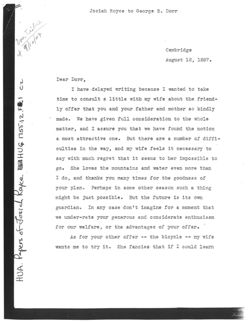
Josiah Royce to George B. Dorr
Taskin
Cambridge
x
August 12, 1887.
Dear Dorr,
I have delayed writing because I wanted to take
time to consult a little with my wife about the friend-
ly offer that you and your father and mother SO kindly
made. We have given full consideration to the whole
matter, and I assure you that we have found the notion
a most attractive one. But there are a number of diffi-
culties in the way, and my wife feels it necessary to
say with much regret that it seems to her impossible to
go. She loves the mountains and water even more than
I do, and thanks you many times for the goodness of
your plan. Perhaps in some other season such a thing
might be just possible. But the future is its own
guardian. In any case don't imagine for a moment that
we under-rate your generous and considerate enthusiasm
for our welfare, or the advantages of your offer.
As for your other offer -- the bicycle my wife
wants me to try it. She fancies that if I could learn
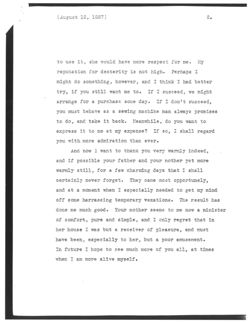
(August 12, 1887)
2.
to use it, she would have more respect for me. My
reputation for dexterity is not high. Perhaps I
might do something, however, and I think I had better
try, if you still want me to. If I succeed, we might
arrange for a purchase some day. If I don't succeed,
you must behave as a sewing machine man always promises
to do, and take it back. Meanwhile, do you want to
express it to me at my expense? If so, I shall regard
you with more admiration than ever.
And now I want to thank you very warmly indeed,
and if possible your father and your mother yet more
warmly still, for a few charming days that I shall
certainly never forget. They came most opportunely,
and at a moment when I especially needed to get my mind
off some harrassing temporary vexations. The result has
done me much good. Your mother seems to me now a minister
of comfort, pure and simple, and I only regret that in
her house I was but a receiver of pleasure, and must
have been, especially to her, but a poor amusement.
In future I hope to see much more of you all, at times
when I am more alive myself.
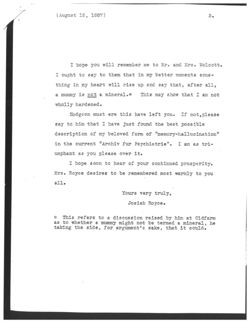
(August 12, 1887)
3.
I hope you will remember me to Mr. and Mrs. Wolcott.
I ought to say to them that in my better moments some-
thing in my heart will rise up and say that, after all,
a mummy is not a mineral.
*
This may show that I am not
wholly hardened.
Hodgson must ere this have left you. If not, please
say to him that I have just found the best possible
description of my beloved form of "memory-hallucination"
in the current "Archiv fur Psychiatrie". I am as tri-
umphant as you please over it.
I hope soon to hear of your continued prosperity.
Mrs. Royce desires to be remembered most warmly to you
all.
Yours very truly,
Josiah Royce.
*
This refers to a discussion raised by him at Oldfarm
as to whether a mummy might not be termed a mineral, he
taking the side, for argument's sake, that it could.
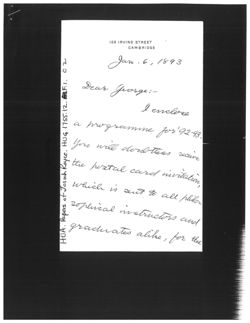
103 IRVING STREET
CAMBRIDGE
Jan 6, 1893
Dear George:-
I enclose
a programme for 92-93.
you will doubtless receive
the postal card invitation
which is sent to all philo-
sophical instructors and
graduates alike, / for the
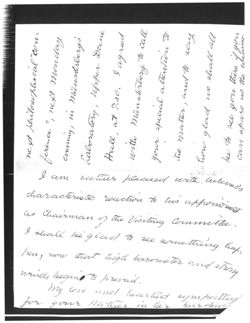
I am rather pleased with
characteristic reaction to his
as Chairman of the Visiting Committee
I shall biglad to see something heap
wride begin to prevail.
pen, now that high barometer and
for your mother in her bur otemo
my tore and heartest sympathy
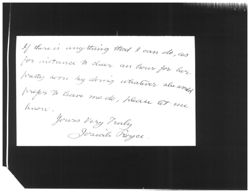
If there is anything that I can do, as
for instance to cheer an hour for her
pretty 200m by doing whatever she worded
proper to have me do, please let me
know.
years Very Fruly
Issual Royer
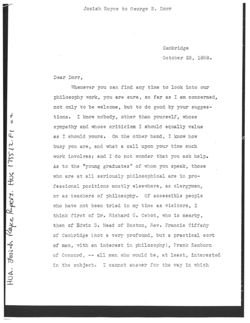
Josiah Royce to George B. Dorr
Cambridge
October 23, 1898.
Dear Dorr,
Whenever you can find any time to look into our
philosophy work, you are sure, so far as I am concerned,
not only to be welcome, but to do good by your sugges-
tions. I know nobody, other than yourself, whose
sympathy and whose criticism I should equally value
as I should yours. On the other hand, I know how
busy you are, and what a call upon your time such
work involves; and I do not wonder that you ask help.
As to the "young graduates" of whom you speak, those
who are at all seriously philosophical are in pro-
fessional positions mostly elsewhere, as clergymen,
or as teachers of philosophy. Of accessible people
who have not been tried in my time as visitors, I
think first of Dr. Richard C. Cabot, who is nearby,
then of Edwin D. Mead of Boston, Rev. Francis Tiffany
of Cambridge (not a very profound, but a practical sort
of man, with an interest in philosophy), Frank Sanborn
of Concord, -- all men who would be, at least, interested
in the subject. I cannot answer for the way in which
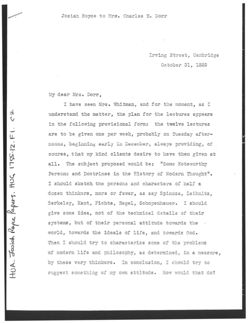
Josiah Royce to Mrs. Charles H. Dorr
Irving Street, Cambridge
October 31, 1889
My dear Mrs. Dorr,
I have seen Mrs. Whitman, and for the moment, as I
understand the matter, the plan for the lectures appears
in the following provisional form: the twelve lectures
are to be given one per week, probably on Tuesday after-
noons, beginning early in December, always providing, of
course, that my kind clients desire to have them given at
all. The subject proposed would be: "Some Noteworthy
Persons and Doctrines in the History of Modern Thought".
I should sketch the persons and characters of half a
dozen thinkers, more or fewer, as say Spinoza, Leibnitz,
Berkeley, Kant, Fichte, Hegel, Schopenhauer. I should
give some idea, not of the technical details of their
systems, but of their personal attitude towards the
world, towards the ideals of life, and towards God.
Then I should try to characterize some of the problems
of modern life and philosophy, as determined, in a measure,
by these very thinkers. In conclusion, I should try to
suggest something of my own attitude. How would that do?
( October 31, 1889)
2.
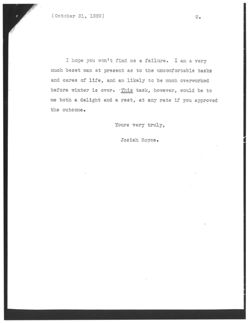
I hope you won't find me a failure. I am a very
much beset man at present as to the uncomfortable tasks
and cares of life, and am likely to be much overworked
before winter is over. This task, however, would be to
me both a delight and a rest, at any rate if you approved
the outcome.
Yours very truly,
Josiah Royce.
Josiah Royce to Mrs. Charles H. Dorr
103 Irving St., Cambridge
December 19, 1889
My dear Mrs. Dorr,
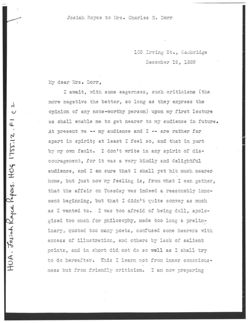
I await, with some eagerness, such criticisms (the
more negative the better, so long as they express the
opinion of any note-worthy person) upon my first lecture
as shall enable me to get nearer to my audience in future.
At present we -- my audience and I -- are rather far
apart in spirit; at least I feel so, and that in part
by my own fault. I don't write in any spirit of dis-
couragement, for it was a very kindly and delightful
audience, and I am sure that I shall yet hit much nearer
home, but just now my feeling is, from what I can gather,
that the affair on Tuesday was indeed a reasonably inno-
cent beginning, but that I didn't quite convey as much
as I wanted to. I was too afraid of being dull, apolo-
gized too much for philosophy, made too long a. prelim-
inary, quoted too many poets, confused some hearers with
excess of illustration, and others by lack of salient
points, and in short did not do so well as I shall try
to do hereafter. This I learn not from inner conscious-
ness but from friendly criticism. I am now preparing
( (December 19, 1889)
2.
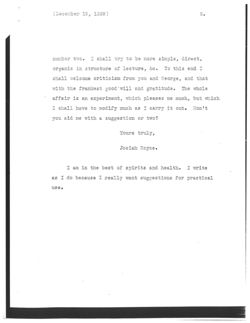
number two. I shall try to be more simple, direct,
organic in structure of lecture, &c. To this end I
shall welcome criticism from you and George, and that
with the frankest good'will and gratitude. The whole
affair is an experiment, which pleases me much, but which
I shall have to modify much as I carry it out. Won't
you aid me with a suggestion or two?
Yours truly,
Josiah Royce.
I am in the best of spirits and health. I write
as I do because I really want suggestions for practical
use.
Josiah Royce to Mrs. Charles H. Dorr
North Conway
August 11, 1890
My dear Mrs. Dorr,
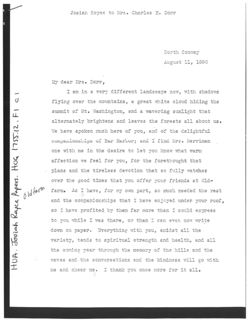
I am in a very different landscape now, with shadows
flying over the mountains, a. great white cloud hiding the
summit of Mt. Washington, and a wavering sunlight that
alternately brightens and leaves the forests all about us.
We have spoken much here of you, and of the delightful
companionships of Bar Harbor; and I find Mrs. Merriman
one with me in the desire to let you know what warm
affection we feel for you, for the forethought that
plans and the tireless devotion that SO fully watches
over the good times that you offer your friends at Old-
oldform
farm. As I have, for my own part, so much needed the rest
and the companionships that I have enjoyed under your roof,
SO I have profited by them far more than I could express
to you while I was there, or than I can even now write
down on paper. Everything with you, emidst all the
variety, tends to spiritual strength and health, and all
the coming year through the memory of the hills and the
waves and the conversations and the kindness will go with
me and cheer me. I thank you once more for it all.
&
(August 11, 1890)
2.
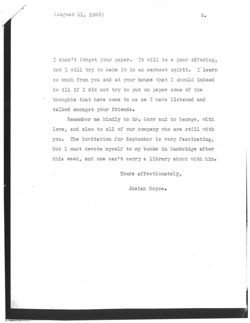
I shan't forget your paper. It will be a poor offering,
but I will try to make it in an earnest spirit. I learn
so much from you and at your house that I should indeed
do ill if I did not try to put on paper some of the
thoughts that have come to me as I have listened and
talked amongst your friends.
Remember me kindly to Mr. Dorr and to George, with
love, and also to all of our company who are still with
you. The invitation for September is very fascinating,
but I must devote myself to my books in Cambridge after
this week, and one can't carry a library about with him.
Yours affectionately,
Josiah Royce.
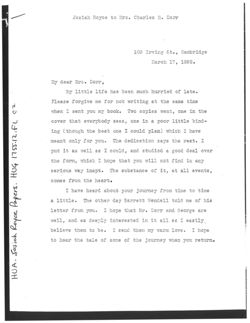
Josiah Royce to Mrs. Charles H. Dorr
103 Irving St. , Cambridge
March 17, 1892.
My dear Mrs. Dorr,
My little life has been much hurried of late.
Please forgive me for not writing at the same time
when I sent you my book. Two copies went, one in the
cover that everybody sees, one in a poor little bind-
ing (though the best one I could plan) which I have
meant only for you. The dedication says the rest. I
put it as well as I could, and studied a good deal over
the form, which I hope that you will not find in any
serious way inapt. The substance of it, at all events,
comes from the heart.
I have heard about your journey from time to time
a little. The other day Barrett Wendell told me of his
letter from you. I hope that Mr. Dorr and George are
well, and as deeply interested in it all as I easily
believe them to be. I send them my warm love. I hope
to hear the tale of some of the journey when you return.
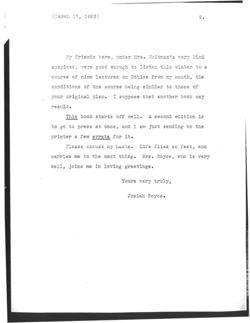
(March 17, 1892)
2.
My friends here, under Mrs. Whitman's very lind
auspices, were good enough to listen this winter to a
course of nine lectures on Ethics from my mouth, the
conditions of the course being similar to those of
your original plan. I suppose that another book may
result.
This book starts off well. A second edition is
to go to press at once, and I am just sending to the
printer a few errata for it.
Please excuse my haste. Life flies SO fast, and
carries me to the next thing. Mrs. Royce, who is very
well, joins me in loving greetings.
Yours very truly,
Josiah Royce.
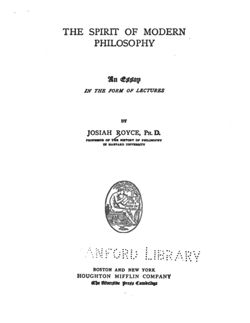
THE SPIRIT OF MODERN
PHILOSOPHY
An Essap
IN THE FORM OF LECTURES
BY
JOSIAH ROYCE, PH. D.
PROFESSOR OF THE HISTORY OF PHILOSOPHY
IN HARVARD UNIVERSITY
IOVI
BIEN or
RIEN
INFORD
LIBRARY
BOSTON AND NEW YORK
HOUGHTON MIFFLIN COMPANY
(be nibertibe press Cambridge
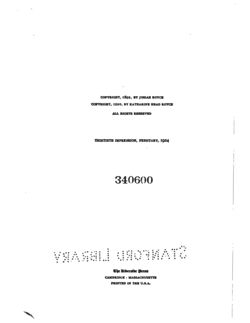
COPYRIGHT, 1892, BY JOSIAH ROYCE
COPYRIGHT, 1920, BY KATHARINE HEAD ROYCE
ALL RIGHTS RESERVED
THIRTIETH IMPRESSION, FEBRUARY, 1924
340600
UNORMATE
The Press
CAMBRIDGE . MASSACHUSETTS
PRINTED IN THE U.S.A.
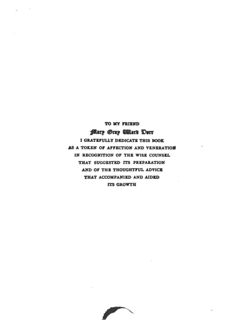
TO MY FRIEND
Mary Gray Wath Derr
I GRATEFULLY DEDICATE THIS BOOK
AS A TOKEN OF AFFECTION AND VENERATION
IN RECOGNITION OF THE WISE COUNSEL
THAT SUGGESTED ITS PREPARATION
AND OF THE THOUGHTFUL ADVICE
THAT ACCOMPANIED AND AIDED
ITS GROWTH
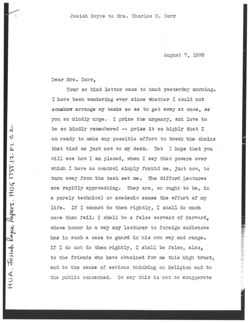
Josiah Royce to Mrs. Charles H. Dorr
August 7, 1898
Dear Mrs. Dorr,
Your so kind letter came to hand yesterday morning.
I have been wondering ever since whether I could not
somehow arrange my tasks so as to get away at once, as
you so kindly urge. I prize the urgency, and love to
be so kindly remembered -- prize it so highly that I
am ready to make any possible effort to break the chains
that bind me just now to my desk. Yet I hope that you
will see how I am placed, when I say that powers over
which I have no control simply forbid me, just now, to
turn away from the task set me. The Gifford Lectures
are rapidly approaching. They are, or ought to be, in
a purely technical or academic sense the effort of my
life. If I cannot do them rightly, I shall do much
more than fail; I shall be a false servant of Harvard,
whose honor in a way any lecturer to foreign audiences
has in such a case to guard in his own way and range.
If I do not do them rightly, I shall be false, also,
to the friends who have obtained for me this high trust,
and to the cause of serious thinking on Religion and to
the public concerned. To say this is not to exaggerate
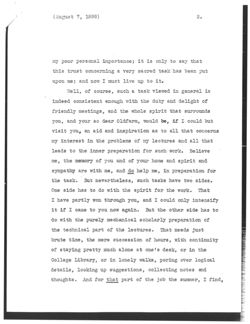
(August 7, 1898)
2.
my poor personal importance; it is only to say that
this trust concerning a very sacred task has been put
upon me; and now I must live up to it.
Well, of course, such a task viewed in general is
indeed consistent enough with the duty and delight of
friendly meetings, and the whole spirit that surrounds
you, and your so dear Oldfarm, would be, if I could but
visit you, an aid and inspiration as to all that concerns
my interest in the problems of my lectures and all that
leads to the inner preparation for such work. Believe
me, the memory of you and of your home and spirit and
sympathy are with me, and do help me, in preparation for
the task. But nevertheless, such tasks have two sides.
One side has to do with the spirit for the work. That
I have partly won through you, and I could only intensify
it if I came to you now again. But the other side has to
do with the purely mechanical scholarly preparation of
the technical part of the lectures. That needs just
brute time, the mere succession of hours, with continuity
of staying pretty much alone at one's desk, or in the
College Library, or in lonely walks, poring over logical
details, looking up suggestions, collecting notes and
thoughts. And for that part of the job the summer, I find,
(August 7, 1898)
3.
with its other inevitable tasks, is all far, far too
short already. But the work is now in full swing, and
I feel that I am at a very critical place in massing my
materials. If I leave now, for any place or purpose but
to amass more materials, the whole external organization
of my work will, I feel, tend to suffer.
Well, these are decidedly material aspects of the
affair. But if one lectures about a better world, one
has to write one's lectures in this world, subject to
all the material difficulties of time and ignorance, and
slowness in reading, in reflecting, and in writing. None
the less, duty binds one to do his material best with
the stuff he has in him.
So here I must sit and work, now that at last the
job has got under way. Earlier in the vacation I was
away a bit, but on professional tasks that I could not
rightly avoid. From now on, I must stay pretty much
alone, except for my family, until I have something to
show.
When I can see you again, I most of all want to
hear the new things of which you speak, that you have
to read to me. Now I hope that in September, some time,
(August 7, 1898)
4.
the material way may look a little clearer before me
in this task of mine. And then, if I still may, and
you are not weary of my long delay, I will come down
over some Sunday, solely to see you and George and to
hear something of your news. Even that I cannot promise.
It all depends upon whether or no I can get my task in
hand, on its material side, enough to earn a few hours
of the privilege of being with you. Just now I must not
go from here, although I deeply long to do so.
I write fully, frankly, lovingly.
Please remember me warmly to Mr. and Miss Mason,
to Mrs. Whitman and above all to George.
Yours very truly,
Josiah Royce.
Josiah Royce to Mrs. Charles H. Dorr
Cambridge
Wednesday Evening
August 30, 1899.
My dear Mrs. Dorr,
My family are just now returning from Winchester,
and this evening gives me my first chance to write you,
since I returned. It is always good to visit you. And
this last time seemed peculiarly full of encouragement
and inspiration. I was sorry of course to find how
often you still feel beset by weariness; but when you
are able to give your friends your presence, you can
hardly tell, yourself, how full of cheer and of strength
that presence is, and how much better in soul one is for
having been awhile in your company. For me, all that you
said to me and did for me came, during this visit, with
especially potent helpfulness. I needed such support,
just at the moment; and I felt it profoundly, so that
I return to work a much stronger, and, I hope, a more
serviceable man. I owe to you, and to George also, a
great deal, in addition, for the delightful care that
was taken to make my visit entertaining, and for the
good friends whom I met, and so much enjoyed, through
your kind intermediation. I thank you many times. May
(August 30, 1899)
2.
you grow daily stronger and nearer to the perfect
peace.
My family are well, and Mrs. Royce joins me in
kindest remembrances to you both.
Yours very truly,
Josiah Royce.
7/14/04
Harvard University Archives (HUA)
HUA
[Pusey Library]
July 14,2004
Notes
HUG 1755.12 File: ind. Letters to M.G.W.Dorr and G.B.D.
UA I 15.1380
Subscuption Papers
Emeisn Hall - letter to G-B Dor
1901-05.
- letter of 4/28/01 -
"President Eliot is deletated c our Emecom
plan 1 ready to bring tup at
Conseverent."
UniJame of 5/1/03 "Dea Geoge is
Solicitations " lly other Brictinis don't
bleed well." I of 3 letters of WJ.
- Undaca letter is scheduling
Speakers 15th benefits the Popce Janest
Palmer,
- Oliver W. Hiller 4/6/02 decide hat to "fork
"
out for the philosoph dependents nor well
he ash other to contribute to what his
not dong newerf - it would look "a
little queer."
Several letter in eay Febuu 1902 declar
attend "an meity in besoff of
Every Hall" schedule for H
afternoon of Fab 14,1902 See
We Thayer letter of 2/14/02
2,
Request f William R. Thayer, 81,
Ed for of Harvard Students
Magazine (4/25/02) to GBD
for a "report" in Even Have
transpect
Challen Eliot sect check I May '03 to 6BD
"for Emerson Hall."
From GA. Peobody + wrfe give $100, (5/8/03)
Paulive Show Perkins St., Jamaica Plain
a
on "lla Day" $ 1,000. Entlusiesta
letter st suppat
Photocopied letter plus 18 others in file.
HUG 300 Dorr, George B. (1874) fle
has record ( my copy tas) of
4 your a understand and
1883-89, 1889-90, 1890-91 year
of graduate work.
Also indicate S.M. (Hon.) u of llaine,
(924.
3/
Josidh Royce
HUG 1755 12
Letter to lles CH. Porr & G.B.Dorr
1887-1910.
copied
8/12/87
5/2/91 JR letter is deliberation a
form of dedication for bonk.
Very concerned @ her to word
dedicals is Mary word Dorr US
Mrs. Charls Dorr
1/6/83
Sent GBD "programme for 92-93"
Act to all $ instructors L
graduates alike for
of conference "next Mondy
copied
Capital
8/12/87
Invite h Dorr's to Old Form, Roye
urfa cail come ever n though send
"loves Moutaids - water even
None than I do.".
Dorr had from Porcentry riding
a biggle this cerf want him
to feg it. For "in I could
lear town it she would And
More respect for the by
reputation to dextent is nothigle
Dorr offers oun hike ?leveled
though one will be slipped to Royce
Than Dorr 4 pants for La few
channing days" sense they got les
neved off "some
temporan Vexations."
7/1"
Proper describe Mrs. Dorr a Co
"minister of comfort, pure
and simple."
2/26/95. Re GBD's offer at course
[for two of than? in "brain
embryology
5/1/04 Invite to GBD to "philosopheral
Carefure "at Royce home (5/2/04).
on Religious Onciousness.
copied 10/23/98
5/21/04 Gittot Spinozan book from 6BD
achievement a "remunder of old
times when first we met. Many
are the gifts and good hours
that I have owed to you t
yours." He regrets my
unable to help practi call
in this Matter of Emerson
Hall."
caped 7/31/04 fell to Boy = Wheeler, President
re GBD as bearer sto letter
ub GBD emote to California
M Sieve visit emonts to
Berbeley
12/17/05 Lette to GBD insity he t other
in photograph psych country to dine
on 12/29 (he at Howard
Unon.
7/14/104
5
4/28/04. . Re possible get topic le GBD
this And May 5,1904
TO Many Dorr
1/9/98 on symbolism and the
reality of late carly "that
slays Faith and Love /
depress - mourns in the darkness
That the tale of this
Irama is
and tab is ta whole of it;
copied
9/20/96 Lellere recent visit.
11/5/96
" re "our dear Le Cantes,"
He 's as grologist to he daughter
4 a "thoughtful dreamer of
any vesions." They are
"anone the ven four people
in the world whom &
counter really worty to
meet you
11/8/96
he Dorr's invitation to he Coutes,
Now apparent stay c Rockes.
HOLLIS
Le Cante lectured are them evaluation
11/14/96
Cayee beaut from helents in
letter form bar Haber regard
your propose an to adores
you gave her as "ber book." 3pp
6
12/19/97 Accepts invile to
Linner 12/23 c ur Mason
and Us. Mason.
2/28/98 Hope to see her 3/12 for My
chame to accept your kindness are so few
and mg returns so poor." My love
copied
8/7/98 to GBD
to George
n
10/23/98 " GBD
7/11/99 " llrs Dorn accept invite
to come last week of buglest
Regret not coning lastyear
escoriting U.S, Olivia D. Cushing
8/30/99 to less Dore when shein
ustill best by wearness"
copy
but to other your presence
is "fill of cheer and
5/1/04 to CBD Invite to paper
of strangtant
have
to he read DUP.
has
5/21/04 to 630 , re Spinoza Notes.
from
7/31/04 to Pres'. Wheeler
from
12/17/05 for 12/29/05 dinner.
4/28/10 Meet 5/5/10 ?
9/12/92 To Llso Dove. Accepts invite
to stay long weeked
6/21/89 Re stay
10/31/89
Plan for leatures,
8
8/11/94 Tills D.
H
DUNE
Nite Next time
HUC 6921 : Genel Infol a
Howard Comment +Class
request.
Day in 1923
Is George on last for
HON. MASTERS? Cheh
Squart
HUD 274.505 Clan of 1874
great # 147 t #148.
Security this
FROM:
sheet
UAV 161.201.10
admission GSAS
UAV 161.200
admission bach 1886-1898
2070
James & Royce re Bar Harbor
7/27/72 Wm. In B.H. for more than two weeks. Pp. 425-8 Corr. Wm. James In Vol. 4 he writes to sister
Alice of his first rgely-impressions entering Bar Harbor by sea. Impressed by the island and mainland
hills, but where "society here is abundant and excellent, "I suppose few watering places[s] present such
an
intellectual front to the sweather." too many social acquaintances. 'wagon excursions to different
cliffs and hilltops, and rowing and sailing are the amusements here and when a day here is fine, it
is
resplendent. The finest skies I have seen in America." More detail here than elsewhere in the james
correspondence. Describes "The fresh wind, the interminable spotless twilight, the dark heaving ocean,
the solemn might of the cliffs on our left hand, the incipient northern light which later became one of
the finest I have ever seen, all made a first class night of it." However, in a letter to Alice (9/17/94) says
he may not go to MDI because too much talk there will do him "no good at all."
- twelve day visit with Dorrs WJ & AJ.
7/29/90 - WJ to AJ, Royce will return to Dorrs in 10 days
8/16/96 - Cambridge, has been ill with GI issues. Wants to go to Bar Harbor for he needs wilderness, but
changes mind and went to the Adirondacks with Harry for a restorative vacation.
8/11/97 writes to Ellen Gertrude from Oldfarm, described as a "really grand place." Off to Intervale by
the 15th. Writes to Alice that he spent a.m. working on Immortality lecture wqith Hodgson but and when
he departs on the 13th he thanks MGWD for as jolly a three days "as he has ever passed," bragging to
Alice about the vitality he found at the Dorrs. Heads for Mt. washinton enroute to Chocorua, then onto
Keene Valley, walking to improve his constitution je says to brother Henry. 8/30/97.
8/30/97 - spent 4 days alone at the Dorrs.
TO Alkice James-6/27/1904 wants GBD to be one of his pallbearers aftrer attending Sarah Whitman's
funeral. Where GBD was one of ushers.
12/5/08 - WJ came to BH to investigate movement of a table without contact, reported by GBD.
WJ repeatedly sought relief from anxiety through travel. .Hiking mountains hefre and abroad
See 1917 letter from Tom Ward re preservation, a letter not from WJ but a lifelong friend. Who was also
on the Hafrvard Phil Dept. Visiting Committee.
9/12/2018
Royce, Josiah I Internet Encyclopedia of Philosophy
Josiah
Royce
(1855-1916):
Overview
Josiah Royce was one of the most
influential philosophers of the
period of classical American
philosophy, the late nineteenth
century through the early twentieth
century. Although often identified
as an exponent of Absolute
Idealism, which is a philosophical
view explored by Royce particularly
in his Gifford Lectures, Royce was a
thinker of widely diverse interests
and talents. He made major
contributions to psychology
including a textbook in the field
and was, in fact, elected President
of the American Psychological Association. He wrote a history of
California, considered today a forerunner of contemporary
historiography in its attention to the role of women and minority
groups. He explored social ethics, developing many ideas on the social
grounding of the self, some of which were later expanded upon by
George Herbert Mead. Furthermore, Royce wrote on pressing social and
political problems of the day including race relations. W.E.B. Dubois
of
his
9/12/2018
Royce, Josiah I Internet Encyclopedia of Philosophy
considered the founder of the Harvard school of logic, Boolean algebra,
and the foundation of mathematics. Among his students at Harvard
were Clarence Irving Lewis who went on to pioneer modal logic, Edward
V. Huntington, the first to axiomatize Boolean algebra, and Henry M.
Sheffer, known for the eponymous Sheffer stroke. Royce has recently
been cited as a proto-cybernetic thinker; another of his students was
Norbert Wiener, the father of cybernetics. Royce also wrote on issues in
the philosophy of science.
In addition to these many philosophical achievements, Royce made
major contributions to the Philosophy of Religion, writing on the
problem of evil, and Christian community and presenting a
phenomenological study of the religious experience of ordinary people.
Royce also wrote throughout his career on ethical theory and on the
conditions for creating both genuine and supportive communities as
well as creative, unique, ethical individuality. At the end of his life he
turned to the development of a world community through a process of
mediation and interpretation.
Table of Contents
1. Life
2. Thought and Works
a. Royce's Philosophy of Community
b. Royce's Ethics: The Philosophy of Loyalty
C. Religion
d. The Problem of Evil
e. Logic
3. References and Further Reading
a. Primary Sources
b. Published Editions
C. Secondary Sources
9/12/2018
Royce, Josian I Internet Encyclopedia of Philosophy
1. Life
Josiah Royce was a Californian by birth, born on 20 November, 1855, in
Grass Valley, the son of Josiah (1812-1888) and Sarah Eleanor (Bayliss)
Royce (1819-1891), whose families were recent emigrants from England,
and who sought their fortune in moving west in 1849. His pioneer
mother Sarah was a central figure in forging a new social and political
community in Grass Valley. She was the center of much musical activity
with her melodeon, the first brought to California. She also helped found
a church and served as a teacher of the young, including young Josiah.
Under his mother's tutelage, Josiah developed his love of literature,
reading Milton and other literary works; made his acquaintance with the
Bible and religious experience; was given an introduction to music and
its beauty; and experienced the joys of a warm, loving community, his
family, and particularly his mother and sisters. Young Josiah began his
literary career with a delightful story of the travels of Pussy Blackie, a
"Huckleberry Finn cat," who runs away from home; gets bitten by a dog;
is captured by an eagle; travels on a railroad car; lives in the house of a
rich family; finds a cat companion with whom Pussy exchanges stories;
discusses social issues such as the contrast between the rich and the
poor, as well as the treatment of the less fortunate and moral questions
such as honesty, shame, killing, and war. In 1866, the Royce family
moved to San Francisco where Royce first attended the Lincoln School.
Royce also attended San Francisco Boys' High School where he had as a
classmate the (later famous) physicist, Albert Michelson. Continuing his
pioneer trek, Royce entered, at age fourteen, an infant University of
California, later becoming one of its first graduates, thus participating in
the beginnings of higher education in the state. After receiving his
degree in Classics in 1875, Royce traveled to Germany to study
philosophy for one year. He mastered the language while attending
lectures in Heidelberg, Leipzig, and Göttingen. On his return, he entered
the Johns Hopkins University in Baltimore and in 1878, was awarded
one of its first four doctorates.
IUPUI (INDIANA UNIVERSITY-PURDUE UNIVERSITY INDIANAPOLIS)
The Writings of Josiah Royce: A Critical Edition
Welcome to the Josiah Royce Critical Edition website.
On this site you will find information on the edition-its bylaws and its board members. You
will find the volumes that are published-one to date; unpublished transcribed manuscripts;
the Frank Oppenheim Comprehensive Index of Royce's papers at the Harvard University
Archives; an extensive bibliography complied by André De Tienne; and some online versions
of books written by Royce.
When you wish to leave a page, use the back function or click on another screen listed on
the left.
Most of the links on these pages are pdf files. If your brower is set to open pdfs as pdfs
automatically, the file will appear immediately; otherwise you will be asked whether you
wish to open the pdf file with whatever reader you have on your computer. Should you neec
a pdf reader, you may obtain an Adobe Reader here.
We will update this page as new material is added
IUPUI (INDIANA UNIVERSITY-PURDUE UNIVERSITY INDIANAPOLIS)
The Writings of Josiah Royce: A Critical Edition
THE OPPENHEIM COMPREHENSIVE INDEX
Welcome to the Josiah Royce Comprehensive Index (CI). The Comprehensive Index of the papers of Royce found at Harvard University was created by
Frank Oppenheim with the assistance of Dawn Aberg and John Kaag.
The Harvard University Archives contains most of the papers of American philosopher Josiah Royce (1855-1916). One hundred fifty-five "boxes"
house the original manuscripts of his published and unpublished books, articles, lectures, letters, logic work, and other materials. In 2008-09,
Royce scholar Frank Oppenheim with Dawn Aberg and John Kaag worked to compile a critical review of the entire collection. This CI shows the
breadth and depth of Royce's thought and allows for new insights into Royce's writings. The CI describes, dates (where possible), and in some
cases evaluates the Harvard Archives Royce Papers (HARP).
check
Harvard University's archivists created a "Finding Aid" to the Collection, which is primarily a listing of what is found in the archives. Appendix C of
the CI describes the collection in greater detail, from a scholar's rather than an archivist's point of view.
The CI is a dynamic work which will develop as Royce scholars work with it. Finally, while the CI has been copyrighted, it is a work in progress.
We
invite readers who stumble on errata or omissions to email comments so that the CI may be improved with your help. Send suggestions and
corrections to: roycece@iupui.edu.
Introduction to the Comprehensive Index
JULY 26, 1918]
SCIENCE
V. 48#1230
87-88
Surgeon-General Rupert Blue, United States
In case I erect or provide during my life-
Public Health Service; Lieutenant-Colonel F.
time for the erection of such a memorial edi-
F. Simpson and Dr. Franklin Martin.
fice as is described in the first part of this
This committee is authorized to meet at
article XXVIII., my trustees shall not be re-
regular intervals and to cooperate with the
quired to erect an additional memorial build-
committee on states activities, the state and
ing, though they shall have complete power to
county committees, and other agencies and so-
apply my said residuary estate for the benefit
cieties engaged in advisory or executive func-
of the said university to the erection of other
tions dealing with classifications and enroll-
edifices of a memorial character or to the other
ment for military, industrial and home/needs.
purposes specified in subdivision I. All build-
ings erected as aforesaid shall be made fire-
THE STERLING BEQUEST TO YALE UNI-
proof and shall be constructed in the most
VERSITY
substantial manner.
THE residuary estate of John W. Sterling,
which it is said will amount to $15,000,000, has
Mr. Sterling was graduated from Yale in
been left by the terms of his will to Yale Uni-
1864. His bequest is the largest ever made to
versity. Mr. Sterling, who was of the law
an American university, and the amount has
firm of Shearman & Sterling, died on July 5
only been exceeded by the gifts of Mr. Rocke-
while staying in Canada at the fishing lodge
feller to the University of Chicago and of Mr.
of Lord Mount Stephen. Of the remaining
and Mrs. Stanford to Stanford University.
$5,000,000, $1,000,000 goes to the Miriam A.
Osborn Memorial Home at Rye, N. Y., and
MEMORIAL TO JOSIAH ROYCE
$4,000,000 to relatives, friends, employees and
SOME of the personal friends and colleagues
charities. The clause which gives the residue
of Josiah Royce, who believe that his work and
of the estate to Yale University is this:
his character made a deep impression upon a
All the rest, residue and remainder of my
wide circle of men and women, and that he be-
estate not hereinbefore effectually disposed of,
came in fact the center of a large spiritual
I direct my said trustees to dispose of in the
community, many of whose members were un-
manner following:
known to him, as he was unknown personally
To apply the same, as soon after my decease
to them, feel that the reverence and affection
as may be practicable, to the use and for the
which went out to him as a thinker and as a
benefit of Yale University, in the erection in
man should be embodied in some appropriate
New Haven, Conn., upon land selected at its
memorial of him a't Harvard University, where
expense by it with 'the approval of my said
he expressed himself in characteristic speech
trustees, of at least one enduring, useful and
and writing for thirty years.
architecturally beautiful edifice, which will
It is proposed, with this end in view, to cre-
constitute a fitting memorial of my gratitude
ate a fund of $20,000, to be known as the
to and affection for my alma mater. The said
Josiah Royce Memorial Fund, the income of
trustees shall have entire liberty and discre-
which shall go to Mrs. Royce during her life-
tion to apply any portion of the said property
time, and thereafter to the department of
or its proceeds to the erection of a single
building, and they shall apply the balance of
philosophy of Harvard College, to be used in
said property, if any, to the erection and equip-
such ways as the department shall decide from
ment of other fine and enduring buildings for
year to year.
the use of students in the academical or gradu-
There are evident reasons why this appeal
ate departments, and, to some extent, to the
should not be delayed until the return of nor-
foundation of scholarships, fellowships or lec-
mal conditions, natural as such postponement
tureships, the endowment of new professor-
might on some accounts appear to be. And
ships, and the establishment of special funds
further, the due honoring of our moral heroes,
for prizes.
though a privilege under all circumstances is
88
SCIENCE
[N. S. VOL. XLV-III. No. 1230
especially a privilege and a duty in heroic
Chicago, who is now in the Sanitary Corps of
times.
the National Army attached to the Food Di-
Those who desire to subscribe may send
vision of the Surgeon General's Office, is at
their checks to Charles Francis Adams, Esq.,
present on duty in England, making a study
treasurer of Harvard College, 50 State Street,
of food conditions in the rest camps of the
Boston.
CHARLES W. ELIOT,
United States Army.
CHARLES P. BOWDITCH,
M. K. AKERS, professor of applied electric-
president, American Acad-
ity, at the State College of Washington, has
emy Arts and Sciences,
been granted leave of absence for the duration
JOHN GRIER HIBBEN,
of the war. He is now conducting research
president, Princeton Uni-
work in the development department of the
versity,
Western Electric Company of New York.
F. ALFRED HOERNLE,
Harry L. Cole, instructor in chemistry at the
chairman, Department of
State College of Washington, has been recom-
Philosophy and Psychol-
mended for leave of absence during the period
ogy, Harvard University,
of the war, and is now training in the avia-
LAWRENCE J. HENDERSON,
tion camp at Berkeley, California.
secretary, The Royce Club,
JAMES J. PUTNAM, M.D.
THE Royal Society of Arts has awarded the
E. E. SOUTHARD, M.D.
Albert Medal for 1918 to Sir Richard Tetley
WILLIAM ERNEST HOCKING
Glazebrook, C.B., Sc.D., F.R.S., "for his serv-
ices in the application of science to the indus-
tries of peace and war, by his work as director
SCIENTIFIC NOTES AND NEWS
of the National Physical Laboratory since
PROFESSOR A. A. MICHELSON, head of the
1899, and as chairman of the Advisory Com-
department of physics, University of Chicago,
mittee for Aeronautics." The society's Albert
has been commissioned as lieutenant-com-
medal, founded in 1863 to commemorate the
mander in the navy.
presidency of Prince Albert, has been awarded
DR. RICHARD C. MACLAURIN president of
annually "for distinguished merit in pro-
Massachusetts Institute of Technology, has ac-
moting arts, manufactures and commerce."
cepted the appointment of director of college
OXFORD UNIVERSITY has conferred the de-
training, in charge of the Students' Army
gree of master of arts honoris causa on John
Training Corps under the War Department's
Louis Emil Dreyer, Copenhagen, late director
Committee on Education and Special Train-
of the Armagh Observatory.
ing aiming to mobilize the higher institutions
THE Birmingham medal of the British In-
of learning.
stitution of Gas Engineers, has been presented
PROFESSOR JULIUS STIEGLITZ, chairman of
to Mr. John West, of Southport. Mr. West,
the department of chemistry at the University
who is eighty years of age, has been awarded
of Chicago, has been appointed as special ex-
the medal in connection with his work for the
pert in the United States Public Health Serv-
gas industry and Ministry of Munitions.
ice of the Treasury Department. This will not
involve his work at the university. The gov-
THE David Livingstone Centenary medal of
ernment assigns him two assistants, who will
the American Geographical Society has been
be in the employ of the Public Health Service
awarded to Colonel Candido Mariano da Silva
and will carry out their work in Kent Chem-
Rondon in recognition of his valuable work of
ical Laboratory under Professor Stieglitz's di-
exploration in South America.
rection.
MR. HERBERT SAMUEL, M.P., has been elected
MAJOR ANTON J. CARLSON, chairman of the
president of the Royal Statistical Society of
department of physiology at the University of
Great Britain.
fib
UNH LIBRARY
Poszior
3 4600 100303 3518
Royce
ON THE HUMAN SELF
By JAMES HARRY COTTON
Josich Royce
HARVARD UNIVERSITY PRESS
Cambridge, Massachusetts
1954
Verizon Yahoo! Mail -eppster2@verizon.net
Page 1 of 2
Verizon Yahoo! Mail Verizon Central Yahoo!
Search:
Web Search
Welcome, eppster2@verizon
Mail Home
All-New Mail
Tutorials
YAHOO!
Help
23
verizon
[Sign Out, Member Center
MAIL Classic
Mail
Addresses
Calendar
Notepad
Mail For Mobile - Options
Check Mail
Compose
Search Mail
Search the Web
Folders
[Add Edit]
Previous I Next I Back to Messages
Inbox (6)
Delete
Reply
Forward
Spam
Move.
Draft
This message is not flagged. [ Flag Message - Mark as Unread
Printable View
Sent
Date:
Mon, 17 Sep 2007 21:31:07 -0400 (EDT)
Bulk
[Empty]
From:
JohnClendenning@aol.com
Add to Address Book
Add Mobile Alert
Trash
[Empty]
Subject:
Re: Josiah Royce
My Folders
[Hide]
To:
eppster2@verizon.net
Eliz messages
Member Information
Dear Ron,
Ron Archives (18)
This is an interesting issue. Before using the anecdote in J. H. Cotton, I tried to
find data that would nail it down. Unfortunately, Cotton is my only source. But
Search Shortcuts
because the story rings true for me, I used it. (I liked the image of this strange
Californian in his threadbare suit hosted by the perfectly dressed Bostonian for
My Photos
dinner.) In general, Cotton is reliable, but in a few details, he is flat wrong. For
My Attachments
instance, Cotton says that Royce's commencement address at UC was on
Aeschylus' Prometheus Bound. Actually that was the subject of
his baccalaureate thesis. His commencement address was on a
passage from Sophocles' Antigone. I also doubt that Royce worked "on a
campus labor crew to earn money to buy his first drafting instruments," and that
"the loan [for his European studies] was scrupulously repaid out of his first
earnings." Both of these details seem to have come to Cotton through Stephen
Royce, whose "many recollections of his father," are the source." Cotton
states: "Whenever in this work stories of Josiah Royce appear without other
citation they are drawn from his son's reminiscences" (xi).
I assume that this includes the alleged evening with Royce, James, Palmer,
and others.
Best wishes in your research. Please keep in touch.
John
See what's new at AOL.com and Make AOL Your Homepage.
Delete
Reply
Forward
Spam
Move.
Previous
Next Back to Messages
Save Message Text I Full Headers
http://us.f842.mail.yahoo.com/ym/ShowLetter?MsgId=1245_3306002_103574_1704_176...9/18/2007
4
ROYCE ON THE HUMAN SELF
INTRODUCTION
5
one hundred dollars. Later that summer he set out for Boston to meet
win me as a follower, but to give me my chance. It was upon his
some of the intellectual leaders of the country before he sailed for
responsibility that I was later led to get my first opportunities here at
Germany. He had a warm letter of introduction from President
Harvard.²
Daniel Coit Gilman of the University of California. He soon found
Royce early developed a love of lecturing. In April, 1878, less than
Mr. George Dorr, a business man of wealth and a friend for many
a week after he had submitted his doctoral dissertation, Royce began
years to comc. Mr. Dorr asked the youthful student how he could
in Johns Hopkins a series of eight public lectures on "Poetry of the
help. Royce would like admission cards to the Harvard and Boston
German Romantic School," giving two lectures a week, writing
Public libraries. That was arranged. Was there anything else?
them more or less ad hoc. In his days at Johns Hopkins he used to
Yes, the young Royce wanted to meet some of the leaders of thought
write preliminary sketches of lectures he hoped to give in his first
in Boston.
teaching post. But when he received his degree there was no position
A few days later Royce received an engraved invitation to have
open in pliliosophy and he had to go back to Berkeley to teach
dinner with Mr. Dorr, "to meet Mr. Josiah Royce of California."
English literature and composition. But the philosophic interest
On the appointed evening Royce came early to the Dorr home,
would not be dampened. In a few weeks Royce announced a series
wearing his only suit, already threadbare. Mr. Dorr came down
of public lectures in introduction to philosophy. A note attached
stairs in full evening dress. Said Dorr, "Royce, I think you are
to these manuscripts in Royce's hand says that originally twelve
right: it's too hot for formal clothes this evening. If you will excuse
lectures were planned, but that they had to be cut to ten on account
me, I'll run upstairs and change." Dorr and Royce were the only
of examinations. The last two were given extempore, centering
men at the party in informal clothes. Ten others were present, in-
about the conclusions of his dissertation. Royce adds, "The course
cluding George Herbert Palmer and William James, to meet the
was dialectically a tolerable success, pedagogically a monstrous
young Californian not yet twenty years old. This was the first meet-
failure." 3
ing of Royce and James.
Yet the next term he announced another series on the history of
Years later at dinner in the Royce home James recalled that first
modern philosophy from Descartes to Kant. He was shortly to
meeting. Mrs. Royce asked if they were impressed by the social
write a manual in logic for his students in composition. One of his
backwardness of the lad from California. "On the contrary," James
complaints was that freshmen were vague in their writing. He began
replied, "we talked afterwards of the charm and delight of his
at once writing philosophical essays, some of which were published.
conversation."
During his four years there he kept up a lengthy correspondence
In Germany Royce studied first at Leipzig; later he was strongly
with William James, working out in the letters some of his early
influenced by Lotze's lectures at Göttingen. The next year he re-
theories, telling James how lonely he was as the only philosopher
turned to the just-opened Johns Hopkins University on a fellowship.
on the West Coast, hoping for an early appointment in an eastern
In the summer of 1877 Royce went to Cambridge for a long talk
college. "There is no philosophy in California-from Siskiyou to
with William James. His friends had been warning him that there
Ft. Yuma, and from the Golden Gate to the summit of the Sierras.
was no future in philosophy. It was from James that Royce received
Hence the atmosphere for the study of metaphysics is bad, and
the needed encouragement to continue.
I wish I were out of it." 4
James found me at once-made out what my essential interests were
In 1882 James was to leave for Europe for a year and on his
at our first interview, accepted me with all my imperfections, as one
suggestion Royce was invited to take his place for one year, at a
of those many souls who ought to be able to find themselves in their
salary of one thousand dollars. George Herbert Palmer was SO
own way, gave a patient and willing ear to just my variety of philo-
impressed with his quality that he arranged to take an overdue
sophical experience, and used his influence from that time on, not to
sabbatical leave to give Royce a second year. After that second year
HDS - Pragmatism and Idealism in Dialogue
Page 1 of 1
HARVARD DIVINITY SCHOOL
Quick Navigation
Conference Home
Program
William games & gosiah Royce a Century to
Registration
Pragmatism and Idealism in Dia
Speakers
Accommodations
May 25-27, 2007
Directions
Lowell Lecture Hall, Harvard
University
Contact Us
A conference to assess the
interactions, contributions, and
continuing resonance of two major
American philosophers and Harvard
professors.
Speakers to include John
Clendenning, Harvey Cormier, Hans
Joas, Jacquelyn Kegley, James
Kloppenberg, David Lamberth, John
Lachs, John J. McDermott, Frank
Oppenheim, Hilary Putnam, Robert
Richardson, Sandra Rosenthal, Linda
Simon, Ignas Skrupskelis, Cornel
Photograph by Harvard University Archives, call # HU
West, and others.
James, William (10)
Free and open to the public; advance
registration required.
Hosted by Harvard Divinity School, in conjunction with the Josiah Royce Society, the Society for the
Advancement of American Philosophy, and the William James Society. Supported by the Lowell Institute
of Boston, the Hocking-Cabot Fund for Systematic Philosophy, the William James Lecture Fund, and the
Humanities Center at Harvard.
Humanities Center
NJS
at Harvard
HG
directories search hds I site map I my.hds I privacy policy home
ABOUT HDS I MEET THE FACULTY RESEARCH PROGRAMS LIBRARY I PUBLICATIONS
GIVING OPPORTUNITIES | NEWS AND EVENTS
Copyright 2006 President and Fellows of Harvard College. All rights reserved.
last modified: October 16, 2006
comments about this page should be addressed to: JamesRoyce2007@hds.harvard.edu
http://www.hds.harvard.edu/JamesRoyce2007/index.html
12/13/2006
Michael Forest Practically "Saved": An Inquiry into the Foundations of Royce's Development - Journal of
Page
1
of
9
The
Copyright © 2000 by the Pennsylvania State University. All rights reserved.
The Journal of Speculative Philosophy 14.1 (2000) 24-35
Minist
sparch
United
TITLE fournal
Contents
[Access article in PDF)
Practically "Saved": An Inquiry into the Foundations of
Royce's Development
1
Michael Forest
Traditionally interpreted as an absolute idealist and therefore as an anomaly in his own milieu, Josiah Royce
has been often mischaracterized over the course of this century. Attention has been overly focused on
Royce's commitment to the epistemological Absolute of his middle writings. 2 Royce's dialectically
adversarial relationship with his best friend William James has had a tendency to exaggerate the differences
between the two of them and to obscure the many deep philosophical commitments they both shared.
The purpose of this paper is to show that Royce's theology is mainly a consequence of his commitment to
the Kantian project in philosophy and that he thus had more in common with the Harvard pragmatists than is
commonly ascribed to him. 3 While neo-Kantianism is usually interpreted as idealism (and for good
reasons), there is a more practical side to the Kantian project. This strain runs from Immanuel Kant through
nearly the entire pragmatic tradition and includes Royce as easily as it does James and Charles Sanders
Peirce. Thus, as a by-product, this paper will be a resource for a more inclusive and tightly knit view of the
classical American philosophers. Primarily, however, this paper eventuates in a focus on the concept of
salvation to illustrate that the primacy of Royce's thinking as a whole was based more deeply on his
commitment to practical reason than on a commitment to any absolutes. The progression of Royce's
thought, as well as its theological culmination in his two-volume The Problem of Christianity, it will be argued,
can be best explained by uncovering Royce's commitment to the priority of practical reason over speculative
reason. This position [End Page 24] helps to explain Royce's evolution toward a voluntaristic theology that
explicated the conditions for the possibility of a religious way of life.
The paper will begin with a discussion of the intellectual background into which Royce developed. It
proceeds to Royce's early work, with considerations of the practical bearing expressed in that work and the
problems generated by it. Next, the paper presents analyses of several of Royce's middle works to show how
practical reason undergirds his project and endures throughout his intellectual life. Finally, the paper ends
with the final fruits of Royce's practical bearing and its shift in emphasis through the new stage of salvation
in his major theological work. Of course, there is much more to Royce's practical philosophy than need be
considered for this thesis. Because I am examining the role of practical reason as a foundation for Royce's
speculative work, the reader may excuse my omissions of some of Royce's very practical themes, such as
loyalty, transformation, and the interpretive Spirit.
Like Royce, the American pragmatists accepted influences from a variety of different places and traditions.
Certainly, John Stuart Mill, Charles Darwin, Herbert Spencer, the British empiricists, and the German
idealists all played their parts in the story of the development of pragmatism. But a special place must be
accorded to Immanuel Kant. Several particular doctrines originating with Kant had an indelible impact,
primarily, two specific aspects of the same teaching. First, the passivity of the mind was abolished in favor of
a mind that actively constructs the world. While this notion differs in theoretical function for Kant and the
Americans, it always expresses the belief that the content of phenomenal experience under-determines any
adequate theoretical interpretation of it. Hence, extraphenomenal concepts and categories are necessary to
elucidate the structure and content of experience. Second, and related to this, Kant stressed the importance
of the role of practical reason in understanding the real. Indeed, the function of Kant's famous Critique of
Pure Reason is a demonstration that reason is primarily practical. Both in the realm of the moral world and in
scientific inquiry, the guidepost toward truth is practical reason. 4 Thus, taking his cue from Kant, Royce
http://muse.jhu.edu/journals/journal_of_speculative_philosophy/v014/14.1forest.html
1/2/2003
The
Letters
Clean
Introduction
John
1970.
absorbed When Josiah in news Royce died on September 14, 1916,
Ed.
obituaries and Few took note of his passing; after and a presi-
dential election. of trench warfare, U-boat atrocities, America was
returning from dropped the out of print. To many of the as one by
one his books memoirs, Royce was gradually forgotten the usual
in the twenties war and to still younger men who young men
lute" philosophy-"Loyalty," seemed the "Beloved Community," Royce's
and thirties, the characteristic terms came of of age
in America quaint and unintelligible. He was of the "Abso-
World and the who could write a book SO comprehensive one the last as men The
Individual.
phy"-rich, William James once said that Royce was "the Rubens of
builder, abundant, bold, colorful, imperfect. He philoso-
idealism. America's He only international representative of was a system-
mission: he felt was moreover a philosopher with a post-Kantian
correct imbalance obliged, as a man of the late nineteenth deep sense of
to seek a an theoretical left by the Revolutionary and Romantic century, to
the social order.1 and practical bond between individual eras,
the
later This idea is present throughout his men and
its ones it comes with gathering force. As a child works, he but in
his death war fought he to preserve the United States. A few and
the urgency revealed in the new communities of California had seen in
was not a conflict saw it written in blood at Verdun. The war, months he before
of mankind and the between individual nations, interests but of between nations, the community insisted,
order Royce's and its life was thus framed by conflict between
even his last His philosophy, his literary and historical sought to learn
its meaning. members. He studied the conflict and the social
I efforts in logic show how deeply he was concerned writings,
"The Outlook in Ethics," International Journal of Ethies (1891) 106
11.
10
INTRODUCTION
INTRODUCTION
11
and tormented by the conflict. Finding his ties to the community
ing to legend, she publicly whipped a newspaperman who had
and practicing loyalty to its highest ideals were for him personal
written an unflattering editorial, and she shot her husband after he
obsessions as well as theoretical problems. He did not find theory
killed her bear. Lola is also given credit for having discovered Lotta
and experience to be fundamentally different, for he believed phi-
Crabtree, who grew up in Grass Valley and who later became one
losophy to be essentially a criticism of life. "You philosophize," he
of the most popular actresses of the American stage.
said at the opening of The Spirit of Modern Philosophy, "when
Katharine Royce, the philosopher's wife, once said that "Grass
you reflect critically upon what you are actually doing in your
Valley was a place that was nothing in a situation that was no-
world. What you are doing is of course, in the first place, living.
where." Her view was not entirely fair. Most of Nevada County's
And life involves passions, faiths, doubts, and courage. The critical
twenty thousand residents lived in Grass Valley, and by the time
inquiry into what all these things mean and imply is philosophy."
the Royces arrived in the spring of 1854, there were three churches
By studying Royce's life we may gain a clearer understanding of
with growing memberships. Quite clearly, the "camp" had become
the personal sources of his philosophy.
a "community." By the time of Royce's birth, the earth beneath
Grass Valley, California, where Royce was born on November
Grass Valley had yielded $3.5 million in gold, and the wealth was
20, 1855, was at that time, by most generous estimate, a bit more
to last as long as mining for gold remained profitable. This fact
than six years old. Situated in the foothills of the Sierra Nevada
made Grass Valley different from the mining camps of the Mother
near the trail connecting Sacramento with the Truckee Pass, the
Lode. There the gold was taken from placer deposits close to the
grassy land on the banks of Wolf Creek was first visited by Forty-
surface; when the mines were panned out, the miners moved on.
Niners as they came looking for their strays. By September 1850, a
But the gold of Grass Valley was in quartz deposits deep in the
man named Morey opened a store in Grass Valley, although, with
earth, and getting it out required finance, technology, organization.
confidence characteristic of the pioneer, he momentarily called the
The first ten years of Royce's life were spent in the midst of such
place Centreville. In October, a man named McKnight found
a
agitation and development. His elders often told him that this was
ledge, two feet thick, that yielded $500 in gold per ton. Miners
il "new community." To a small boy, that expression seemed very
began to pour in, a hotel was built, and in November, an election
odd. "I wondered," he said much later, "and came to feel that part
was held and a few laws were adopted. It is said that ballots were
of my life's business was to find out what all this wonder meant."+
collected in a cigar box, and that on the following day four persons
The father of this boy, Josiah Royce, Sr., had been born in
were arrested-two men for fighting, one for riding too fast, and
Rutlandshire, England, in 1812, and had been brought by his
a woman for parading in the street wearing male attire. By the end
parents to America at the age of four. He had grown up in the
of 1851, Grass Valley had a post office, a church, and a school; by
town of Dundas, Canada, on Lake Ontario, very near the border of
the end of 1855, it was incorporated and was developing a water
New York, The Royces were pious Baptists who liked to remember
system.
that an ancestor had stood guard at the execution of Charles I.
Undoubtedly, Grass Valley, like other mining camps, had its
Such Protestant zeal led the elder Royce into Bible study, and
share of outlaws and exotics. Newspapers were filled with stories
according to his obituary, he could quote "passage after passage on
of knifings, shootings, bad cards, and the rest. The notorious Lola
the sime subject, beginning often with the earliest prophesied, and
Montez arrived in the early 1850S. Famous for her "Spider Dance,"
adding one quotation after another bearing upon the same points
Lola had followed the gold hunters to California after some the-
until he ended with the Book of Revelation." Evidently, he was,
atrical success in America and Europe. She had been a mistress to
Louis I of Bavaria who had made her a countess. In Grass Valley
il
HUA,
Katharine Royee to Ralph Barton Perry, January 13, 1933. Perry Papers.
she lived for several years with her husband and a pet bear. Accord-
"Words of Professor Royce at the Walton Hotel at Philadelphia, Deceme
U Nevada County Mining Review [n special issue of the Grass Valley Daily
her 1015," Philosophical Review (1016) 507.
Morning Union (1Hos) 1. pp. 1=10
Tribute to Josiah Royce," Los Gatos News, August 14, 1888,
INTRODUCTION
22
INTRODUCTION
23
promotion to the chair of English literature. Gilman apparently
and psychology, an advanced course in British empiricism, and
sympathized with Royce's ambitions, but for reasons not wholly
another advanced course in psychology; during his second year he
clear, he resisted the urgings of both Sill and James that Royce be
repeated the introductory course and added Palmer's advanced
appointed at Johns Hopkins. Sill was particularly candid: "About
courses in ethics and metaphysics; in his third year he taught a
Royce," he wrote to Gilman on April 26, 1880, "is there not some
half-course in philosophical theism during the first term, a half-
opening for him with you, or failing that, do you not know of some
course in oral discussion during the second term, and supervised
one of the reputable colleges where he could be Prof. of Logic, or
advanced composition for juniors and seniors. A degree of perma-
Rhetoric, or Eng. Literature-or all of them together? As I have said
nence was guaranteed, however, when Royce received in April
to you before, I don't believe this is a good place for him. At the
1885 an appointment for five years as assistant professor, effective
same time, James was working for Royce quite as urgently and
September I.
somewhat more fruitfully. In the spring of 1880, he recommended
The Religious Aspect of Philosophy certainly helped to resolve
Royce for a position at the University of Minnesota, and in 1881
the problem of Royce's temporary status. He had been growing in
nearly landed him an assistant professorship at Harvard. Though
the direction of this treatise since his first year's study of philosophy
neither of these efforts succeeded, James did find a way to bring
in Germany, but before 1880 his philosophic studies had been
Royce to Harvard for the following year. James had arranged to
largely assimilative and only sporadically constructive. He had been
take a sabbatical leave, and was required, under the existing rules, to
fascinated with Clifford's "mind-stuff" theory, had struggled with
find a qualified temporary replacement for half of his pay, $1,250.
I lodgson's Philosophy of Reflection, and otherwise had drawn
Though it had to be understood that the appointment was for one
ideas from a vast and various expanse of sources. Though he always
year only, James felt that Royce would gain, if he took the job,
tended to conceive of philosophy in Kantian terms, he was no
an inside track on any future developments at Harvard. Royce
longer willing, after the autumn of 1880 to follow Clifford on the
acted suddenly and boldly. James's letter had been sent on April 23;
quest for "things-in-themselves," but instead had come to see that
on May I, Royce wired his acceptance. After an anxious wait of
the more significant problem left by Kant lay in determining the
more than three weeks, Royce received his letter of appointment,
structure, not the limits, of knowledge. This line of analysis led
and on June 2, he presented his resignation to President Reid. Deter-
naturally to "The Possibility of Error." Royce first signaled this
mined to sever all ties to California, Royce ignored James's advice
direction in "On Purpose in Thought," a paper sent to the Johns
that he leave his wife and child with her parents and spend his "first
I lopkins Metaphysical Club and read there in late autumn 1880. At
experimental year" in Cambridge alone.2 27 Instead, on September 4,
about the same time he gave a lecture in Berkeley on "The Ethical
the three Royces boarded a train for Cambridge, and on September
Aspect of Modern Thought," which, as the title suggests, may have
IO, Charles Lanman, who had himself recently joined the Harvard
been an early version of The Religious Aspect of Philosophy. The
faculty, recorded in his diary: "Went to Boston to meet Royce, &
book itself was, as Royce explained his methods, "founded on old
his wife & babe in arms. They arrived from San Francisco well."
lectures and essays of mine rewritten and joined with whatever new
Royce moved to Harvard with slight hope of making Cambridge
things come into my head."28 He began its actual composition
his permanent home. As a temporary replacement for James during
shortly after joining the I larvard faculty, and in March 1883 pre-
the first year and for Palmer during the second, he was able to
sented il series of four lectures entitled "The Religious Aspect of
remain at Harvard for a third year only by accepting part-time
Philosophy." Lanman described the first of these lectures as a
work in the English Department. The spontancity of these arrange-
"splendid success" and loyally attended the entire series." By all
ments caused Royce to make considerable adjustments in his teach-
reports Royee was il huge success, In addition to his winning the
ing. During the first year he taught an elementary course in logic
respect of the Harvard community, he received the encouragement
MO Sill to Gilman, April 16, HHo,
in Royce to Coale, January 14, 1884.
28
INTRODUCTION
INTRODUCTION 29
acquaintance of Alfred Deakin, one of Australia's greatest states-
reality enabled Royce to deepen his idealism and relate it to cos-
men. Possibly because of their vast personal and cultural differences,
mology. The "world of description" is the physical world, the
Royce and Deakin became lifelong friends. As traveling companions
world of science-public and permanent; the "world of apprecia-
for two or three weeks they delighted in exchanging views on phi-
tion" is the ideal world, the world of feelings-private and spon-
losophy and politics, each finding inspiration by sharing in the
lancous. But it is the appreciative self who lives in the "true Self"
other's experience. Leaving Australia, Royce sailed to New Zealand,
and who makes science and the entire world of description possible.
then traveled by steamer to San Francisco, finding new strength at
The "double aspect" theory, therefore, gives a wider range of
each stage of his journey. Arriving in Cambridge in early Septem-
experience to the "Absolute Thought" than Royce had previously
ber, after an absence of more than five months, he wrote to Presi-
suggested and makes his idealism something more than "an idle
dent Gilman, announcing his return to health: "I feel like a bent
comment upon the general connectedness of things. "40 It was prob-
bow, all ready to twang."30
ably this speculation that Royce had implied in his letter to James
The breakdown taught Royce the dangers of overwork. As a
while en route to Australia; it had made, as he said, "the dry bones
consequence the tempo of his life, if not the vigor of his activities,
of my 'Universal Thought' live."41
settled down considerably for several years after 1888. With the
Royce, in the meantime, had begun editorial work for two peri-
birth of a third son, Stephen, in May 1889, the Royces made a
odicals, work that led him into the most famous controversies of his
permanent move to a new and roomy house at 103 Irving Street in
career. Robert Underwood Johnson of Century Magazine decided
the freshly subdivided estate of Charles Eliot Norton. Here in the
to launch a series of articles on California history and asked Royce
shade of huge elms, two doors from William James, around the
to assist as an editor and occasional contributor. This venture,
corner from Charles Lanman, a short walk from the Yard, Royce
which occupied Royce during 1890 and 1891, rekindled the fires of
spent the remaining twenty-seven years of his life. The tensions of
his conflict with John Charles Frémont and led to a skirmish with
his earlier life at Harvard gradually relaxed as the external signs of
the daughter of General William T. Sherman. A more notorious
his emerging stature became evident. In the spring of 1891, with
incident, however, resulted from the establishment, in 1890, of the
the formation of Stanford University, the new president, David
International Journal of Ethics for which Royce was one of the
Starr Jordan, urged Royce to accept the chair of philosophy. Con-
founding editors, In the first issue of the Journal he printed a
vinced of his importance to Harvard and informally promised an
lengthy review of Francis Ellingwood Abbot's The Way Out of
early promotion, Royce decided to remain in Cambridge. In fulfill-
Aquosticism. The result has been appropriately called "the Abbot
ment of the promise, Royce became Professor of the History of
affair."
Philosophy in the fall of 1892.
After il fairly distinguished career as an independent clergyman
During these years, seemingly uncertain of his scholarly future,
and polemicist for the Free Religious Association, Abbot turned to
Royce undertook the lighter tasks of his profession. At different
philosophy. In 1881 he received the second Ph.D. in philosophy
times, he proposed writing a book on Theodore Parker, a biography
granted at Harvard; at the same time, he founded and became pre-
of Goethe, a study of Hegel, and an edition of the Phänomenologie.
ceptor of the lome School for Boys in Cambridge. During the
None of these plans was actually carried out. Yet when, in the fall
following year a piece from his dissertation was published in Mind,
of 1889, Mrs. Charles Dorr encouraged Royce to present a series of
which Royce, though probably he had not yet met its author, found
public lectures on some prominent modern thinkers, he flew to the
a "and spectacle." When Abbot revised and expanded the article
task with enthusiasm. The result was The Spirit of Modern Philoso-
into il book, Scientific Theism (1885), Royce wrote a satirical
phy (1892) which contains Royce's most important advance of the
review, in Science, treating Abbot as a harmless incompetent, one
early 1890s, his distinction between "the world of appreciation"
and "the world of description." This "double aspect" theory of
in NMP, 11 1411 the "double aspect" theory is developed throughout lee-
tire 11, "Physical Law and Freedom," pp. 381-434.
80 Royce to Gilman, September 6, 1888,
" Royce to James, May 11, HHH,
7/4/07
INTRODUCTION
D
1875.
INTRODUCTION
INTRODUCTION
3
I
2
the leading U.S. expositor of a different philosophic style, absolute
principal question confronting him is the connection between the world
of the absolute and our world of everyday experience. During the nine-
idealism.
This picture is wrong not merely in detail but in principle. I have
ties he explores various resolutions of this problem, concentrating on
indicated that the Cambridge pragmatists-Royce among them-were
psychological ones. By the end of the century-in The World and the
part of a major philosophical movement. Their pragmatism is a form of
Individual and what follows it-he turns to symbolic logic to effect a
neo-Kantianism which draws from a set of connected doctrines: a con-
reconciliation between the two worlds, and mathematical studies domi-
structionalist epistemology stressing the changing character of our con-
nate his thinking until 1910. His last writings, notably The Problem of
ceptual schemes; a commitment to a variety of voluntarism; a Kantian
Christianity, attempt to translate his technical conclusions into more
concern with the nature of possible experience; an adherence to the
comprehensible language, while preserving the insights of his more pop-
idealist principle that existence does not transcend consciousness; a dis-
ular twentieth-century work. In short, I have learned my way around the
trust of traditional British empiricism; a recognition of the importance
main trails of Royce's system, and I have tried to map them accurately.
of logic for philosophy; an uncomfortableness with the dichotomy be-
But I am sure that there are side trails I have missed and fear that even
tween the conceptual and the empirical; a refusal to distinguish between
important ones are unexplored because of my own lack of understanding.
questions of knowledge and of value; an emphasis on the relation of
By contemporary standards a lack of clarity pervades Royce's
philosophy to practical questions; and a desire to reconcile science and
work, but I have not read into his language more exactness than it will
bear. I have simply attempted to make intelligible what I think he was
religion.1
The Harvard philosophers conducted a dialogue with major figures
saying. Undoubtedly vagueness is one of his major failings, but if we
in the western tradition. They have little relation to the analyses the
are to understand his philosophy it is pointless to demand of him stan-
historian has made of them; nor were they influenced by Franklin,
dards which he had no intention of meeting. To interpret him with them
Jefferson, Emerson, and the Adamses; nor by Beard and Veblen.
in mind would be an ahistoric enterprise. Aside from discussing the
In offering an alternative to these two varieties of intellectual his-
major tensions in his writing, I have also muted my internal criticism of
I have tried to sort out the issues which led Royce to the views he
Royce's thought. Although I have been much concerned with philosophic
tory, defended and to show how his position changed over the years as he re-
argument, I am not sure that appraisals of the correctness of a position
fined it and faced new difficulties. He begins his philosophical career as
are part of the task of the intellectual historian, and I am dubious, at any
a neo-Kantian puzzled by the same sorts of problems which perplexed
rate, about our ability to specify what is philosophically right or wrong.
William James. The idealistic arguments of Royce's first major work,
Although I have tried to show Royce's relation to the intellectual life
The Religious Aspect of Philosophy, are advanced only after several
around him and his connection to the tradition of philosophy at Harvard
as a "pure pragmatist." Through 1900 he elaborates this idealism
which extends from at least 1870 to the present, I have not tried to make
years along both metaphysical and ethical lines. But after the 1885 book the
him "relevant." I am not convinced that any of our present philosophic
For The Growth of American Thought (3rd ed., New York, 1964) New
example: Paul Conkin, Puritans and Pragmatists (New York, 1968) ; Ralph Merle
tastes provide or should provide a canon for judging past thinkers; and
I am convinced that if a man is worth studying, he is worth studying for
Curti, Gabriel, The Course of American Democratic Thought (2nd ed., (rev. ed.,
what he had to say. I am sure that in some sense Royce thought as he did
Henry 1940) Richard Hofstadter, Social Darwinism in American Thought World War
because he was "an American" and, indeed, "a Californian." I am also
York, New York, 1955) ; Perry Miller, ed., American Thought: Civil War to
sure that his personal life influenced his writing. But I have found little
One (New York, 1954).
6
INTRODUCTION
3
philosophers and non-philosophers. and I have been asked many times
what perversity attracted me to a man identified with religious thinking,
1
missing
and overblown in rhetoric. Nonetheless, at his best Rovee is a powerful.
EARLY PRAGMATISM
consistent, and intriguing thinker. I have been struck by the ingenious
and complex maneuvers he is able to make in elaborating his position.
1877-1884
In reading through his published and unpublished work I have come to
feel that he was an extraordinary human being with an incredible drive
and a wide range of talents. Royce has stimulated and fascinated me for
six years; I hope I have conveyed this stimulation and fascination to the
Josiah Royce was born in Grass Valley, California, in November, 1855,
reader.
six years after his parents migrated there as "forty-niners." When his
family moved to San Francisco in 1866, he enrolled in his first formal
school, and attended local institutions until his graduation from the Uni-
versity of California at Berkeley in 1875. Royce so impressed local busi-
nessmen that they agreed to send him to Germany for a year of study.
On his way to Leipzig and Göttingen he stopped in Boston and briefly
met William James. The nineteen-year-old again made a favorable im-
pression, and when he returned from Germany to study for a Ph.D. in
the new graduate program at The Johns Hopkins University, he began
a real acquaintance with the Harvard psychologist. Royce received his
doctorate in philosophy from Hopkins in 1878, but although the ac-
quaintance with James developed into friendship, there were no teaching
positions of any sort at Harvard; in fact, there were no positions in
philosophy anywhere, and the young man traveled back to Berkeley
where he became an Instructor in Literature and Composition.
Even before he returned to the west coast, Royce wrote that he
would grow spiritually consumptive in its metaphysical climate. After six
months there he told James there was "no philosophy in California."
"From Siskiyou to Ft. Yuma and from the Golden Gate to the Summit of
the Sierras," Royce lamented, "there could not be found brains enough
[to] accomplish the formation of a single respectable idea that was not a
manifest plagiarism. Hence the atmosphere for the study of metaphysics
7
1. EARLY PRAGMATISM
1877-1884
8
9
4
is bad. And I wish I were out of it." His chance came in the spring of
Idealism," he announced that he felt his debt to Kant "most of all."
1882: Harvard offered him a job replacing James, who was to be on leave
Prior to 1885 Royce's Kantianism is more striking. He came to philoso-
in 1882-1883. Royce was so discontented with Berkeley that he gave
phy as a neo-Kantian troubled by the status of the Ding an sich; as
he
little regard to his future prospects in Cambridge and made the difficult
struggled with the problems which Kant's view generated, he elaborated
continental trip with a wife and infant son for a one-year appointment
a position which was idealistic but simultaneously voluntaristic and even
which paid $1250. He arrived in Boston in the fall of 1882 to lecture in
pragmatic. The result of the first Kritik, Royce wrote in 1881, is that
James's courses in psychology.
"we all now live, philosophically speaking, in a Kantian atmosphere";
Teaching psychology was not yet metaphysics, but it was closer to
the problems of the critical philosophy are fundamental, and the philoso-
metaphysics than literature and composition. Actually, Royce's interests
phy of the future must be the critical one. Although Royce was to become
were not so unrelated as they appear. As an undergraduate he studied both
one of the leading exponents of post-Kantian Idealism, his road to this
philosophy and literature, and during his graduate training spent a great
position was not through the post-Kantians. We should study them be-
deal of time on the German romantics. During the seventies his study of
cause "with all their extravagances" they never lost sight of Kant. Even
them paralleled his study of nineteenth-century German philosophy. In
Schopenhauer, whose voluntarism, rather than any Hegelian doctrine,
the four years he spent at Berkeley his own work increasingly stressed
was later cited as an influence on Royce, in no way challenges Kant. In
the technical developments in German intellectual history, and teaching
his formative years Royce considered Schopenhauer an unsatisfactory
psychology at Harvard did not require much of a shift: it was still the
expositor of Kant and an inadequate speculator in his own right;
science of mind, and his superiors also gave Royce other congenial
Schopenhauer's significance was that he led younger students "to look for
assignments.2
themselves" into Kant.5
At Hopkins and Berkeley Royce offered courses of lectures that
It is in the more exact thinking of the German neo-Kantian move-
expounded his own thought. His dissertation was also an attempt at
ment that the battle "to grasp and to perfect the critical idea in all its
original philosophy, and with its acceptance he started to contribute to
meaning and consequence begins afresh. " But if Royce believed the
philosophical journals. In his classes at Cambridge he does not seem to
neo-Kantians were the true heirs to Kant, and if his own early work was
have elaborated his own ideas, but soon after he arrived he delivered
in this tradition, Royce was no mere expositor of his master. He was con-
some evening talks entitled "The Religious Aspect of Philosophy." In
cerned with a "needed reform" in the critical philosophy, a reform con-
them he continued to work out the position which he espoused more fully
nected with the status of the things in themselves. Royce stated the need
in the book of the same name published in 1885. The doctrines formu-
to
go "back to Kant, "6 and in his doctoral dissertation of 1878, "On the
lated there were consequently the result of seven years of reflection; and
Principles of the Interdependence of Knowledge," he attempted a reinter-
if we are able to understand his first book, we must explore Royce's at-
pretation of the Kantian doctrine of the Ding an sich. The absolute ideal-
tempts to account for the nature of knowledge, the pervasive theme in
ism of The Religious Aspect of Philosophy, seven years later, is the
his early writings.
culmination of this reinterpretation.
The central problem in his dissertation is to rebut a self-imposed
Kant's influence on Royce was enormous; the young man wrote of
skepticism. He begins by analyzing judgments. A judgment is expressed
him as "the good father,"3 "3 and in The Religious Aspect of Philosophy,
in a proposition of subject-predicate form which brings two ideas to-
which Royce described as belonging to the "wide realm of post-Kantian
gether in a way designed to indicate their relationship. But, Royce asserts,
240
EPILOGUE
5
next entries are devoted to the revisions of the last of the 1914 Berkeley
Lectures, all originally intended to deal with interpretation.4 With the
BIBLIOGRAPHIC NOTE AND
outbreak of war in August he threw himself into new explications of the
applications of his doctrines.¹
FOOTNOTE ANNEX
In the other Berkeley Lectures delivered prior to the Sarajevo
assassination he hinted at changes in his thinking more dramatic than
even interpretation had yielded. He conducted an exploration of the
concept of the probable, a predicate which lies between truth and
The best bibliography of Royce's published works is the "Annotated Bib-
falsity. 6 Probability was also at the basis of his ideas on international
liography of the Published Works of Josiah Royce" by Ignas Skrup-
insurance, but what philosophical formulations he had in mind-if any
skelis in The Writings of Josiah Royce, edited by John J. McDermott
-are unknown to us.
(Chicago, 1969), pp. 1167-1226. This bibliography lists bibliographies
His continuous preoccupation with World War I made him the
of secondary works and of the contents of the Royce manuscripts. In
leading anti-German ideologue. After The Problem of Christianity he
addition to the Royce, James, and Peirce papers at Harvard, I have used
developed no new ideas, and by 1916 verged on senility. His death in
the papers of F. H. Bradley, Alfred Bray Kempe, and Theodore de
September of that year ended the most important and productive era of
Laguna. The Bradley papers are in Merton College, Oxford; the Kempe
philosophical speculation at Harvard. As President Lowell had written
papers in the possession of his son, Reverend A. H. M. Kempe, Bedford
him toward the end of his career, "The University is built not of bricks
Hotel, Southgate, Chichester, Sussex; the de Laguna papers in the pos-
but of men; and you have been one of the cornerstones. A dozen such
session of his wife and daughter, Grace and Frederika de Laguna, 221
men would alone make a great University."
N. Roberts Road, Byrn Mawr, Pennsylvania, 19010. While the Bradley
and de Laguna papers were not useful for my study, Mrs. Grace de
Laguna was most helpful in giving me a long and pleasant interview.
Reverend Kempe provided invaluable assistance.
Most substantive "footnotes" are starred and appear in the text.
Those that follow ought to be self-explanatory. Throughout these notes,
the following abbreviations are used:
CG
The Conception of God, New York, 1897
CI
The Conception of Immortality, Boston, 1900
FE
Fugitive Essays, ed. J. Lowenberg, 1920, reprinted in New
York, 1968
HGC
The Hope of the Great Community, New York, 1916
LJR
The Letters of Josiah Royce, ed. J. Clendenning, Chicago,
1970
LMI
Lectures on Modern Idealism, ed. J. Lowenberg, foreword
by John E. Smith, New Haven, 1967
241
242
FOOTNOTE ANNEX
1. EARLY PRAGMATISM
243
6
OP
Outlines of Psychology, New York, 1903
4. RAP, p. xiii.
PC
The Problem of Christianity, intro. John E. Smith, Chicago,
5. "Before and Since Kant," Berkeley Quarterly, 2 (1881), pp.
1968
134, 145, 147. For Schopenhauer's influence see PC, p. 39.
PIK
"On the Principles of the Interdependence of Knowledge,"
6. "Before and Since Kant," pp. 145-149; "Kant's Relation
to
Modern Philosophic Progress," Journal of Speculative Philosophy, 15
Ph.D. Dissertation, John Hopkins, 1878, Harvard Univer-
(1881), p. 372.
sity Archives
7. PIK, p. 39. Royce presented the dissertation to the faculty at
PL
The Philosophy of Loyalty, New York, 1908
Johns Hopkins in April 1878. I have taken the citations from a xerox of
RAP
The Religious Aspect of Philosophy, Boston, 1885
a typewritten copy made in 1927 and deposited in the Harvard Univer-
RLE
Royce's Logical Essays, ed. Daniel Robinson, Dubuque,
sity Archives. I have taken the liberty of correcting some typographical
1951
errors in my quotations.
8. PIK, pp. 43-44.
RP
Royce Papers, Harvard University Archives
9. PIK, pp. 65-66.
SGE
Studies of Good and Evil, New York, 1898
10. PIK, pp. 50-56.
SMP
The Spirit of Modern Philosophy, Boston, 1892
11. PIK, pp. 58-61.
SRI
The Sources of Religious Insight, New York, 1912
12. PIK, pp. 87-88.
WAI
War and Insurance, New York, 1914
13. PIK, pp. 63-65.
WI1, WI2
14. PIK, p. 4.
The World and the Individual, 2 vols., New York, 1899,
15. PIK, pp. 65-66.
1901
16. PIK, pp. 78-81.
WJ
William James and Other Essays on the Philosophy of Life,
17. PIK, p. 82 (italics in original)
New York, 1911
18. PIK, pp. 4, 94 (italics in original). Royce makes this point
more dramatically four years later in "How Beliefs are Made": "The
only absolute truth of which we mortals seem to have any clear notion
would be found in a perfect agreement of all rational beings with one
INTRODUCTION
another; and this agreement would simply express the fact that we were
all in perfect moral harmony." Reprinted in FE, p. 346. The title and
1. Murray G. Murphey defends this contention at length in his
date and place of original publication of published articles later col-
important article "Kant's Children: The Cambridge Pragmatists," Trans-
lected are not normally cited in my footnotes; reference is simply made
actions of the Charles S. Peirce Society, 4 (1968).
to the collection in question; it may be consulted for a complete citation.
19. PIK, pp. 110, 129-130, 135, 138, 145.
20. RP, p. 64. Found in Box 79.
21. Cited in Ralph Barton Perry, The Thought and Character of
1. EARLY PRAGMATISM, 1877-1884
William James, vol. 1 (Boston, 1935), p. 789. Royce had also pondered
Peirce's classic Popular Science Monthly articles (see p. 788).
1. LJR, pp. 59, 66.
22. "The Eternal and the Practical," Philosophical Review, 13
2. LJR, pp. 121-123. For a more complete account of Royce's
(1904), pp. 116-117. See also PL, pp. 325-326; and W J, p. 43.
early life see LJR, pp. 45-116; Thomas F. Powell, Josiah Royce (New
23. For the fullest statement of his doubts see "Kant's Relation,"
York, 1967), pp. 1-23; and John Clendenning's forthcoming biography.
p. 374; for others, "On Purpose in Thought," 1880 (unpublished but
3. LJR, pp. 59, 86.
later printed in FE), pp. 226, 248.
George Herbert Mead: Josiah Royce - A personal impression
Page 1 of 2
Site Map
George's
George Herbert Mead's
Page
Josiah Royce A Personal Impression
a Mead Project site
at Brock University's
Citation: George Herbert Mead. "Josiah Royce - A Personal Impression",
Sociology Department
International Journal of Ethics 27, (1917): 168-170.
Josiah Royce - A personal impression [1]
MY own response to Professor Royce in 1887-88 may, I think, be regarded as fairly typical of his appeal to many of the
young men and women who found themselves caught in the speculative problem of the time. That problem had been
fashioned in theology. Even those who were outside the churches had in the back of their minds the fundamental
assumptions of the philosophy of the church: that the world was ordered by some personal purpose whose result was
assured, while the successful results of the lives of individual men and women depended largely upon their willingness
to fit into this rational moral purpose - that this purpose was bound in some way to realize the fullest development of
their individual thought, culture, and character. The problems that intrigued us were still largely speculative. The social
questions had not as yet become insistent, nor were we caught as yet in scientific implications of these later years. We
wished to be free to follow our individual thinking and feeling into an intelligent and sympathetic world without having
to bow before incomprehensible dogma or to anticipate the shipwreck of our individual ends and values. We wanted full
intellectual freedom and yet the conservation of the values for which had stood Church, State, Science, and Art. We
came out of a narrow Scottish intuitional philosophy, that crystalized problems into dogmas, and paralysed thought; out
of a puritan conception of life that standardized conduct by self-denials both passional and economic, and yet found in
the business and social success which the community approved a sort of guarantee of rightness with God and His
universe. Emerson had represented for us a mood
(169) rather than a method, and only irritated our thirst for a doctrine which would let us think without barriers and still
do God's service in a world of moral order.
We had the docile attitude of those who had received their culture and science from abroad, and out of whose democratic
achievements had arisen no thought or act that could measure up to those of Europe. Politically we might think
ourselves the leaders of the world. Those who thought and read and travelled made no pretensions of our having
expressed the meaning of life either in lasting aesthetic or philosophic forms. To youths of such minds and attitudes
Professor Royce opened up the realm of romantic idealism. What had been barriers of thought became but hazards in the
game. Contradictions, instead of marking the no thoroughfares of reflection, became the guide posts toward higher
levels of reality. To have achieved the dialectic was to have won a liberty that not only needed no eternal vigilance to
insure its security, but even found in any threatened restraint only wider fields within which to range And yet this
intoxicating doctrine proved the reality of God by the very notion of error. Out of it blossomed a foréver waxing
individuality, higher spiritual orders of church and state, and a true infinity that was the heritage of anyone who could
think à la Hegel.
And then this came not only in the form of philosophy; it was embalmed also in culture and puritan America took over
in the form of culture what it would never have tolerated in life and conduct, much as one delights in the insects which
have been incased in yellow amber. There should be a special edition of the Spirit of Modern Philosophy bound in
tooled morocco with illuminated borders and initialed paragraphs and illustrated with preRaphaelite art to symbolize
what it meant to young men when Royce first taught in Cambridge.
http://spartan.ac.brocku.ca/~lward/mead/pubs/Mead_1917f.htm
12/3/2002
George Herbert Mead: Josiah Royce - A personal impression
Page 2 of 2
The predominant impression he left upon me was of clear ideas and luminous vistas, of subtle athleticism of thought,
and an inexhaustible universe of explication and illustration. Philosophy was no longer the handmaid of theology
(170) nor the textbook for a formal logic and a puritan ethics. The bodily reality of the world was of the texture of
thought and if anywhere this idealistic doctrine has been achieved it was in the audience of Josiah Royce.
He was no jealous occupant of the platform. He delighted in the thinking and expression of others. The generosity of his
appreciation left a warmth behind that inevitably grew into an affection that went with the admiration which the
operation of his powerful brain always inspired, while the keenness of his questions detected inaccuracies and pricked
the bubbles of spurious conceptions.
I could follow his courses, unfortunately, only through one term and part of another, for a physical breakdown took him
away during the winter. But I received an impression from him of freedom of mind, and of dominance of thought in the
universe, of a clear unclouded landscape of spiritual reality where we sat like gods together but not careless of mankind
and it was a vision that followed me for many years.
George H. Mead
University of Chicago
Endnotes
1. Read at a meeting in commemoration of Josiah Royce held at the University of Chicago November 22, 1916.
Copyright (c) 1996-2002 The Mead Project. All rights reserved.
The text of the document presented here is in the public domain. The hypertext version is copyrighted and represents an official communication of The Mead Project.
While scholars are permitted to reproduce these materials for the own private needs, no part of this publication may be reproduced or transmitted in any form or by any
means, electronic or mechanical, including photocopy, recording or any information storage or retrieval system, for the purpose of profit or personal benefit, without written
permission from the Department of Sociology at Brock University. Permission is granted for inclusion of the electronic text of these pages, and their related images in any
index that provides free access to its listed documents.
Lloyd Gordon Ward and Robert Throop
The Mead Project, Department of Sociology, Brock University, St. Catharines, Ontario, Canada L2S3A1
(905) 688-5550 X 3455
Please direct written communications to
Dr. Lloyd Gordon Ward
4501 44 Charles Street West
Toronto Ontario Canada M4Y IR8
Phone: (416) 964-6799
George's Page is a winner of the Britannica.com Internet Guide Award
January 2000
Last revision: 21/01/02 07:58:14AM
http://spartan.ac.brocku.ca/~lward/mead/pubs/Mead_1917f.html
12/3/2002
Amazon.com: Books: Josiah Royce: From Grass Valley to Harvard (Oklahoma Western Biographies, Vol. 4)
Page 1 of 3
amazon.com
VIEW CART
WISH LIST
YOUR ACCOUNT
HELP
RONALD'S
APPANEL
TOYS &
SEE MORE
ronald's Gold
WELCOME
STORE
ELECTRONICS
GAMES
MUSIC
BABY
TRAVEL
STORES
Box
BROWST
RESTAURERS
SUBJECTS
MAGAZINES
BIDDLE
BARGER
ACCOUNTS
R 00/03
BOOKS
TOTALS
> Introducing Apparel & Accessories at Amazon.com
SPACE
Josiah Royce: From Grass Valley to
MONE CHOICES
Harvard (Oklahoma Western
Books
Biographies, Vol 4)
Used & new from $3.95
GO!
by Robert V. Hine, Richard W. Etulain (Editor)
Have one to sell?
Sell yours here
Usually ships in 1-2 business
days
Add any item to your Wish List
BOOK INFORMATION
Used & new from $3.95
and win up to $350 of
buying info
products. Learn more.
editorial reviews
Edition: Hardcover
Add to Wish List
table of contents
See more product details
or -
Add to Wedding Registry
RECENTLY NEWDE ITEMP
Customers who shopped for this item also wear
Don't have one?
We'll set one up for you.
I1
Letters of Josiah
Clean Underwear from Amazon's Gap Store
Royce by John
Cashmere Sweaters from Amazon's Lands' End Store
Clendenning
Tommy Bahama Shirts from Amazon's Nordstrom Store
(Author)
Performance Fleece from Amazon's Old Navy Store
11
Josiah Royce: An
For a limited time get $30 to spend at Amazon when you spend $50 in
Intellectual
Amazon's new Apparel Store!
Biography by
Bruce Kuklick
Explore more in Amazon's new Apparel Store
iil
On Royce by
Griffin Trotter
Product Details
RATE THIS ITEM
Hardcover: 218 pages
I dislike it
I love it!
Publisher: Univ of Oklahoma Pr (Trd); ASIN: 0806123753; (March
1992)
1
2
3
4
5
Amazon.com Sales Rank: 1,274,643
I own it
Submit
Edit your ratings
What's Your Advice?
Is there an item you'd recommend instead of or in addition to this one? Let the world
Favorite Magazines!
know! Enter the item's ASIN (what's an ASIN?) in the box below, select advice type, then
click Submit.
I recommend:
in addition to this product
Submit
instead of this product
Editorial Reviews
Explore our new
From Library Journal
Magazine Subscriptions
Royce. a famous early 20th-century Harvard philosopher. grew up in Grass Valley,
store.
California, a small mining community near San Francisco. Hine presents a carefully
http://www.amazon.com/exec/obidos/tg/detail/-/0806123753/qid=.. 1104-9034348-5687156?v=glance&s=bo 11/11/2002
250
Emerson Memorial Hall.
[December,
1905.]
The Autumn Quarte
is striking. Here, generation after generation will be inspired by the life
and works of the great scholar and philosopher, in a way in which no
THE UNIVERSIT
other university can instruct and inspire, through the very atmosphere
of the Memorial. It is to be the home of the Philosophical Department.
THE AUTUMN QUART
As one enters the building, in the hall will be seen the seated statue of
Registration
The following table gives an iter
Emerson, in bronze, by Frank Duveneck. This hall is of impressive and
statistics.
total enrolment in the University o
simple Doric proportions and detail. The hall leads directly to a lecture-
1904, and Oct. 14, 1905
room, seating 350 persons. On the first floor are also several class-rooms
and rooms for seminars. A generous staircase leads to the second floor,
Oct. 17, 1903.
Oct
which will be largely devoted to the sections of Sociology. Here will be
the sociological library and museum, and also the philosophical library.
College.
Seniors
318
This floor has also a lecture-room seating 150 persons, beside various
Juniors
419
class-rooms and studies. Through special gifts the libraries and other
Sophomores
637
Freshmen
560
rooms on this floor are to be splendidly furnished and equipped.
Special
136
The third floor is devoted entirely to Psychology. Here the greatest
College Total
2070
care has been given to the planning of the most complete arrangement
for psychological research, in the equipment of laboratories and experi-
Lawrence Scientific
School.
ment-rooms, in studies and class-rooms.
Fourth year
89
It is thus seen that under one roof Harvard has now assembled depart-
Third year
102
ments closely bound together, and has provided generous and splendid
Second year
139
First year
113
accommodations for a great work whose results are immeasurable. Prof.
Special
112
Münsterberg in a speech at the Emerson Centenary at Concord, in May,
L. S. S. Total
555
1903, said: We want a spacious, noble, monumental hall. But we
know also that the value of this memorial gift lies not in its walls and
Graduate School.
roof, but in the kind of work which will develop within those walls. It
Resident
374
Non-Resident
12
will be a true Emerson Memorial only if the words and work in that hall
become help and guidance, wisdom and inspiration for new and new
Graduate School Total
386
generations of Harvard Men."
Total Arts and Sciences
3011
2
A.letter from Prof. Royce was read at the same meeting, in which
Royce
he said "That the founding of this new building may mean the begin-
Divinity.
ning of a new life for philosophical study in our country, and the dawn-
Graduates
14
Third year
7
ing of a new day for the interests of higher thought in our national
Second year
4
affairs, is the earnest wish of your absent colleague."
First year
7
Special
17
Jamms
Prof. James, in an address at this centenary celebration, also said :
" 'Gainst death and all oblivious enmity shall you pace forth, beloved
Total Divinity
49
master. As long as our English language lasts, men's hearts will be
Law.
cheered and their souls strengthened and liberated by the noble and
Graduates
3
musical pages with which you have enriched it." With the words in
Third year
178
]
Second year
197
mind of three of the professors who will labor together in this Emerson
First year
290
Memorial Hall, the reality and worth of the building is realized for Har-
Special
56
vard and for humanity.
Law Total
724
HARVARD UNIVERSITY
DEPARTMENTS OF PHILOSOPHY
ANDIPSYCHOLOGY
American Hall
Common Manachusett
January 23, 1924
Dear Mr. Donal
We have an opportunity to secure
a portrait of Professor Royae which is an
excellent likeness. It meets with the on-
thusiastic approval of Professor Palmer
The subscription 18 complete with the ex
ception of about $300 As 8. friend of
Royoe you will perhaps be able to join us
M completing the subscription listo
Sincerely yours
pain N Woods
Honorable G.Bo Dorr
Joseah Royce artical Edition Website
Indians University
Page 1 of 41
9/12/18
Josiah Royce: Partial Bibliography
1
Josiah Royce: Partial Bibliography
Compiled by André De Tienne
2013-2016
The principal focus of the present bibliography is the secondary literature on Royce. For the most part, listed articles
and books have some aspect of Royce's life, thought, and writings on any subject as their main topic, not as a tangential
one. The compilation provided here remains permanently a work in progress. One of its shortcomings is that it does not
list reviews of books on Royce, with rare incidental exceptions. Users of this collection of references are encouraged to
bring any error to the compiler's attention, as well as to share relevant references that are missing, or to provide the
exact references to their own recent Royce-related publications.
I.
Bibliographies
1
II.
Principal Works by Josiah Royce
2
Posthumous Editions and Anthologies
3
The Writings of Josiah Royce: A Critical Edition
5
A. Edition Volumes
5
B. Transcribed Manuscripts
5
Papers in Archives
5
Translations
6
III.
General American Philosophy Books with a Royce Component (primary or secondary)
6
IV.
Secondary Literature
9
V.
Doctoral Dissertations
35
VI. M.A. Theses
39
VII. PDFs or Downloadable Articles or Essays
39
VIII. Online Videos
40
I.
BIBLIOGRAPHIES
Rand, Benjamin. "A Bibliography of the Writings of Josiah Royce." Philosophical Review 25.3 (1916): 515-22.
Loewenberg, Jacob S. "A Bibliography of the Unpublished Writings of Josiah Royce." Philosophical Review
26 (1917): 578-82.
Smith, John Edwin. "Bibliography" (presented as addenda to Rand's bibliography). In his Royce's Social Infi-
nite: The Community of Interpretation (New York: Liberal Arts, 1950), pp. 171-73.
Cotton, James Harry. "Selected Bibliography." In Royce on the Human Self (Cambridge: Harvard Univ. Press,
1954).
Humbach, Karl-Theo. "Bibliographie des Schriften von und über Royce." In Das Verhältnis von Einzelperson
und Gemeinschaft nach Josiah Royce. Heidelberg: C. Winter, 1962, pp. 181-201.
Devaux, André A. "Bibliographie des traductions d'ouvrages de Royce et des études sur l'œuvre de Royce."
Revue internationale de philosophie, vol. 21, nos. 79-80 (1967): 159-82.
Oppenheim, Frank M. "A Critical Annotated Bibliography of the Published Works of Josiah Royce." Mod-
ern Schoolman 41 (1964): 339-65. Revised as "Bibliography of the Published Works of Josiah Royce" in
Revue internationale de philosophie vol. 21, nos. 79-80 (1967): 138-58.
Skrupskelis, Ignas K. "Annotated Bibliography of the Published Works of Josiah Royce." In The Basic Writ-
ings of Fosiah Royce, ed. John J. McDermott, vol. 2: 1165-226. Chicago: Univ. of Chicago Press, 1969;
New York: Fordham University Press, 2005.
Buzzi, Elisa. Individuo e comunità nella filosofia di Fosiah Royce. Milano: Vita e Pensiero, 1992, pp. 269-95.
Clendenning, John. "Selected Bibliography of the Writings of Josiah Royce" In The Life and Thought of Josiah
M
Royce, 415-19. "Secondary Sources," 420-26. Revised and expanded edition. Nashville & London:
Vanderbilt University Press, 1999.
Oppenheim, Frank M., S.J., Dawn Aberg, John J. Kaag. "Comprehensive Index of the Josiah Royce Pa-
pers in the Harvard University Archives." Two PDFs: "Complete Introduction to the Comprehensive
240pp.
The Harvard Crimson DEATH OF PROF. JOSIAH ROYCE
Page 1 of 1
The Harvard Crimson
September 22, 1916
DEATH OF PROF. JOSIAH ROYCE
Foremost American Idealist Succumbed to Heart Failure Sept.
14.
NO WRITER ATTRIBUTED
After an illness of two weeks, Professor Josiah Royce, Alford Professor of natural religion, moral
philosophy, and civil polity, died from arterio sclerosis, at his home in Cambridge on September 14.
The funeral was held in Appleton Chapel last Saturday, Professor James Hardy Ropes of the Divinity
School officiating.
Professor Royce was born in Grass Valley, California, on November 20, 1855, and was graduated
from the University of California in 1875. After receiving a Ph.D. from Johns Hopkins University he
became, in 1878, instructor in English literature and logic in the University of California. He was
instructor in philosophy at California in 1882 and assistant professor from 1885 to 1892. In that year
he came to the University as professor of the history of philosophy.
The degree of LL.D. was conferred upon Professor Royce by the University of Aberdeen in 1900, and
by Yale in 1911. He received the degree of Litt, D. from Harvard in 1911 and D.Sc. from Oxford in
1913.
He was a fellow of the American Academy of Arts and Sciences, a member of the National Academy
of Sciences, National Institute of Arts and Letters, American Philosophical Society, American
Psychology Association, and American Philosophical Association. He was a member of the Colonial
Club of this city and of the Authors' Club of Boston and the Authors' Club of New York.
He was the author of a considerable number of books, beginning with the Religious Aspect of
Philosophy, published in 1885. His work on the Problem of Christianity, in two volumes, was
published in 1913. Between these two dates he wrote a number of books dealing with historical,
philosophical, religious and psychological subjects.
Professor Royce is survived by his wife, who was Miss Katharine Head, and by two sons, Edward
Royce, who is an instructor in music at Ithaca, N. Y., and Stephen Royce, of Ironwood, Mich. He also
leaves two sisters, Miss Ruth Royce and Mrs. Edward Barney, both of Berkeley, Cal.
Professor William P. Montague of Columbia University paid the following tribue to Professor Royce:
"Although Royce has a number of disciples who follow his scheme of thought in its essentials, he has
a far larger constituency of those who disagreed with him and yet feel that they owe what is best in
their thought to his stimulus.
http://www.thecrimson.com/article/1916/9/22/death-of-prof-josiah-royce-pafter/?print=1
12/30/2011
x
Was
THE
HARVARD GRADUATES' MAGAZINE.
VOL. XXV.- DECEMBER, 1916.- No. XCVIII.
JOSIAH ROYCE.
PROF. GEORGE HERBERT PALMER, '64.
A PICTURESQUE figure has left us, a prodigious scholar, a stimulating
teacher, a heroic character, a playful and widely loved friend. He was one
of the glories of three universities - California, Johns Hopkins, Harvard
- and was almost as well known in England, France, and Germany as
here. His thought is already absorbed into the mind of the race. To depict
the great philosopher in due proportions will be the work of another time,
place, and writer. The present paper has a narrower and more personal
aim. We teachers work in a way unlike the members of other professions.
We constitute a family, which meets each week, and feels its mutual
dependence; our successes and failures are interlocked, ourselves enriched
by the supplemental traits of one another. When one of us dies, his col-
leagues mourn, not for the public loss alone, but for their own much more,
each sharing with each such bits of remembrance as illustrate the beauty
and excellence of the absent friend. In the family journal of Harvard I
would record in this fragmentary and intimate way the affection which
thirty-four years have bred in me for Josiah Royce.
He was early remarkable. We all know the poverty and isolation of his
boyish years and have heard that he moved through those hardships with
the same unflinching cheerfulness with which in later years he met public
attack, domestic affliction, and failing health. Such hardships would have
quenched a less resolute spirit. Parents of slender means bore him in an
1855
obscure valley of California in 1855, a time when that State was more cut
birth
off from the rest of the world than any other has ever been. Things of the
mind were little regarded by the early gold-seekers. The State University
JOSIAH ROYCE, LITT.D., 1911.
did not begin instruction at Berkeley till 1873, but it had Royce already
Alford Professor of Natural Religion, Moral Philosophy and Civil Polity.
among its students, he taking his bachelor's degree in 1875. Tuition was
1875
free, but for "a timid and ineffective boy," as he afterwards called himself,
BA
discomforts abounded. "My comrades," he writes, "very generally found
1855.
me disagreeably striking in my appearance, by reason of the fact that I was
& 9/14/16
166
Josiah Royce.
[December,
1916.1
Josiah Royce.
167
red-headed, freckled, countrified, quaint, and unable to play boys' games."
To such exuberant and unimaginative youths Royce's perpetual inclina-
was always his mode of progress. He carried his past with him, not drop-
tion to ask questions and accumulate knowledge seemed as queer as his
ping his early conceptions, but evolving them continually into richer sig-
nificance. Few minds were more progressive; few more steadfast.
appearance; but undisturbed, he gathered needed instruction in social
customs from those who laughed, moral and mental stimulus from the
Royce's departure from California gives us our first view of that easy
courage which was one of his central traits. The year 1882-83 William
books of Mill and Spencer, and still more from two great teachers, Edward
James was to spend abroad. He and I reported to President Eliot that we
Rowland Sill, the lucid poet and Professor of English, and Joseph Le Conte,
the philosophic geologist. His graduation thesis, on the theology of
wished Royce to take his place. We had hardly- more knowledge of him
than a few published papers afforded, while both we and President Eliot
Aschylus's Prometheus, was SO remarkable that it was printed by the
had been much impressed with the solid qualities of Professor X, who had
University and prompted a group of gentlemen to offer the means for his
recently been visiting Harvard. That this gentleman would succeed, if
further study in Germany, a welcome aid afterwards scrupulously repaid.
At several German universities he received profound influences from Kant
appointed, was practically certain. Of Royce's success there might well be
doubt. But we urged that Professor X would give us something of the
and his Romantic followers, from Schopenhauer, from Lotze. Acquaint-
regulation pattern, while whatever we got from Royce would have its own
ance with Hegel came many years later. Just as his resources were coming
distinction. As the appointment was only temporary, President Eliot
to an end, Johns Hopkins University was founded and offered Royce one
consented, and we invited Royce, offering a thousand dollars for salary
of its four earliest Fellowships. He returned to this country and took his
and nothing at the close of the year. James was to return. A poor man, and
Doctor's degree at Baltimore in 1878, immediately afterwards accepting
with a wife and baby, Royce resigned a permanent position and brought
an instructorship in Rhetoric and Logic at the University of California.
his family across the continent. When in later life I asked him how he
Those who know only his later writings may wonder at this appoint-
had dared, he said that risks of this sort were inevitable for one who would
ment. One does not easily imagine Royce correcting compositions. The
go on to power and were safer the earlier in life they came. In that first
style we think of as his was not neat and exemplary. Its sentences were
year he showed his quality SO fully that I offered to provide him a second
usually long and tangled, with a good deal of repetition, and little assistive
rhythm. Condensed, brilliant, epigrammatic writing was never his. He
opportunity by taking the sabbatical absence which had been for some
time due me. After two years the entire University was convinced that he
needed considerable sea-room. His papers seem composed rather for the
could not be spared. He became an Instructor for a third year and in 1885
clarification of his own mind than for that of his reader. In short, his style
an Assistant Professor.
was rich rather than formal, that of one on whom thoughts were ever
But something happened in that third year which showed the moral
crowding, and to whom beauty of phrasing made but a slight appeal. A
sensitiveness and heroism of the man. Knowing Royce's slender means,
peculiarly genuine style it was, therefore, convinced and convincing. No
President Eliot suggested to Mr. Augustus Lowell that Royce be offered a
one can submit himself to its massive flow without feeling that he is under
course of Lowell Lectures, with a fee of a thousand dollars. Royce was
the guidance of a master competent, candid, large-thoughted, as large
summoned to a conference. I met him as he returned. He had refused.
in heart in brain.
Mr. Lowell, probably feeling some misgivings over the strange youth, had
Now it is interesting to see that this volume and rush of style came to
told him that the founder's will contained a statement of religious belief
Royce through the deepening experiences of life. In the beginning his
to which it was necessary that each lecturer should assent. To this Royce
sentences were brief and conformable to pattern. In his third year of
demurred. He could accept no creed as a condition of receiving money.
teaching he printed a small Primer of Logical Analysis for the Use of
Uncomplainingly he returned to poverty, and I do not think ever men-
Composition Students. It is admirably written, academic in its clearness,
tioned the matter to half a dozen persons. We who knew persuaded him to
conciseness, and attention to the users' needs. I name it to mark the con-
give to the University in public lectures the material he had intended for
trast between Royce's early and later styles. But it illustrates well some-
the Lowell Institute. This was the origin of his Religious Aspect of Phil-
thing still more important, which I may call the tenacity of his intellectual
growth. He was ever changing, ever constant. In this his first book he
osophy, published in 1885, a book whose freshness, force, and devout spirit
treats of the very subject on which his thoughts were largely engaged at
gave him a commanding position throughout the country.
the time of his death. But how differently the subject was conceived! That
Then followed a period of enormous productivity. Dr. Rand enumer-
ates twenty-three volumes and ninety-four articles written by Royce, and
168
Josiah Royce.
[December,
1916.]
Josiah Royce.
169
his oral product was hardly less astonishing. For College work he taught
hardly thought of what he knew as knowledge. It was rather a unified
more hours than any other member of his Department, saying he preferred
outlook on life - spacious, detailed, consecrated, amusing, inexhaustible.
to do so because in contact with the minds of others he could best formu-
All knowledge was his province. Among his specialties were psychology,
late his own. Every year he gave numerous lectures, often whole courses,
logic, ethics, metaphysics, the philosophies of nature and religion; he knew
at other colleges and cities. At Aberdeen he gave the Gifford Lectures, at
none better - the course which philosophy had taken since its rise;
Oxford those before Manchester New College, and from both universities
had elaborate acquaintance with mathematics, biology, and most of the
received honorary degrees. For several years he taught in our Summer
natural sciences which relate to man; he wrote a novel and a history of
School. He took but one sabbatical year and few vacations, in the early
California; music and poetry were the arts that moved him, and he was at
years seldom went to bed till after midnight, smoked incessantly, and
home in the literatures of England, Germany, France, and Italy. Yet the
allowed himself little exercise. To bodily conditions he always paid little
living man was never lost in the great scholar. The same intellectual im-
heed. Feeble as he was left by the serious illness of four years ago, it was
pulse which carried him over such vast scholastic fields sent him just as
during those four years that some of his strongest books were written, a
eagerly into the common affairs of the day. The crimes of Germany, the
striking instance of scholarly hardihood. To himself he was ever a stern
land of his spiritual birth, pursued him day and night and had considerable
taskmaster, and while perhaps overconsiderate in dealing with earnest
influence in bringing about his death. When the quiet scholar stepped on
students of middling powers, he was exacting with men of capacity, impa-
the public platform to tell of them, his moral passion swayed the entire
tient with pretenders, and scornful in exposing careless ignorance. Perhaps
audience and much of the world outside. No speech of the war resounded
his classes did not always follow the intricacy of his lectures, but they
SO far. Men knew that he spoke the ultimate judgment of history.
knew that something big was going on above them, and were all duly
But that moral passion deserves a higher name. It was, indeed, religion,
elevated. Each gained his own vista into an unsuspected world, many
a feeling not merely reverential toward law, but addressed to a person
having their minds and characters re-created in the process, and every
manifested wherever order appears and needing our concurrence to com-
year a sufficient number stood ready to elect courses known to be severe.
plete that order. In his all-embracing Absolute, Royce found room for our
It used to be said of Jowett, the Master of Balliol, that nobody else's
individual existence here and hereafter, for our sins, repentance, atone-
pupils differed from their master SO widely as did his. That is high praise.
ment, and salvation. Loyalty to this sovereign person made him one of the
A supreme teacher brings into utmost fulness the unlike powers of all his
most unshakably religious men I have ever known.) From organized reli-
scholars. Just this was the aim and glorious accomplishment of Royce.
gion he held aloof, partly because it was his disposition in all things to go
He brought out in those who came under him their own native quality and
his own way, partly, too, I think, through reaction from certain rigidities
had no desire to restrict them to what he himself had seen. Once when he
of his boyhood. But he acknowledged to me that there was something
was to be absent for six weeks in England he asked me to take charge of
childish in such aversion, and twice in recent years he conducted prayers
his advanced course. I hesitated, saying I totally disagreed with the doc-
in Appleton Chapel. Personally he fairly lived with the Eternal, the affairs
trine he had been maintaining. He said he knew I did and thought his
of time being still counted worth while because in them too can be seen
students would gain by getting my point of view. I accordingly did my
"bright shoots of everlastingness." To his happy home came many sor-
best to pull up the little plants he had industriously set out and to expose
rows, "afflictions sorted, anguish of all sizes." And he suffered. Who that
their roots to the sun. When the class presented a thesis a month or two
knew that tender heart could doubt it? But at the centre of him there was
after his return, he told me it was the best he had ever had. One year he
peace. "Shall not the judge of all the earth do right?" he always seemed to
and James offered a course on Metaphysics together.
say. Through every experience he walked unperturbed, no fear, no clouded
Yet this large tolerance had in it nothing of that negative indifferentism
intellect, no check of philosophic humor. At one time he was bitterly
which, having no convictions of its own, counts one belief as good as an-
attacked by a man whose ignorant book he had truthfully reviewed.
other. He was ever a believer, precise, insistent, and inquiring, his temper
Abusive articles were sent broadcast through the country and the Harvard
constructive and not merely critical. Strikingly original in thought and
Corporation was petitioned to remove him. Just at this time his mother
speech, he never ceased to build, each bit of truth captured being firmly
died. When I said to him that it was hard to meet two such blows at once,
bound up with what had gone before, till one was equally astonished at the
he answered, "No. Each is bad, but there is a gain in having them to-
range and exactitude of his knowledge. Indeed, whoever talked with him
gether. They lean up against each other, and when I become sore over one,
170
The Department of the Classics.
[December,
1916.]
The Department of the Classics.
171
the other gives change." So did he travel on earth's common way in cheer-
The nineteenth century saw an enormous expansion in the number of
ful godliness. That elvish figure with the unconventional dress and slouch-
subjects, literary, historical, and scientific, which demanded interest and
step, that face which blended the infant and the sage, that total per-
study. It was no longer possible or desirable that Greek and Latin should
sonality, as amused, amusing, and intent on righteousness as Socrates
claim SO large a part of the students' time as they had done in the two
himself - happy the University that had for a long time SO vitalizing a
previous centuries. The Catalogue of 1850 shows that French, German,
presence!
Spanish, and Italian had found a place; likewise history and political sci-
ence; and seven natural sciences were recognized. The history of the epoch
which began in 1869 with the election of President Eliot is familiar. During
THE DEPARTMENT OF THE CLASSICS.
the forty years of his administration the number of subjects taught greatly
multiplied. Larger equipment was provided, especially for scientific sub-
CLIFFORD H. MOORE, '89, Professor of Latin.
jects, and the so-called free elective system was given wide scope. Further-
IN one sense the Department of the Classics is as old as Harvard College,
more, with the increase of wealth which followed the Civil War, a college
for, although the present departments were not organized as committees
experience began to be sought by youths who were brought up in en-
of the Faculty of Arts and Sciences until 1890-91, Greek and Latin, to-
vironments which hardly favored literary studies. The result of these
gether with Hebrew and mathematics, were almost the only studies pur-
and other causes has been that an interest in literature is no longer so
sued during the first 150 years of the College. "The Laws Liberties, and
common among college students as formerly, and that Greek and Latin
Orders of Harvard College," prepared by President Dunster and accepted
have naturally felt the change more keenly than their more modern
by the Overseers in 1642, state the terms of admission as follows: "When
sisters.
any scholar is able to read Tully, or such-like Latin author ex tempore, and
But, at the same time, the Classics have shared in the great expansion
make and speak true Latin in verse and prose sud (ut aiunt) marte, and
of which I have been speaking. In 1825 one professor and three instruc-
decline perfectly the paradigms of nouns and verbs in the Greek tongue,
tors gave the entire instruction in Greek and Latin; the growth of graduate
then may he be admitted into the College, nor shall any claim admission
study and the expansion of the College have led to a steady increase in the
before such qualifications." The test prescribed by the President in the
number of teachers until to-day there are in the Department eight profes-
same year for admission to the bachelor's degree was the ability "to read
sors, including one professor of classical archaeology. and one of ancient
the original of the Old and New Testaments into the Latin tongue, and to
history, two assistant professors, two instructors and one assistant.
resolve them logically"; for the master's degree it was ordained: "Every
During the last two hundred and seventy-five years there have been many
scholar, that giveth up in writing a synopsis or summary of Logic, Natural
interesting and eminent men among the classical teachers. To go no farther
and Moral Philosophy, Arithmetic, Geometry, and Astronomy, and is
back than 1811, when professorships of Greek and Latin were first estab-
ready to defend his thesis or positions, withal skilled in the originals afore-
lished, we can name Ashur Ware (1811-15) and Levi Frisbee (1811-17);
said
shall be capable of the second degree, of Master of Arts." In
the former became judge of the United States District Court in Maine, the
1650 the public examinations for the first degree were in "the Latin, Greek,
latter Alford Professor in this University. Charles Beck, like Charles Fol-
and Hebrew tongues, and Rhetoric, Logic, and Physics." Even at the end
len, a political exile from Germany, was Professor of Latin for eighteen
of the eighteenth century the classics, Hebrew or French, mathematics,
years (1832-50), and by his publications, especially on Petronius, gave
rhetoric, logic, physics, and ethics, with some history and natural philos-
distinction to classical scholarship in America. George Martin Lane, second
ophy, formed the entire course of study. The ready use of Latin in written
scholar of the Class of 1846, University Professor 1851-69, Pope Professor
and oral exercises was still expected, although doubtless the law of 1642,
1869-94, is happily remembered by the older graduates for his great learn-
which forbade the scholars ever to use their mother tongue, except in pub-
ing and his pungent wit. Especially notable were three incumbents of the
lic exercises, no longer was in force. Yet such a curriculum cannot be
Eliot Professorship of Greek. The earliest was Edward Everett (1815-26),
called a narrow one, for it fairly corresponded to the encyclopredia of
first scholar of the Class of 1811, who later became President of Harvard
knowledge and in large degree met the intellectual interests of those days.
(1846-49); he also had a distinguished public career as United States Sen-
The value of the training given was attested by the services of the gradu-
ator, Secretary of State, Minister to Great Britain, and Governor of Massa-
ates of Harvard College.
chusetts. C. C. Felton, eighth scholar of the Class of 1827, held the pro-
Professor Josiah Royce
By PROFESSOR WILLIAM ERNEST HOCKING, 'or.
T
have claimed the service of
all his undertakings, whether in the
Josiah Royce during the entire
working out of a theory, or in the
period of his activity as teacher
management of a detail of academic busi-
of philosophy, from 1882 to 1916. has
ness, or in personal help and counsel, as
been the rare good fortune of Harvard
many can testifiy who have come to him
University. Amid a group of men
for advice. To those who first knew
uniquely distinguished in philosophy,
him by the fame of his published work,
Royce has been from the first preemi-
his large humanity and kindness may
nently the metaphysician. The
power
have come as a discovery and surprise
and universality of his mind made
in point of fact, however, it was the base
themselves felt and re-
upon which the struct-
spected throughout a
ure of his thought was
period in which meta-
raised. His early
physical studies were
writings, a history of
of small general re-
California, which he
pute. To him. philoso-
describes as "a study
phy meant an interpre-
of American charac-
tation of life. with its
ter" and "The Feud of
varied experiences and
Oakfield Creek". a nov-
groping purposes: and
el of California life,
few students have pass-
are but indicative of a
ed through Harvard
permanent undercur-
during the past third of
rent of interest in the
a century without re-
varieties and passions
ceiving directly or in-
of human nature, and
directly both illumina-
this. in turn. of his
tion and ennoblement
deep personal attach-
because of the inter-
ments.
pretation which he of-
He was born in
fered. Even when his
Grass
Valley.
Cali-
thought was difficult or
fornia
in
1855.
He
elusive. we knew that
speaks in his history of
we found in him a
JOSTAH ROYCE.
California of his moth-
vastness of vision. a
er's journey across the
depth of learning. a grasp of fact, a
desert of Utah : and elsewhere of his
logical skill, a hospitality to difference
early training in her private school
and opposition. which set a new standard
held at her own house. dis
for the work of a thinker
degree was taken at the Univer-
His career has been one of singular
sity of California in 1875. Here the
fidelity and courage. The originality
bent of his mind began to assert itself
which marked him throughout, in his
in his swift response to the teaching of
bearing, his speech, his thinking, was
Joseph LeConte, geologist and philoso-
not sought it was a result of a dominant
pher, to the independent reading of Her-
passion for getting at realities, pursued
bert Spencer and Stuart Mill. and to the
with loyalty into every detail of life. A
personal friendship of Edward Rowland
great capacity for taking pains marked
Sill. During a year of post-graduate
Google
Original from
Digitizes by
HARVARD UNIVERSITY
HARVARD ALUMNI BULLETIN
(1916)
5
study in Germany, he found Lotze an
haps his chief work, owes its form to his
impressive teacher, read Kant and
appointment as Gifford Lecturer at Aber-
Schopenhauer with avidity, and was fas-
deen for two series of lectures. "The
cinated by the writings of the Romantic
Problem of Christianity" likewise was
school, especially by its philosophy of
given at a series of Lowell lectures in
poetry. In Royce's mind, the interest in
Boston and Hibbert Lectures at Man-
letters has been close neighbor with an
chester College. Oxford, in the winter of
letters
interest in logic. It was, therefore, no
1012-1913 Beginning with "The Philo-
abrupt change when at Johns Hopkins,
sophy of Loyalty". Royce's philosophy
where he received the degree of Ph.1).
shows a decided trend to ethical and so-
in 1878, the logical theories of Charles
cial applications. Yet it was an unex-
Peirce chiefly engaged him. But this
pected development when, profoundly
unusual union of interests was to have
stirred and troubled by the outbreak of
an important bearing on his destiny.
the European war. he appeared in the
Becoming an instructor in English at
field of political theory and recommen-
the University of California during the
dation, in "War and Insurance" (1914).
four years 1878 to 1882, he found him-
his last published work.* And to
him-
self contending, somewhat against the
self as well there may have been some
prevalent judgment, for the study of
element of surprise when, a scholar, al-
logic as foundation for a good style. His
most a recluse by habit, accustomed to
first book was a "Primer of Logical An-
think of himself as ineffective in public
alysis for the Use of Composition Stu-
affairs, he became in his address at Tre-
dents," (1881). So it came about that,
mont Temple ( January 30. 1916) on
when invited by William James and
"The Duties of Americans in the Pres-
George Herbert Palmer to lecture on
ent War". at once the prophet and the
philosophy at Harvard for a single year,
leader of multitudes. Then, and in his
Royce determined, with characteristic
"Lusitania Memorial Address" which
courage, to make the journey across the
followed, he spoke as had Fichte before
continent and to burn his bridges.
A
him, directly to his nation; and his na-
series of lectures given during this year.
tion heard him.
and afterward published as "The Religi-
In his relations with his colleagues,
ous Aspect of Philosophy", marked at
Royce realized in a remarkable degree
once the region and sweep of his genius.
the highest privilege of philosophy, that
It was the first of a series of works which
of bringing together the various sciences
by the dignity and fervor of their lang-
on the ground of their common prob-
uage have taken a permanent place in
lems. His Seminary in Logic was, in
American letters, as by the worth of their
this respect, a true university in itself;
thought they belong to the general history
and doubtless the centre of his own in-
of philosophy. I shall mention only the
terest was there. Wherever he went. he
major ones: "The Spirit of Modern Phil-
formed a bond of connection and good-
osophy". 1892; "The Conception of
will; as in his several years as lecturer
God". 1895 "Studies of Good and Evil".
at Yale University. or as incumbent of
1898: "The World and the Individual".
the Bross lectureship at Lake Forest Un
two volumes, 1900-1902; "Outlines of
versity. And beside his immense schol-
Psychology". 1903: "Herbert Spencer".
arly labor and effect there will always
1904: "The Philosophy of Loyalty".
stand out in our minds, who knew him,
1908: "William James and Other Es-
the Royce of conversation, infinite in re-
says". 1911: "The Sources of Religious
Insight". 1912; "The Problem of Christ-
little volume of essays called "The Hope
ianity". two volumes, 1913.
of the Great Community" is now being
"The World and the Individual", per-
brought out by Macmillan.
Google
Original from
Digitizes by
HARVARD UNIVERSITY
6
HARVARD ALUMNI BULLETIN
source, in anecdote and history, of quaint
production, until by the failure of his
and genial humor, enlarging and lifting
heart his work was ended on September
the horizon of whatever subject he
14
of
this year doubt if to any one
touched, in whose presence invisible
who, in his formative period, owed so
things took on substance and our pettier
little to Harvard, has Harvard owed so
selves dropped away, in whom we were
much
To this, his local community, he
aware of one of the great men of his gen-
gave unstinting and loyal devotion; but
eration.
through it, he was serving the Great
His health was impaired in 1912 by a
Community. He dared to live accord-
light touch of paralysis. The following
ing to his own vision of the Eternal, "as
years were marked by an added vigor of
one whose portion is immortality."
Opening of the University
T
HE University opened its doors
years Assistant Dean. Dean Yeomans
last Monday for the academic
will have two assistants-Dr. Clarence
year 1916-17. It is too early for
C. Little, '10, Research Fellow of the
definite figures on the enrolment of stu-
Cancer Commission, who will this year
dents in the various departments, but
have charge of the seniors and sopho-
the indications are that the entering class
mores, and Lawrence S. Mayo, '10, as-
in the College will be larger than it was
sistant in history, who will have charge
last year.
of the juniors and freshmen. The in-
The epidemic of infantile paralysis in
tention is that every student shall have
the eastern part of the country raised
the same assistant dean throughout his
a question as to the wisdom of opening
course. This arrangement will leave
College this week, but the health au-
Dean Yeomans free for the larger mat-
thorities of Massachusetts and Cam-
ters of administration.
bridge and the other experts who were
Professor Hurlbut will have a "sab-
consulted agreed that there was little
batical" during the current college year,
danger in beginning the college year at
but will return to the University next
the usual time. Every student has been
fall in the English Department, with
required to file, when he registered, a
which he was connected before he had to
statement in regard to. his whereabouts
give all his time to administrative work.
during the summer and possible expos-
His term as Dean has been longer than
ure to the disease, and individuals whose
that of any other occupant of that
history gives the slightest reason for
post.
suspicions are being examined further.
The changes in the teaching staff of
Dr. Roger I. Lee, Professor of Hygiene,
the University have not been important.
has sent a reassuring letter to the
Hon. Bertrand Russell, who had been ap-
Crimson, in which he states that "pre-
pointed lecturer in the Department of
sumably life in a college gives in itself
Philosophy for the second half of the
a certain amount of insurance against
college year, will be unable to keep his
the disease."
engagement; his views on the con-
The College has a new Dean this year.
scription of soldiers have so offended the
Professor Byron S. Hurlbut, '87, who
British government that it has refused to
has been Dean of Harvard College for
permit him to leave England. Professor
14 years, has retired from that office,
Maurice De Wulf of the University of
and has been succeeded by H. A. Yeo-
Louvain has been appointed lecturer on
mans, '00, who has been for several
philosophy. Leave of absence for the
Google
HARVARD UNIVERSITY
HARVARD ALUMNI BULLETIN
1916
81
copies in the Norton Collection so as to
These lectures on "California", which
make the tale complete.
formed the basis of his "History of Cali-
Book of Hymns for Young Persons, 1854
fornia", published in the Commonwealth
Catalogue of Plates of Turner's Liber Studi-
Series, were remarkable. He began the
orum, Cambridge, 1874.
series in a small lecture room; the second
Warner Classics, Vol. III (containing Nor-
lecture was so crowded that he ad-
ton's admirable essay on Dante.)
Four American Universities, 1895.
journed to Sever II, and there he had
Poems of Mrs. Anne Bradstreet, 1897.
such an audience that he was compelled
(Grolier Club Publication.)
to finish the course in Sanders Theatre.
Heart of Oak Books. 6 vols., 1894-95.
He was then practically unknown in
The Brantwood Edition of Ruskin's Works.
(Each volume contains an introduction by Mr.
Cambridge, and only twenty-eight years
Norton.)
old. I doubt if any newcomer to the
Atlantic Monthly. Jan, Feb., March, 1859.
University ever made a favorable im-
May, Sept., Oct., Nov., 1861. April, 1862. Feb.,
pression so distinctly and rapidly as did
Nov., Dec., 1878. July, 1881. June, 1889. Jan.,
Dr. Royce in this series of lectures.
1897.
North American Review. Jan., Oct., 1864.
I had the good fortune to be a stu-
Jan., Apr., Oct., 1865. Jan., Apr., Oct., 1866.
dent under Dr. Royce for three years,
Jan., Apr., Oct., 1867. April, July, 1868. July,
and the experience is a delightful
1869.
memory. His knowledge on all subjects
(Also a complete set of the North American
was at that time remarkable, and his
Review from 1863 to 1868, the period of Nor-
ton's editorship.)
lectures on Philosophy were wonderful-
New Princeton Review, Nov., 1888.
ly fascinating to me.
American Journal of Archaeology, Jan., 1885.
I am very glad to see that Professor
Forum, March, 1889, and Feb., 1896.
Hocking emphasizes the fact that he
Harper's Magazine, Oct., Nov., 1889, and
Sept., 1893.
was preeminently a metaphysician. This
So far as I know, the above are the
is clearly the fact, and it has annoyed me
only things now lacking in the collection,
somewhat of late to read comparisons of
which already numbers without them 93
him and William James. Their minds
volumes.
were not in any great degree comparable
WILLIAM C. LANE,
at all. James was not a metaphysician.
Librarian.
GEORGE U. CROCKER, '84.
Harvard College Library.
Editor, HARVARD ALUMNI BULLETIN
It was in 1883, in my second year at
ROYCIAN REMINISCENCES
Harvard, that I first came into contact
Editor, HARVARD ALUMNI BULLETIN :
with the late Professor Royce. There-
I have read with much interest Pro-
after, and until my graduation, I was
fessor Hocking's admirable sketch of
brought into as close relations with him
Dr. Royce in the ALUMNI BULLETIN.
as could be expected by the average
My memory is that the first public
pupil, and the fascination of his per-
lectures which Dr. Royce gave were on
sonality and of his methods of teaching
"California", and not on the "Religious
increased rather than decreased as time
Aspects of Philosophy", and were given
went on.
during James's sabbatical year. He came
I still recall him clearly, as he appeared
to take the place of James, and I well
in those old days: a young man, in the
remember James telling the members of
plenitude of physical and mental power,
his class in Phil. 2 about this new young
his massive and magnificently modelled
man, whom he did not know personally,
head crowned with brilliantly auburn
but thought well of, and of his asking us
hair, and his large, observant, grey-blue
to give him a good reception and a care-
eyes ever seeming to be inquiring. Like
ful hearing.
that of most great men, his bearing was
Digitized by
Google
HARVARD UNIVERSITY
82
HARVARD ALUMNI BULLETIN
one of utter simplicity, and perhaps the
counting-room, the field, the court-room,
effect of that trait was accentuated by
any and every theatre of common busi-
the childlike contour and expression of
ness and social activity, was liable to be
the lower part of his face. His figure
referred to and called upon to yield ob-
was short, stocky, and inclined to be
ject-lessons. If it were the writing of
fleshy, and I imagine that he seldom took
English, the bearings of logic, as a branch
exercise or recreation other than such as
of philosophy, upon properly or im-
might be incidental to his goings and
properly constructed sentences were duly
comings to and from his post of duty.
imparted and made to stick. He ever
His mode of instruction also had the
encouraged the student's initiative,
simplicity of ease and of perfect mastery,
teaching him how to teach himself and
and one of my earliest impressions of the
others; going, perhaps, to the college
man was that his brain must operate so
library with us, as he did one day, and
harmoniously and his ideas coordinate
showing us how to use newspaper-files
so readily that a sense of strain or any
in practical research, and remarking that
lack of clearness would have been out of
he himself had spent "many happy
the question. And in the same way I
hours" there, and "didn't see why we
explained to myself his wonderful ca-
shouldn't."
pacity for work, for few of the boys were
Professor Royce's originality was
ignorant of his ceaseless and prodigious
marked from his very entrance into the
intellectual output. Nor was there any-
specialty of philosophy. And what, in-
thing of the old-time, traditional profes-
deed, is a philosopher? Speaking of
sional ways with him, anything of the
Emerson's works one day, Dr. Royce
"so absorbed in the abstract that he
remarked that Emerson was not a phil-
ceased to be practical." No duty was
osopher, but a "suggester", reserving the
too crude for him to attend to thorough-
title of philosopher to those who had
ly and conscientiously, and he performed
originated something like a system or
the offices of instructor in such a sub-
"school" of philosophy. In that sense,
ject as "Oral Discussion" of every day
indeed, in the sense that Plato, and Kant,
or historical subjects of importance with
and Hegel, were philosophers, we of
the same fidelity and special fitness as
America may have as yet produced no
he did those of instructor in the various
philosopher but we have produced a
branches of philosophy.
good deal of philosophy, and not the
Speaking of his literal devotion to
least, but rather an opposite degree, of
duty, I remember that one morning he
that philosophy lies at the door of Pro-
was a few minutes late at lecture, owing,
fessor Royce's revered and luminous in-
he said, to oversleeping as an effect of a
telligence. Now, alas! that door is
cold, and that he apologized with much
closed-for us: but one cannot believe
unction, going so far, if I recall aright, as
that it is closed forever or elsewhere.
to assure us that he was "ashamed" to
J. W. RICHARDSON, '86.
have overslept
By example, much more than by pre-
MORNING PRAYERS
cept, he inculcated that essential sane-
Editor, HARVARD ALUMNI BULLETIN:
ness of mind that combines the theoreti-
I have read rather tardily the leading
cal with the practical and comprehen-
editorial in the BULLETIN of October 19
siveness with the duty of original
on the statistics of Phillips Brooks
thought. If he were teaching specula-
House, and must express my regret at
tive philosophy, all the resources of his
its disparaging comments on the con-
profound learning and thinking in that
duct of worship in Appleton Chapel, and
subject were at his pupils' command. If
the comparison of morning prayers with
it happened to be practical ethics, the
a "slimly attended elective course." The
Google
HARVARD UNIVERSITY
180 UTOPIAN STUDIES
biographical, psychological, sociological, whatever-which would serve to string
his individual analyses together into a more coherent and attractive critical artifact.
Despite these flaws, Hammond's book is nevertheless an essential purchase for
anyone seriously interested in Wells or the short story form. In addition to his per-
ceptive, if fragmented, textual analyses, Hammond provides a checklist of all 83 of
Wells's extant stories, including publication data and brief plot summaries for each.
This is an extremely valuable resource, worth the price of the book in itself. In addi-
tion, at the end of the book, Hammond includes texts of two stories which have
never before been reprinted, "How Gabriel Became Thompson" (1894) and "How
Pingwill was Routed" (1895)-plys Wells's little-known introduction to his 1911
short story collection, The Country of the Blind and Other Stories. Last, but not
least, the book offers an especially charming, and rare, cover photograph of Wells
(circa 1897) from Hammond's private collection. The pose is conventional, and yet
the slight wry smile under the moustache and the piercing directness of those pale
eyes somehow memorably convey the wicked playfulness which was Wells's best
and most secret gift as a writer. At his best, Hammond understands this.
Nancy Steffan-Fluhr
New Jersey Institute of Technology
Robert V. Hine. Josiah Royce: From Grass Valley to Harvard.
The Oklahoma Western Biographies, Vol. 4.
Norman: University of Oklahoma Press, 1992. $24.95.
I WAS PREDISPOSED to like Hine's biography because of an abiding interest of my
own in its general theme, namely, the impact of geography, particularly landscape,
on ideas. Its more specific theme is how the nineteenth-century Californian frontier,
its topography and society, helped shape the thought and character of an early inhab-
itant, Josiah Royce. Nor was I disappointed in my expectations; Hine's book was a
delight throughout. It joins Clyde A. Holbrook's Jonathan Edwards, The Valley and
Nature, another essay in ecological biography of an earlier American idealist, in pro-
viding another concrete instance of Otto Kraushaar's observation that American
"philosophical idealism with its passionate search for wholeness and spiritual secu-
rity mirrored the struggle of disparate peoples to create, on this continent, order out
of wilderness, thereby to become one nation."
The main question Hine addresses is how did Royce's experience of the Amer-
ican West shape his philosophy and character? Hine traces Royce's distinctive ideas
of voluntarism, individualism, community and loyalty to his boyhood and youth
spent on the Californian frontier His voluntarism was inspired by the incessant
activity, the sheer exertions of individual wills in western mining camps, farms and
towns which were necessary for wresting a living from and taming a harsh and
unfamiliar wilderness. Individualism was impressed on Royce by the heroic activity
of strong-willed individualists who, chafing under the harness of civilization, revelled
in the freedom of the frontier and pursued headlong its opportunities for self-
advancement. Community, however, was conspicuous by its absence in the Califor-
nia of Royce's youth, but it was what the more thoughtful members of the society,
like Royce's mother, longed for, with its virtues of stability, culture, and rootedness.
Royce recognized early on that community depended on loyalty to a cause outside and
greater than its constituent members, binding otherwise rootless and licentious indi-
viduals and disciplining the self-will of each, though without nullifying individual
This content downloaded from 137.49.125.110 on Thu, 23 Jan 2020 14:17:58 UTC
All use subject to https://about.jstor.org/terms
Utopian Studies 5,#1 (1994): 180-82
Book Reviews 181
integrity. Royce experienced firsthand the evils of an unfettered individualism
untempered by loyalty to a larger culture and heritage.
Hine also sees Royce's monistic Absolute pragmatism, the distinctive form of
Royce's mature philosophy, as the philosophical expression of his pioneer mother's
quest for physical and spiritual security in an inhospitable and daunting wilderness.
He finds a striking metaphor for Royce's Absolute pragmatism in the history of
American art: "Royce and [John] Muir were both comfortable with pioneer pragma-
tism, but, like Albert Bierstadt painting a western mountain, they wrapped it in a
spiritual glow." Hine interprets Royce's later philosophy as an instance of that curi-
ous combination of idealism and materialism identified by F.J. Turner as a typical
trait in the Western character. However, Hine makes the important qualification that
his frontier experience did not exactly cause these elements of Royce's philosophy,
but rather predisposed him towards them, since they are also to be found in Euro-
pean philosophy, and Royce's sojourn in Germany was no less decisive than his for-
mative years in California for his philosophical development The American West
functioned in Royce's mind "like an aquifer, a submerged but enduring sustenance."
Among the many virtues of Hine's biography is his portrayal of Royce as more
than a philosopher, as his being also an historian of considerable merit and a distin-
guished man of letters. He scuttles the prevalent opinion that Royce's histories and
fiction are mere digressions from his philosophical work, but rather, in their discus-
sion of the themes of community, religion, and the larger meaning of historical
events, are clear adumbrations of his later philosophical treatises and thus central to
his intellectual mission.
Hine demonstrates that Royce is an historian with a difference-a philosophi-
cal historian as it were. Royce's history of California, more than just another
regional history, is nothing less than a study of American character, a primer in "the
proper ordering of human society," and a philosophy of history Hine takes Royce
seriously enough as an historian to compare him favorably to, among others, Freder-
ick Jackson Turner whose notable "frontier thesis" was specifically influenced by
Royce. 'In western American historiography," concludes Hine, "Royce holds a piv-
otal place, coming as he did after Parkman, coincidental with Bancroft, and before
Turner." Moreover, according to Hine, Royce holds no less a crucial place in the
larger field of modern historiography since he pioneered the genres of oral history
(actually interviewing John Freemont for his history of California), sociological his-
tory in the manner of Max Weber, ecological history (of which Hine's biography of
Royce is itself an example), and even anticipated the French Annales school.
Hine fully credits Royce as a writer of fiction and as a literary critic. Interest-
ingly, he acknowledges Royce's love of and immersion in literature by imitating
Royce's own practice of using quotations from classic authors as epigraphs for chap-
ters. Hine notes that Royce's philosophical works are crammed with apt literary cita-
tions (there are thirty-seven, for example, in The World and the Individual alone)
which illustrate Royce's view of literature as a proper vehicle for philosophy. More-
over, Hine's biography itself reads like the best fiction; one can hardly bear to put it
down and, even after reading it, one looks forward to taking it up again. Hine's own
literary instinct is apparent in his using Bunyan's Pilgrim as a metaphor for Royce
himself, a particularly apt comparison inasmuch as The Pilgrim's Progress was
among Royce's favorite reading.
My only criticism-just a quibble really-of Hine's biography concerns its
omission of footnotes documenting his copious citations from not only Royce but
many other authors as well. This is quite inconvenient. However, the blame lies not
with Hine, but with the series' unaccountable prohibition on footnotes. There is
This content downloaded from 137.49.125.110 on Thu, 23 Jan 2020 14:17:58 UTC
All use subject to https://about.jstor.org/terms
182 UTOPIAN STUDIES
compensation of sorts, though, in Hine's annotated bibliography, and his assurance
that a fully annotated copy of his manuscript can be obtained through interlibrary loan.
In summary: Hine's biography of Royce is a variation on the Frontier theme in
American historiography as applied more particularly to the history of American
philosophy; it discloses how some distinctive movements, idealism and pragmatism,
and a "leitmotiv"--the quest for community-in American philosophy are rooted in
one American philosopher's decisive encounter with the West. As such, Hine's
biography is another episode in the ongoing quest for an American national identity,
in attempting to specify what is uniquely "American," a clue to which lies in the
frontier experience. Hine engagingly reveals Royce not only in his full stature as a
philosophical polymath and a significant public intellectual and cultural critic of his
day (much admired and followed by Woodrow Wilson), but also as a prophet, like
Emerson, who speaks trenchantly and urgently to our own time as a diagnostician of
the modern American neurosis of alienation and, perhaps, as a physician who might
help heal it with his monism-which appeals to our current holistic cravings in the
midst of a shattered and chaotic culture. Hine characterizes Royce as a humane sage
whose ultimate concern was nothing less than the universe.
Richard A.S. Hall
Kutztown University
Alan Craig Houston. Algernon Sidney and
the Republican Heritage in England and America.
Princeton: Princeton UP, 1991. iii + 355 pp. $39.50.
ALAN CRAIG HOUSTON, political science professor at the University of California,
San Diego, has produced a major work on Algernon Sidney's (1623-83) republican
philosophy which, as a dissertation secured the Political Science Association's Leo
Strauss Award in 1990. This important book challenges historians who have argued
that Lockean liberalism had much more effect on American thought than Sidney's
classical republicanism. He also challenges political scientists who contend that cul-
tivating civic virtue is a quixotic ideal for complex societies. To assert his claim for
the appeal of classical republican values, Houston places it in its 17th-18th century
ideological Anglo-American context. Houston's polemical style is to state Sidney's
position and then quote from Sidney's writings in support of that point. While at
times one is inclined to think that 17th century prose may lend itself to vagaries of
interpretation which will keep scholars in business until the end of time, it is diffi-
cult to fault Houston's methodology in making his case.
In a useful biographical sketch, Houston allows that "the most striking fact
about Sidney's life is not that he was martyred for the Discourses Concerning Gov-
ernment, but that he wrote it at all" (15). The basis of Sidney's republicanism was
his fierce opposition to the corrupt Stuart monarchs. In the end his monarchist ene-
mies who held the people's "moral and political capacities" in contempt, resisted
change, and believed in "natural hierarchies among men," and the undoubted superi-
ority of monarchy, hanged him on Tower Hill on December 7, 1683, as an ungrate-
ful betrayer of his class (67).
Sir Robert Filmer, Sidney's protagonist and England's leading patriarchal abso-
lutist, held that monarchs had divine right ordained by God in accord with the law of
nature and England's traditional constitution. Against these views Sidney, James
Tyrell and John Locke held that by God's creation Adam was monarch of the world,
This content downloaded from 137.49.125.110 on Thu, 23 Jan 2020 14:17:58 UTC
All use subject to https://about.jstor.org/terms
Remembering Grass Valley native son philosopher Josiah Royce
News I July 30, 2013
Christopher Rosacker
Staff Writer
From left, William James chats with Josiah Royce.
Josiah Royce Society Website/courtesy photo
When outlining an education focus as a tenet of his gubernatorial tenure Gov. Jerry Brown invoked Josiah Royce to highlight the
importance of community in his inaugural 2011 address.)
"One of our native sons, Josiah Royce, became for a time one of the most famous of American philosophers," Brown said that January
day.
"He was born in 1855 in a mining camp that later became the town of Grass Valley. I mention him because his 'Philosophy of Loyalty' is
exactly what is called for. Loyalty to the community, to what is larger than our individual needs."
Brown, who went on to highlight his father's appreciation of Royce, isn't the only one to draw attention to the philosopher recently.
"
"(H)is 'Philosophy of Loyalty' is exactly what is called for. Loyalty to the community, to what is larger
than our individual needs."
Gov. Jerry Brown on Grass Valley native son Josiah Royce
"There has been an upsurge of interest in his work," said Robin Wallace, who has concocted a theatrical dramatization of Royce's
formative years in Grass Valley to be performed at the international Josiah Royce Society's "Royce, California, and the World"
conference, sponsored by Empirical Magazine and scheduled for Aug. 16-18 in Grass Valley. The conference commemorates the
centennial anniversary of the publication of one of this world-famous philosopher's most important works, "The Problem of
Christianity."
"A lot of Royce scholars, especially young scholars such as myself, haven't had a chance to visit his birthplace," said Dwayne Tunstall,
34, president of the Josiah Royce Society and assistant professor of philosophy and African American Studies at Grand Valley State
University in Allendale, Mich.
"These professors are very excited to have their conference here in Grass Valley and wish to have an ongoing relationship with Grass
In a Tuesday proclamation, the Grass Valley City Council honored Royce and welcomed the society for its upcoming conference. The
last time the city paid tribute to the renowned philosopher was in 1956, the centennial of his birth. The only active evidence of
Royce's existence in the town is a plaque near the entrance of the Grass Valley Library's Royce Branch, named in his honor.
"Whatever Grass Valley does, it shouldn't let another 56 or 57 years go by without recognizing a thinker that during his time period,
was one of the most prominent thinkers in the United States," Tunstall said.
Royce was born Nov. 20, 1855, to Josiah and Sarah Eleanor Bayliss Royce, according to Kelly Parker's writings in the Stanford
Encyclopedia of Philosophy.
At 11 years old, he entered school in San Francisco and went on to graduate from University of California in Oakland, according to Parker.
After travels in Germany to study philosophy, Royce entered Johns Hopkins University in Baltimore, where he earned a Ph.D. in 1878.
In the 1880s, Royce asserted himself in philosophy and earned a permanent appointment as assistant professor at Harvard, where he
taught for three decades until his death.
During his tenure, he instructed such notables as Franklin D. Roosevelt, T.S. Eliot, George Santayana, W.E.B. Du Bois and Helen Keller,
Tunstall said, and his ideas about community dynamics and ideals influenced the American Civil Rights movement, including Dr.
Martin Luther King Jr.
"King's understanding of the 'Beloved Community' (concept) comes from Royce's use of the term," Tunstall said.
Along with William James and Santayana, Royce was one of the most influential philosophers of the American Gilded Age, the Royce
Society attests.
Years ahead of his time, Royce's writing and discourse was critical of imperialism and advocated pragmatism, idealism and other
progressive views of numerous social issues.
"Most people who are not students of California history or philosophy are not SO aware of Royce or who he was," Lourie said.
Royce is considered the leading American proponent of absolute idealism - the metaphysical view that all aspects of reality are
ultimately unified in the thought of a single all-encompassing consciousness, according to Parker.
His thinking and writings on how to build lasting world peace included a prototype to the League of Nations and were studied all over
the world, according to the Royce Society.
"In his speeches, throughout his life, he always gave credit to his formative years, growing up here in Grass Valley," Wallace said.
The four days of the Royce conference will include public events, such as a talk by keynote speaker, Kevin O. Starr, the state librarian
emeritus, and the premiere of Wallace's two-act play, "Beyond Our Mountains." Tickets for the event range from $25 for one event to
$125 for the entire series of events.
"The organizers and myself hope that the community, comes as well, not just for the keynote presentation," Tunstall said.
More information on the conference can be found athttp://roycesociety.org/Meetings/2013-California/RCWConference.htmlor by
emailing royceconference2013@gmail.com.
To contact Staff Writer Christopher Rosacker, email crosacker@theunion.com or call 530 477-4236.
Sharing Josiah Royce's story
Local News | June 22, 2012
Tom Kellar
Special to The Union
He was arguably the most historically important person ever born in Nevada County, but ask someone on the street about Josiah
Royce and you can expect to hear a quick "I don't know" or be met by a blank stare.
The only trace of him within the Grass Valley city limits, the town of his birth, is a plaque in front of the Grass Valley Library on Mill
Street.
It reads: "Josiah Royce. Born in Grass Valley. Alumnus of the University of California. Renowned Harvard teacher and eminent
American philosopher."
Serendipitously, the library is located on the exact spot where Royce was born.
Given his stature as one of the great minds of the late 19th and early 20th centuries, the plaque's brief description of Royce is
accurate, but woefully short on details.
A brief bio would read something like this: Born in 1855, Royce was the son of Josiah and Sarah Eleanor Royce, English immigrants
who traveled west during the Gold Rush.
Royce spent the first 12 years of his life in Grass Valley, before moving with his family to the San Francisco area.
He graduated from the University of California in 1875, and began teaching English composition, literature and rhetoric there soon
after.
He would go on to receive a doctorate from John Hopkins University, study abroad in Germany, and eventually land at Harvard, where
initially he served as a sabbatical replacement for famous philosopher and psychologist William James.
He and James became close friends, with Royce receiving a permanent position at Harvard in 1884 until his death in 1916.
According to the Britannica Concise Encyclopedia, his many books include "The Religious Aspect of Philosophy" (1885), "The Spirit of
Modern Philosophy" (1892), "Studies of Good and Evil" (1898), "The World and the Individual" (1900-01), and "The Philosophy of
Loyalty" (1908).
His emphasis on individuality and will over intellect strongly influenced 20th-century American philosophy."
The legacy of Royce includes having one of the first four buildings constructed at UCLA named after him (Royce Hall) and an
organization dedicated to the study of his life and work.
Founded in 2003, and called The Josiah Royce Society, the group has tentative plans for hosting an academic conference in this area
next summer.
If local artist and playwright Robin Wallace has her way; Royce will not be a stranger to the great bulk of Nevada County residents
much longer.
She has studied his early life extensively and is busy writing a play about Royce that she hopes can be performed via a stage reading
next August during the Royce Society academic conference.
"I used to live in Los Angeles and worked at UCLA as a nurse in the medical center," Wallace said. "I was always going to Royce Hall for
different events, but had no idea who it was named for."
That would change after Wallace came north.
"I
moved to Nevada City about 21 years ago and 15 years ago a classmate of mine from nursing school in Montreal came to visit me,"
Wallace said. "She told me, 'I have a famous relative that was born here. His name was Josiah Royce."
Wallace says she and her former roommate spent the next few days trying to find out everything they could about Royce. They hoped
While watching last spring's inaugural address by Gov. Jerry Brown, during which he referenced Royce, her passion for the subject of
Royce was rekindled.
"That made me go into my files and get my notes, and I felt reinvigorated," Wallace said. "I began work on a scene that takes place in
1862 in Grass Valley. Real events were taking place. The National Hotel was being rebuilt after a fire.
"The gas works had just opened and they had started lighting up the downtown area at night. I found I could use all of these little
elements in the play."
According to Wallace, the play will focus on the events surrounding a three-year period, when Royce's father left the family behind on
a farm near Grass Valley to pursue commerce in Nevada.
She believes the timing is right for a play about Royce.
"Recently there has been a resurgence of interest in Royce," Wallace said. "He was extremely articulate and interested in everything."
Wallace encourages anyone with information on Royce to contact her at robinawallace@sbcglobal.net
Tom Kellar is a freelance writer who lives in Cedar Ridge. He can be reached at thomaskellar@hotmail.com.
Robert V.Hino
A CENTENNIAL
FOR JOSIAH ROYCE
J
osiah Royce was anxious to
across the river in Cambridge, for
go, to leave his native Cali-
the project. Royce, with no historical
fornia. The young philosopher wrote
training and little knowledge of the
William James, who had instigated
subject beyond his own Californian
his move to Harvard, that he consid-
background, undertook the book,
ered "an egg in Cambridge as worth
which he foresaw as the first history
more than a brood of chickens" in
of California written by a native son.
Berkeley. The "chickens" of Califor-
He called it "a side-work, an amuse-
nia were now providing no intellec-
ment of idle hours," but he admitted
tual sustenance for him. "Califor-
that such amusements can be "pretty
nians generally, and on the whole
serious things." To another friend
with very good reason, regard one
he acknowledged being tempted by
another with profound suspicion
the money, "by the affection that I
and contempt," he wrote. "I have
should feel for the task," and by the
now a little son, three weeks old
good which might be accomplished
I shall be overjoyed at the thought
in examining "the moral and general
of bringing him up in an Eastern at-
significance" of California history.2 2
mosphere. Within three years this
In the summer of 1884 he threw
jaundiced observer of his homeland
himself into the job. Mercifully for
would pen one of the sharpest inter-
Royce, Hubert Howe Bancroft and
pretations of his state ever written.
his crew of writers, then in the midst
His history of California, a pithy
of their monumental labors on the
volume of insight and foresight and
West and just then publishing the
a focus of frequent controversy,
first of their California volumes, al-
now celebrates its one hundredth
lowed him free access to their docu-
anniversary
ments. In their rooms at 1538 Valen-
A year after Royce's arrival at Har-
cia Street in San Francisco Royce
vard, an acquaintance in San Fran-
pored over collections like those of
cisco, William W. Crane, died. Crane
Thomas Oliver Larkin and Mariano
had signed with Houghton Mifflin
Vallejo. He tried valiantly to be his
of Boston to write a history of
own researcher, but in the end had
California, and his death caused the
to admit that "without Mr. Ban-
publishers to seek out Royce, now
croft's documents I should have
been
unable to find my way out
(Insert) Josiah Royce.
of the labyrinth." In another situa-
tion he confessed, "His [Bancroft's]
Technological innovation and social
library is the truly original source
adaptation enabled early Californians to
here, and my research
is at this
dominate and exploit an overwhelming
one most important place but a fol-
physical environment. His own childhood
observations of this process provided
lowing of his already beaten trail.
some of the inspiration for Royce's later
Royce befriended Bancroft and one
research and analysis of the evolution
of his writers, Henry Lebbeus Oak.
of frontier society.
Those relationships would deeply
JUNE 1987
83
California History 66 2 (June 1987):
82-93.
This content downloaded from 137.49.125.110 on Wed, 12 Feb 2020 14:35:47 UTC
All use subject to https://about.jstor.org/terms
The University of California campus in the 1880s.
When Royce left it in 1882, the university was an
academic outpost, a young institution not yet able to
satisfy the intellectual yearnings of the state's ablest
minds. For all his eagerness to go East, however,
Royce relished his work on California, writing in an
1885 letter that he needed to "clear my hands of this
cloying and delicious California preserve
I have
had my fingers in it too long already
influence his work and stand in curi-
back in the healthful climate: it
and conscientious duty. Royce's own
ous contrast to his failure in contact-
prompted "active people to work too
generation, beginning to wrestle
ing another active contemporary
steadily, to skip their holidays, and,
with overseas markets, acquisitions
writer of California history, the
by reason of their very enjoyment
like Alaska, and Chinese exclusion,
lawyer Theodore Hittell The fault
of life, to wear out their constitutions
was addressed in an oft-quoted
must have lain with Hittell, a far
with overwork. 116
digression:
more private man than Bancroft. But
It was the conquest of California
It is to be hoped that this lesson, showing
even Bancroft might have been more
that for Royce most exposed the
chary of his raw material had not
American character. The nation here
us as it does how much of conscience and
Royce's limited agenda seemed to
engaged in a morally if not politically
even of personal sincerity can coexist
with a minimum of effective morality in
him no competitive threat to his
indefensible act. The Bear Flag Re-
multi-volume work.4
volt was incited by the false rumors
international undertakings, will some
As Royce researched and wrote,
of John Charles Frémont, who for
day be once more remembered; so that
when our nation is another time about
his purposes expanded. Before he
Royce became the butt of the moral
to serve the devil, it will do so with more
was through, he saw his history as
problem. Far from justifiable, Fré-
nothing less than a revelation of the
mont's call to military action before
frankness and will deceive itself less by
national character. Ultimately it
the United States Navy arrived could
half-conscious cant. For the rest, our
mission in the cause of liberty is to be
might "serve the true patriot's inter-
have brought such anarchy to Cali-
fornia that England might well have
accomplished through a steadfast devo-
est in a clear self-knowledge and in
the formation of sensible ideals of
accepted overtures from the inhabit-
tion to the cultivation of our own inner
national greatness."
Inasmuch
as
ants for a protectorate. In any case,
life, and not by going abroad as mis-
there had been wrong-doing, his
the institution of guerrilla warfare
sionaries, as conquerers, or as maraud-
writing might be an atonement for
was not in the best interests of the
ers, among weaker peoples.
his country's honor.
United States either politically or
Between the conquest and admis-
He restricted his history to ten
morally; in it "we can date the begin-
sion, California was destined to en-
years, 1846 to 1856, years he saw as
ning of the degradation, the ruin,
dure "a time of doubts, of problems,
absolutely pivotal> He himself had
and the oppression of the Californian
of complaints, and of weariness."
been born on the cusp end of this
people by our own."
In such moments the American na-
period, so that the bridges into his
The unprovoked violence, a con-
ture could be at its best-moderate,
own contemporary world lay rather
sequence of Thomas Hart Benton's
self-controlled, and astute in the de-
close. When he described Califor-
dispatches to Frémont in the Kla-
sign of new communities. But in the
nia's varied landscape he included
math forests, became "a violation of
Gold Rush, California was "to be
his own Grass Valley childhood
the laws of nations, under circum-
morally and socially tried as no other
memories of "frowning higher
stances of peculiar atrocity."8
American community ever has been
mountains" and buttes "springing
Thomas O. Larkin, not Frémont,
tried," and it would exhibit "both
up like young giants." He may have
was pursuing the proper national
the true nobility and the true weak-
been commenting on himself rather
course, the peaceful support of a
ness of our national character." The
than the state when he noted a draw-
local movement for independence
nobility was seen in a polyglot popu-
from Mexico, presuming eventual
lation which successfully dealt with
annexation to the United States. In
North-South dissensions; in the ac-
Robert V. Hine Professor of History at the
these acts and in the official military
tivities of women who injected fam-
University of California, Riverside. He is
conquest that followed, Royce saw
ily and religious values into a raw
the author of Community on the Ameri-
the nation typically ambiguous in its
society; and in the average Ameri-
can Frontier and many other books and
articles on the American West and American
desire to conquer but in its unwill-
can's "instinctive cleverness" at self-
thought and culture.
ingness to assume the role of con-
government.
This article was made possible by a generous
querer. Instead it clothed its aggres-
Royce cautioned, however, at
grant from Mrs. LeRoy F. Krusi in memory
sion, as Frémont himself had done,
exaggerating that "marvelous politi-
of her late husband.
in the garb of peaceful intentions
cal talent. "13 It must be seen against
84
CALIFORNIA HISTORY
This content downloaded from 137.49.125.110 on Wed, 12 Feb 2020 14:35:47 UTC
All use subject to https://about.jstor.org/terms
two evidences of weakness: civic
ceded sounder buildings, safer
our own highest spiritual destiny in bod-
irresponsibility and the local man-
docks, more organized fire depart-
ily form. It is never truly sordid or cor-
ifestation of a diseased national feel-
ments. Over-excitement, self-ab-
rupt or unspiritual; it is only we that
ing toward foreigners. Both of these
sorption, extravagance, and nervous
are so when we neglect our duty.17
tendencies allowed orderly, friendly
strain were in time balanced by fam-
life to degenerate into serious, vio-
ily life and church-oriented circles.
Seldom has a history led to such
lent disorder. Though miners in
The vigilance committees of 1851
lofty conclusions. California's ten
a spirit of compromise and good
and 1856 eventually rooted out the
formative years were not just the
humor bound themselves into "little
social apathy and public careless-
germ of a future, not just a parable
republics," their camps were so de-
ness which surrounded them. This
for the American character; they
void of broader civic responsibility
trip through the valley of despond
were lessons in the proper ordering
that they endured difficult years of
also included the Land Act of 1851
of human society.
disorder and violence.
(requiring all existing titles to be con-
The social fabric needed consider-
firmed by a commission, expressing
able mending. Royce bitterly de-
"our natural meanness and love of
scribed the cruelty, irresponsibility,
good order in one") and all of the
H
is history was hardly
finished when in the
and ineffectiveness of lynch law in
new state politicians like Bigler,
summer of 1886 the young college
the mines and pointed out the in-
Broderick, and Gwin ("too selfish to
professor wrote a novel. Royce thus
consistency of contemporaries who
be wise"). 16 In the end, however, the
joined many another young aca-
whined about law and order but re-
journey produced a living, dynamic
demic, past and present, in trying
fused to be taxed for jails. 14
As
for
community:
his hand at fiction. Even that same
foreigners, Royce wrote, "You can-
summer Henry Adams and Adolph
not build up a prosperous and peace-
It is the State, the Social Order, that is
Bandelier were so engaged, "I think
ful community so long as you pass
divine. We are all but dust save as this
it has something to do with earning
laws to oppress and torment a large
social order gives us life. When we think
my living," Royce wrote, and he
resident class of the community." "15
it our instrument,
we call it sordid,
must have been thinking of his ill
Foreigners were kept by law and vig-
degraded, corrupt, unspiritual, and ask
wife pregnant with their second
ilantism in fear and misery.
how we may escape from it forever. But
child. But social purposes, though
Disorder served in the end to teach
if we turn again and serve the social
less obvious than those of a Helen
social responsibility. San Francisco's
order, and not merely ourselves, we soon
Hunt Jackson or an Ignatius Don-
fearful fires of the early 1850s pre-
find that what we are serving is simply
nelly, were nevertheless involved,
JUNE 1987
85
This content downloaded from 137.49.125.110 on Wed, 12 Feb 2020 14:35:47 UTC
All use subject to https://about.jstor.org/terms
The fires which ravaged San Francisco in the early
1850s forced the growth of a sense of civic
responsibility which Royce saw as a necessary
component of an enduring community.
and he gave his story the same kind
of Good and Evil (1898). For the novel
in The Octopus (1901). For Norris,
of philosophical base that he had
he turned down the publisher's sug-
characters were victims in naturalis-
given his history. He had learned
gestions of a more literary title and
tic traps-the surging growth of the
that history "talks back," leaves
chose one closer to the geography
wheat; the uncontrollable energy of
documents that must be coped with,
and the history: The Feud of Oakfield
the railroad-surrounded by values
and never "stands still to be count-
Creek: A Novel of California Life. ¹1
at flux in the surge of evolution. For
ed." Philosophy (and by implication
The land in question, between
Royce characters stood in moral di-
its counterpart in literature) is "sub-
Mount Diablo and the Contra Costa
lemmas, facing conflicting loyalties
missive and plastic. (The novel
gives
hills, was claimed by small squat-
between higher law or immediate
the historian new freedom, inviting
ters, including a bohemian college
needs, between personal or com-
him to go beyond the document
professor, Alf Escott (patterned in
munal attachments, but the ultimate
where nothing "talks back" but his
his idealism after the leader of the
values were unshakable. Royce, like
own imagination.1
Sacramento squatters), and a mag-
Norris, had found that a California
Royce had long embraced litera-
nate living in a Nob Hill mansion,
novel, like California history, was an
ture. As a junior at the fledgling Uni-
Alonzo Eldon. They were both old
effective tool for a moral purpose.
versity of California, he delivered a
Californians and had fought the
prize Charter Day oration on the
Paiutes together. But they had
modern novel. The future historian,
clashed over Eldon's desire to build
T
he debut of Royce as Cali-
he said, will place few "influences
a Medici-like fortune rather than be
fornia historian and nov-
that have molded our destiny" high-
concerned, like Escott, with the
elist was anything but bright. Re-
er in importance than current fiction.
common people who made such af-
viewers of both California and The
His favorite novelist then was the
fluence possible. Ironically Eldon as-
Feud hit hard his wordiness and
contemporary George Eliot, and her
suaged his conscience with a closet
moralizing. Even an age accustomed
Mill on the Floss, because it exceeded
attachment to the teachings of Henry
to rhetorical excess rejected the style
Adam Bede and Middlemarch in its
George, yearning for a society in
and the manner, and little perspec-
moral lesson, showed "the instruc-
which opulence like his would be
tive could be expected on the ideas
tive influence a novel may exercise."
impossible.
of a freshman historian and a first
Royce's own novel is usually seen
The plot is complicated and need
novelist
as an exercise or stepping-stone on
not detain us here. The characters
California took the brunt of the
his philosophical path-a study in
are varicolored, including Eldon's
attack. An unsigned review in the
the conflict between duty and desire,
son, who has jilted Escott's daughter
Overland Monthly, for which Royce
a "perspective on identity and mor-
and married a complicated woman,
had written during his days in Berke-
ality." It is far more. Royce here
Margaret; a wandering widower;
ley and for which he held real attach-
continued the exploration of his
and a flamboyant, corrupt newspa-
ment, was vicious. The book was
state's history; it became history and
per editor. The action includes the
described as "contract work, done
fiction combined for a philosophic
Brotherhood of the Noble Rangers,
under press," without unity "except
message The central problem of the
squatters defending their rights
in its uniformity of sermonizing
novel comes straight out of his
under a higher law in the pattern of
reproof of Americans." Sprinkled
California-whether land should be
the Sacramento Settlers' Association
through the review were words like
held in the traditional large holdings
or the San Francisco vigilance com-
immaturity, flippancy, diffuseness,
or should be broken into smaller par-
mittees. In the end forty settlers
unidiomatic English, and it con-
cels. The section in his history deal-
resist the approach of Eldon and
cluded with a patronizing nod: "de-
ing with the Sacramento squatter
his men, and four others die. The
fects like this
will naturally dis-
riots of 1850 was the only portion of
final scene is a virtual replay of the
appear with longer experience in
his book which he had extracted and
events in Sacramento in 1850, and
writing history; and we advert to
expanded for a separate article in the
they are reminiscent, too, of the
them for Professor Royce's good."
Overland, and he would eventually
Mussell Slough incident (May 11,
The anonymous reviewer found the
use that essay for one of his Studies
1880), which Frank Norris recreated
censure of Frémont and California
86
CALIFORNIA HISTORY
This content downloaded from 137.49.125.110 on Wed, 12 Feb 2020 14:35:47 UTC
All use subject to https://about.jstor.org/terms
VIEW & PLAN OF THE BURNT DISTRICT. SAN FRANCISCO, THE E DAY AFTER THE FIRE. 22.° JUNE 1851.
As Seen from the Corper of Washington & Streets
SAVED
GUANT
BROADWAY
Fire beginn
PACIFIC
JACKSON
WASHINGTON
frontiersmen excessive and un-
friend and the journal's editor, Mili-
captiousness of his criticism, his
proved. And in the end "both as lit-
cent Shinn. Henry Oak in the next
book would easily take rank as a
erature and as history, it is, on the
month's issue of the Overland firmly
classic. "23
whole, a failure. "122
supported Royce's position on Fré-
Royce's interest in history was
Shortly before in the Nation Royce
mont and affirmed the book "both
now too deep to be easily deflected.
had unfavorably compared Theodore
as literature and as history" to be "a
The rebukes he suffered from re-
Hittell's new history with Bancroft's
very perfect piece of work," superior
viewers led to more activity, not
emerging work, and now Royce mis-
to anything yet done. William A.
less. He corrected a minor detail in
takenly assumed that the Overland
Dunning in the Political Science Quar-
the California by a letter to the editor
reviewer was the incensed Hittell.
terly was more guarded: "If only the
of the Overland. He contributed a
Royce revealed little resentment,
excellence of the author's literary
series of biographies on figures in
however, at least in a letter to his
style were at all proportionate to the
California history to Appleton's Cyclo-
JUNE 1987
87
This content downloaded from 137.49.125.110 on Wed, 12 Feb 2020 14:35:47 UTC
All use subject to https://about.jstor.org/terms
paedia, He edited lengthy documents
tions were justified by the threat of
(The Century readers were weary-
and letters by George H. Fitch, Wil-
British occupation of California. The
ing of the California controversy so
liam Coleman, William Tecumseh
article contended that Frémont was
Royce was forced to turn to the
Sherman, John B. Montgomery,
given the power to act in his secret
Nation, where in May 1891 (while
George Bancroft and James Bucha-
instructions for the 1845 scientfic ex-
completing a book on philosophy,
nan in a series of contributions to
pedition. When Lt. Archibald Gilles-
contemplating six articles on Goethe,
Century. At the same time he wrote
pie found him on the Oregon bor-
and considering an offer to move
five lengthy reviews of the emerging
der, the messages showed that con-
from Harvard to Stanford) he of-
Bancroft and Hittell volumes. In
ciliation was "no longer practicable"
fered his final words on the subject>
these he championed Bancroft's
and in any case would have been
He protested that George Bancroft's
sound archival evidence and Hittell's
"in conflict with our own instruc-
comments did not change the pic-
readability while castigating Ban-
tions." Frémont dismissed one part
ture; that every agent of the United
croft's failure to credit his co-authors
of Gillespie's dispatches (Buchanan's
States had orders to conciliate the
and Hittell's failure to profit from
orders to Larkin) and concentrated
Mexicans; that cooperation was
Bancroft's documentary leadership.
on the other (the packet from Ben-
thwarted by Frémont's false reports
Royce was a fighter. His writings
ton), "a trumpet," which "made me
and irregular warfare; and that the
in this period took on the nature of
know distinctly that at last the time
retired Bancroft's letter was sprin-
an extended rebuttal to his critics,
had come when England must not
kled with errors in memory. For fur-
clarifying questions, and adding
get a foothold; that we must be first.
ther evidence Royce quoted verbatim
proofs. Frémont died in July 1890
I was to act, discreetly but posi-
the dispatch of Bancroft to Commo-
and Royce was quick to assess the
tively. To support his position,
dore Sloat, once more ordering con-
general's life and work in an Atlantic
Frémont submitted an 1886 memo-
ciliation. The truth was that Fré-
article. Royce pronounced Frémont
randum from George Bancroft, Sec-
mont, "lawlessly thwarted [orders]
a "faithful knight and hero" with
retary of the Navy in 1846, now re-
for his own glory." "I should myself
"winning eyes and gentle voice,"
tired. In it Bancroft denied that there
never think of attacking the Frémont
one who "possessed all the qualities
had been much fear of England, but
legend so often, were it not so un-
of genius except ability He was
"a
he admitted that if he had been in
substantially immortal. I shall re-
creature escaped from a book, wan-
Frémont's place he would have felt
joice indeed, if ever the pale ghost
dering about in a real world when
bound to do what he could to pro-
ceases to walk in broad daylight. The
he was made for dreamland." Royce
mote the purpose of the President,
twilight regions of our historical con-
again charged Frémont with refusal
the possession of California.
sciousness in this country will prob-
to take the ordered and more desir-
In the same issue following the
ably never be rid of
And
with
able course of neutrality, concilia-
Frémont article, the Century printed
these words he closed his public
tion, and ultimate annexation with
Secretary of State Buchanan's letter
comment on John Charles Frémont
less fighting and with fewer resent-
to Larkin (the Gillespie dispatch)
and the history of California.
ments. "General Frémont was sim-
with an editorial note by Royce.
Royce's preoccupation with the
ply not the conquerer of California.
Royce pointed to this as the only offi-
role of Frémont in the conquest had
All that he did
was of no effect
cial dispatch received by Frémont.
lasted for six years. In his letters dur-
except to alienate its people.
Buchanan had indicated that, though
ing the period he vacillated between
Although Frémont's death might
the government wished no foreign
giving Frémont the benefit of the
have dashed the hope that the gen-
control over California, still "this
doubt and, at the other extreme, ap-
eral would disclose anything more
government has no ambitions to
plying the "thumb-screws" to "the
on the California conquest, a twelve-
gratify and no desire to extend our
deceiver. Something inexplicable
page, double-columned article ap-
federal system over more territory
seems to motivate Royce in his un-
peared in the April 1891 Century,
than we already possess; unless by
willingness at least to assume Fré-
"edited" by Jessie Benton Frémont
the free and spontaneous wish of
mont's good intentions, even if he
from the notes of her deceased hus-
the independent people of adjoining
were thoroughly mistaken. Why did
band. Here Frémont's military ac-
territories."
Royce not understand, to use his
88
CALIFORNIA HISTORY
This content downloaded from 137.49.125.110 on Wed, 12 Feb 2020 14:35:47 UTC
All use subject to https://about.jstor.org/terms
own later words, "the art of honoring
erally accepted as a classic in the
Bancroft's work."
Like
Bancroft,
your opponent's loyalty"?2
Perhaps
Zamorano 80 tradition.
Royce, too, realized the significance
it is enough to know that throughout
of oral testimony to corroborate the
his life he loved to explore differences
detail. Hence his decision to take
and heartily championed the clash
of minds. Even in his childhood
I
udged by the standards of
oral histories from John and Jessie
his day or by the basic canons
Frémont. He conducted the inter-
he enjoyed frequent philosophical
of scholarship, Royce as historian of
views in a highly professional man-
wranglings with his sister.
And his
California comes off rather well. For
ner, allowing the subjects a chance
later life would see gargantuan de-
errors of detail his California is occa-
to amend, read the proofs, and offer
bates with his Harvard colleagues,
sionally vulnerable, especially in the
their rebuttal. As he was writing
Francis Abbott and William James.
introduction on pre-American Cali-
his California he expressed to Henry
In spite of its cool welcome, Cali-
fornia, the section in which he was
Oak the anguish of the careful doc-
fornia was in its first century re-
little concerned and for which he
umentary historian: "It is fearfully
printed twice) In 1948 during the
claimed no scholarship. In it he
hard to tell the truth in these things.
Gold Rush centennial, Alfred Knopf
underestimated Indian uprisings
Again and again I write what I think
commissioned Robert Glass Cleland
against the missions, underplayed
I have just learned from a document
for an introduction, kept the new
the Monterey stay of Commodore
or book, and, looking again at my
edition in print till 1961, and sold
ap Catesby Jones in 1846, and had
source, have to tear up my MS. in
3,000 copies (about average among
the Donner Party's Reed banished
disgust.
its historical re-issues of that day).
on foot rather than horseback. He
As for style, he dreamed of brevity,
The reviewers this time were far
confused the number and nature of
but, alas, often sank into verbosity.
more positive than the first ones had
the prisoners taken by the Bear
The year before his death, looking
been. True, George R. Stewart and
Flaggers. And he wholeheartedly
backward, he bemoaned his own
Joseph Henry Jackson cautiously
accepted J. Tyrwhitt Brooks ("a per-
profuseness by extolling a friend's
reiterated the concern with balance.
fectly trustworthy observer") as a
finished self control and brevity of
But Rodman Paul praised the excel-
prime source for life in the mines.
style. The lament was astute self-
lence of the research and the way
We now know that Brooks's journal
criticism. In both the history and the
Royce probed ultimate significance,
was a hoax, revealed fifty years af-
novel Royce wrote countless sen-
and Charles Barker complimented
terward by its author (Henry Vize-
tences of twelve to fifteen lines,
the author on his condemnation of
telly), but, of course, the entire his-
many of which would be infinitely
Frémont, respect for Larkin, tech-
torical profession believed Brooks
clearer were they shorter. His para-
nological insights, and recognition
in Royce's day.35
graphs were sometimes intermina-
of place in law and religion.3
(Against these details must be
ble) Wordiness occasionally veered
In 1970 Gibbs M. Smith chose
placed the body of the work. Over
into pedantry; a few times he even
Royce's California as one of the first
and over Royce's reverence for doc-
described the provenance of a source
four books published by his new
umentation shone clearly. "The
in the text. He could be sarcastic:
Peregrine Press in Santa Barbara.
purpose has been throughout to
"Providence, again, is known to be
Since he considered it "the most in-
write from the sources, "36
and
by
opposed to every form of oppres-
sightful history of California ever
sources he meant a range of news-
sion; and grabbing eleven leagues of
written," he was disappointed that
papers, letters, and diaries The
land is a great oppression. And so
it had sold only 3,000 copies and had
importance of detail even led him
the worthlessness of Mexican land-
gone out of print long before one of
to construct a statistical table for
titles is evident.
He could argue
the companion volumes, The Shirley
the members of the Constitutional
from analogy: "If we desired to steal
Letters. This time Earl Pomeroy wrote
Convention of 1849 showing nativ-
our neighbor's fine horse, why
the introduction, a splendid assess-
ity, length of residence, occupation,
should we first coax him into con-
ment of Royce as historian. Review-
and age. He called his historical bent
finement and then scourge him with
ers unanimously praised Pomeroy's
"my respect for thoroughness," and
whips in his stall, to make him break
contribution, and the book was gen-
this lay behind his enthusiasm for
his bones?"
His metaphors could
JUNE 1987
89
This content downloaded from 137.49.125.11 on Wed, 12 Feb 2020 14:35:47 UTC
All use subject to https://about.jstor.org/terms
General and Mrs. Frémont and their daughter in
Santa Cruz. In attacking Frémont-who had become
a legendary figure in his own lifetime, Royce was
confronting a persistent American mythology of
expansion led by heroic individuals unfettered by
social or legal conventions.
be overdrawn: "The devil's instru-
recent currents of intellectual in-
personal hegira, always understood
ment it actually proved to be,
quiry? To begin with, his stated pur-
the fundamental importance of place
and we have got our full share of
pose sounds surprisingly like a dic-
and rootedness in a well-ordered
the devil's wages for our use of it
tum from the new social history)
community.
[Land Act of 1851]. "144
He
could
"The social condition has been
As a sociologist Royce recognized
editorialize and personalize his argu-
throughout of more interest than the
racial issues. His sympathetic treat-
ments in ways the modern historian
individual men, and the men them-
ment of Mexican society is not unlike
might envy but never dream of
selves of more interest than their for-
that in Leonard Pitt's Decline of the
doing.4
45
tunes.
"44 Thus he wrote no biog-
Californios (although when Royce
the final stylistic impact is one
raphy of Frémont but a critique of
described that society as free, care-
of grandness, of an exciting mind
how Frémont's actions muddied fu-
less, and charming, he sounded
caught up in the joy of intellectual
ture racial relations; he related little
more like the generation of Robert
pursuit. His phrasing betrays that
of the life of James King of William
Glass Cleland). In the description of
exhilaration: "April and May are the
but explored at length how King's
the Mexican lineage of Tom in The
spendthrift months of wealthy na-
death changed the reform conscious-
Feud Royce pursued his racial gener-
ture." 1849 is "the boyish year of
ness of San Francisco.
alization into a strain of elitism
California." Speculative investors
Royce was an ecologist in that he
which had also emerged in the his-
"will be destroyed like flies in the
conceived of life as interacting with
tory, as when he called "the better
autumn. When not overdrawn,
an environment. In an address to
families" of the community "supe-
his similes were apt: "California
the National Geographic Society in
rior to the average Mexicans."52
would have been ready to drop into
1898, "A Psychological Study of the
But his enlightened attitudes on
our basket like a mellow apple."47
Relations of Climate and Civiliza-
race were reflected later in his life
His literary allusions revealed a
tion," he continued an interest, first
when, against a tide of national
thoughtful breadth. The Bible was
explored in his California, in "how
nativism, he publicly supported free
ever ready. From it he viewed the
the physical features of the Pacific
immigration.
Mexican War through the Old Testa-
Coast may be expected to mould our
"Every man looked out for himself
ment story of Ahab coveting Na-
national type. In part, he said, the
in those days," wrote Royce about
both's vineyard. Again, the popula-
mild climate leads to an intimacy
the mining camps, voicing his refrain
tion "was full of Jonahs,
fleeing
with nature and ultimately to a habit
on the kind of individualism which
over seas and deserts." Elsewhere
of personal independence. It was
had proved so destructive to soci-
were scattered wild grapes and
the land and its resources, not sim-
ety. Given the importance of indi-
manna and ravens in the wilderness.
ply political decisions, that deter-
viduality, how could one hope for
Thucydides and Aristotle were also
mined patterns of legal title and set-
community? The problem was in-
there. And so were Jonathan Swift
tlement. Land was the base of his
trinsically American, having first
and Lewis Carroll (no less than the
article on the Sacramento squatter
been formulated by de Tocqueville
Boojum from The Hunting of the
riots and it lay at the heart of The
half a century before. Royce like de
Snark). In all, Royce was a writer of
Feud. But (land) for Royce went
Tocqueville worried about the level-
literary merit. He was, as the Prince-
beyond a question of possession; it
ing "tendency to crush the indi-
ton critic Vincent Buranelli has writ-
should lead ultimately to a devel-
vidual. This intricate tension be-
ten, "an artist capable of rising into
oped sense of place. Thus geography
tween the individual and the group
great prose.
fed psychology. True, in his own life
would intrigue Royce for the re-
he abandoned his place, his West,
mainder of his life, flowering at the
S
for the East, as Bernard de Voto
turn of the century in The World and
till, a hundred years have
would do later, rather than address-
the Individual. But always for him the
passed, and we should
ing the East from a base in the West,
universal came first, as it does for
ask whether Royce, beyond what he
like Vernon Louis Parrington or
the child beginning with an undif-
meant to his own time, speaks to us
Charles Shinn. But as Kevin Starr
ferentiated world and then only
now. How does he relate to more
has observed, Royce, whatever his
slowly recognizing the specifics of
90
CALIFORNIA HISTORY
This content downloaded from 137.49.125.110 on Wed, 12 Feb 2020 14:35:47 UTC
All use subject to https://about.jstor.org/terms
individualized milk and mother. Ul-
timately, however, the individual
give up the antithetical position
mestic life, marital relations, and the
of absolutism. It was as if he ac-
must return to the realization that
cepted, even courted, ambiguity
behavior of women, Royce thought
he is grounded in the universal, in
to ask his own mother, Sarah Bayliss
as a proper ingredient in human
the one reality. 56 For example, Royce
Royce, to write her memoirs. She
sees the mining camps composed of
affairs, and so he would not worry
at appearing to be both individualis-
responded in a book-length account
atomized individuals at the child's
of her months on the trail in 1849
tic and communitarian.
stage of milk and mother who must
and her years in Weaverville, Sac-
Knowing both a dominant mother
someday grope for social cohesion.
ramento, and San Francisco. The
Such a concept thus foreshadowed
and a talented wife, Royce was never
his ultimate philosophy.
ambiguous about the importance of
manuscript illustrated for Royce
how a religious steadfastness could
women. In The Feud he created a
He likewise understood, like Rob-
woman of great strength, Margaret,
be intensified on the plains journey,
ert Bellah in our day, how tricky is
how a few lonesome families could
the concept of individualism, how
whose complexity went far beyond
forge a community, and how vital a
important it is to isolate its elements.
any narrowly Victorian concept of
role religion played in early San
Bellah recognizes two aspects, the
womankind. She was fallible, strug-
Francisco life. 59 Royce, who owed so
gling with moral problems such as
expressive and the utilitarian. Royce
much to her, gratefully dedicated his
her love for a married man, and she
saw a moral and an immoral side to
history "To my mother, a California
earned her goodness, unlike the
individualism, depending on whe-
pioneer of 1849."
men of the story for whom moral
ther it led to a strengthening or a
dilemmas were given and clear cut.
weakening of the society. 57 He could
embrace some forms of individual-
It is Margaret who questions the
stereotype of women as creatures of
A
major strain of modern
ism while remaining devoted to the
feeling and concludes, "men are the
sociological history is
ultimate community. The values and
built on Max Weber's work on collec-
least rational beings on earth." In
joys of individualism produced a
tive consciousness (the collective
the history Royce clearly saw women
tension, but finally there should
mores of Protestantism, for exam-
-the catalysts of family, church,
come a release from that tension
school, and local interest-as a
ple, support the presuppositions of
which would be found in social cohe-
capitalism)-what the more recent
strong counterweight to social dis-
sion. Later in his life he claimed to
historian calls mentalities. In such
ruption and mob disorder.58
be a pragmatist while refusing to
thinking biography is eschewed in
In the process of examining do-
favor of a more embracing social
JUNE 1987
91
This content downloaded from 137.49.125.110 on Wed, 12 Feb 2020 14:35:47 UTC
All use subject to https://about.jstor.org/terms
Royce submitted his notes from their interviews to the
Frémonts for comment in a methodology that is now
required of collectors of oral history. Royce's notes are
at the top of the page. At the bottom is Jessie Benton
Frémont's reiterated challenge to the idea that
California could have been acquired by peaceful means.
entity, and Royce was on an early
tional community. Groups, like indi-
Politics as politicians and parties
version of that track. He saw the
viduals, could act immorally. The
did not much interest Royce. He
struggle for order transcending the
vigilance committee of 1856, for ex-
confined that kind of California ac-
conflicting and confused voices of
ample, for all of its beneficial social
tivity to a scant six pages at the end
individuals. Vigilante justice was
effects, was itself no more than a
of his history. Instead he frequently
more than meetings and hangings;
"businessman's revolution," a group
delved into political theory as, for
it was no less than "the confession
of entrepreneurs furthering its
example, in extolling the political
of the past sin of the whole commu-
own economic interests. This hard-
bent of the typical American or eval-
nity"60 and as such held communal
headed concept of the vigilance com-
uating the forces at the constitu-
meaning. In The Feud it was the col-
mittee has taken a firm hold on sub-
tional convention. In his interpre-
lective cause, the fight of Escott's
sequent historical interpretation.
tive stance, however, he did not em-
neighbors in the land dispute, that
As a part of culture Royce saw re-
brace the theoretical radicalism of
finally brought changes in individual
ligion as a keystone. In the 1850s
his own time. He was aware of it,
consciousness.
San Francisco viewed through the
had once in a lecture appeared as an
Like the modern cultural anthro-
eyes of his mother included "a very
idealistic socialist, and in his history
pologist, Royce was concerned with
goodly array of pioneer churches,
threw side glances at Henry George
the sources of order and disorder.
supported by active and not pov-
and the Populists (though never at
Perhaps his emphasis on social order
erty-stricken societies." In so balanc-
Karl Marx). The ideas of his fellow
is not surprising, since he came to
ing the stereotype of the wild and
Californian, Henry George, certainly
maturity in the 1880s, the period in
licentious society, he foreshadowed
lay behind his concerns for "the un-
which the modern historian Robert
the later writings of John Caughey
fortunate concentration of the land
Wiebe found America's self-directed
and Kevin Starr, to name only two.62
in a comparatively few hands," and
communities faltering before central-
Religion was not just social cement;
it is hardly accidental that Escott in
ized government and the tendency
it was society's affirmation of the
The Feud was a closet follower of
to separate by occupation rather
universal, the door through which
Progress and Poverty.
than by community. In Royce's mind
individuals could exercise expres-
In the arena of the newer intellec-
early Californians were creating the
sive differences while conforming to
tual history Royce might today face
very forms that Royce's own society
the unity of tradition.
the largest number of raised eye-
was losing, and he might in conse-
And, worthy of the modern French
brows. Royce wrote in the history
quence have championed the found-
Annales school of historians, Royce
of ideas tradition best exemplified
ers of community in California more
foresaw the modern carry-over from
by Perry Miller in his monumental
than he did the perpetuators of self-
technology to culture, notably
efforts to evoke the New England
reliance. The builders of the com-
derlining the social effects of mining
mind. It is the lumping together of
monwealth for Royce were not the
techniques. The shovel and the pan
such aggregates that most bothers
entrepreneurs and businessmen, as
allowed pure individualism; they
the recent intellectual historian. He
important as they were to him, but
precluded "secure progress in the
or she is leery of treatises on the na-
the men and women who were
organized life of the camps." The
tional mind or even on the regional
bringing traditional forms to a raw,
cradle was an agent of social change,
mind, preferring to examine groups
unkempt life. The new society Royce
creating "a collection of mutually
like the genteel or particular phe-
championed was a renewal not a de-
more or less independent, but in-
nomena like the Edenic image, re-
nial of the old; ontogeny recapitu-
wardly united bands." Later mining
generation, or "the hegemonic func-
lated phylogeny. And that society
techniques "acted indirectly on soci-
tion of the jeremiad." Historians
of close-knit community had been
ety, as a check to the confusion and
now typically use individuals in
undermined by the frontier and was
disorder
finally bringing men
their work as avenues to concepts
now under attack again by the mod-
together in companies and more
like antimodernism rather than as
ern marketplace, factory, and city.
complex social relations. The sluice
insights into something as amor-
This is not to say that Royce ac-
thus became "the basis for the social
phous as the national character. As
cepted uncritically all forms of tradi-
life of a civilized community."
a consequence, the new history
92
CALIFORNIA HISTORY
This content downloaded from 137.49.125.110 on Wed, 12 Feb 2020 14:35:47 UTC
All use subject to https://about.jstor.org/terms
(12)
acquisition
hewar aloniformed
California,
tittell's
accounted
the
ac
tissue
the
before
the takings I'm exe, slander the
montand Hag for sty "with receiver
withintte well the issed bran
acquisition fcal. healthful much
interiration the 22:00 the itt general
and
Mrs.
French
declared
S
atc
a
motake
extended
2.0
mistake
instaurant miract. animaterial Mrs. Fremant relative
litter
Angeles
such
street
you
tends to fragment the past, dissect-
J
osiah Royce loved his native
resonance from those beginnings.
ing classes and separating currents
California for what its story
As a budding philosopher Royce
of ideas, which Royce did only on
said about American values. Physi-
saw history and literature on a grand
the path to synthesis. Modernists
cally he had to leave it; intellectually
scale. Beyond his facts lay an over-
are often more concerned with con-
he embraced its message through-
arching world of meaning. Even his
flict, as between elites and the com-
out his life. How could a homeland
obsession with Frémont's role in the
mon man; when they synthesize,
he was so anxious to leave become
conquest was in the end a matter of
they walk closer to Royce's footsteps.
so soon extolled and revered?
authority and damaged race rela-
But he attempted more than a simple
course, it has been argued that
tions; the gold rush society was an
synthesis; rather he searched for the
Royce had to transcend California in
early study in the search for what
essential consensus at the heart of
order to become an intellectual, that
he would later call the beloved com-
all experience.
he was in no sense a California phi-
munity. Still, through his philoso-
Perhaps one best grasps large na-
losopher, but rather a German Ideal-
phy emerged remarkable premoni-
tional dimensions from a marginal
ist, and that all of his significant
tions of a social science history
locus. California was hardly a center
ideas germinated elsewhere. Such
whose canons would not capture
of power, but Americans in action
a view can at best be defined as nar-
most historians for generations. He
there may have come closer to essen-
row. Any life is the intersection be-
saw mining camps as societies wres-
tially American traits than the
tween the direction it faces and the
tling with technological change. He
people of Washington or New York.
experiences that intersect that bear-
realized the importance of a sense
Royce understood the importance of
ing. Royce's course was determined
of place, of technology as a factor in
the local as an avenue to the univer-
in California; the rest was elabora-
social change, of collective con-
sal. The idea would flower in his Phi-
tion, though admittedly extensive.
sciousness, of the limitations on in-
losophy of Loyalty (1908):
if you
All great men must intellectually
dividualism. "I have learned, as I
want a great people to be strong,
outgrow the society in which they
have toiled for a while over the
you must depend upon provincial
were born. Royce's birthplace gave
sources, to see in these days a proc-
loyalties to mediate between the
him an experience with a very young,
ess of divinely moral significance,"
people and their nation. 1166
Thus
immature community, an experience
he wrote. 68 Divine or otherwise, the
diversity could embrace unity; Cali-
which he focussed and expanded in
significance he saw still speaks to
fornia could prefigure the nation.
his history and novel. He came to
those who yearn for community.
feel that the rest of his life was a
See notes beginning on page 153.
JUNE 1987
93
This content downloaded from 137.49.125.110 on Wed, 12 Feb 2020 14:35:47 UTC
All use subject to https://about.jstor.org/terms
NOTES
Hine, Josiah Royce, pp. 83-93.
(January 13, 1887), 39-40; XLVIII
nacker to Robert V. Hine, October 7,
(February 14, 1889), 140-42, 164-65.
1986.
1. Josiah Royce, Letters, ed. John
25. Royce, "Fr'mont," Atlantic, LXVI
54. Royce, California, p. 232.
Clendenning (Chicago: University
(October 1890), 557, 548, 550, 555.
55. Royce, Race Questions, p. 75.
of Chicago Press, 1970), pp. 112-13.
26. Royce, "The Conquest of Califor-
56. Royce, Letters, p. 342; Bruce Kuklick,
2. Ibid., pp. 129, 128.
nia," Century, XIX (April 1891), p.
Josiah Royce: An Intellectual Biography
3. Josiah Royce, California, from the Con-
923.
(Indianapolis: Bobbs-Merrill, 1972),
quest in 1846 to the Second Vigilance
27. Royce, "The Frmont Legend," Na-
p. 110.
Committee in San Francisco: A Study of
tion, LII (May 21, 1891), p. 425.
57. Robert Bellah, et al, Habits of the Heart
American Character (Santa Barbara:
28. Royce, Letters, pp. 157-65, 170-74.
(New York: Harper and Row, 1985),
Peregrine Press, 1970), pp. 106, 111.
29. Royce, Philosophy of Loyalty (New
pp. 32-35.
This paper will use throughout the
York: Macmillan, 1908), p. 287.
58. Royce, The Feud of Oakfield Creek
1970 edition (with introduction by
30. Royce, Basic Writings, ed. John J.
(New York: Johnson Reprint, 1970),
Earl Pomeroy); except for the front
McDermott (Chicago: University of
p. 29; except for front matter, this
matter, the pagination in the 1970
Chicago Press, 1969), I, 32.
reprint is paged identically with the
edition is identical with the original
31. Ashbel Green to Robert V. Hine,
1887 edition. Royce, California, p.
1886 edition, as is that of the 1948
March 7, 1986.
295.
edition (with introduction by Robert
32. Stewart, New York Times, Septem-
59. Sarah Bayliss Royce, A Frontier Lady
Glass Cleland).
ber 12, 1948; Jackson, San Francisco
(New Haven: Yale University Press,
4. Royce, California, pp. 92-93.
Chronicle, September 20, 1948; Paul,
1932).
5. Ibid., p. 40.
Mississippi Valley Historical Review,
60. Royce, California, p. 332.
6. Ibid., pp. 6-8.
XXXV (1948-49), 711-12; Barker,
61. Ibid., p. 346; the most impressive
7. Ibid., p. 88.
American Historical Review, LIV (April
recent reflection is Peter R. Decker,
8. Ibid., p. 106.
1949), 705-06.
Fortunes and Failures (Cambridge:
9. Ibid., p. 123.
33. Gibbs M. Smith to Robert V. Hine,
Harvard University Press, 1978),
10. Ibid., p. 156.
February 11, 1986; Kenneth Johnson,
pp. 139-41.
11. Ibid., p. 175.
Journal of the West, X (October 1971),
62. Royce, California, p. 311. John
12. Ibid., p. 201.
751; Zamarano 80 [catalogue of an ex-
Caughey, Gold Is the Cornerstone
13. Ibid., p. 217.
hibition] (San Marino, Calif.: Hunt-
(Berkeley: University of California
14. Ibid., p. 255.
ington Library, 1986), no. 66.
Press, 1948), pp. 272-74; Starr,
15. Ibid., p. 283.
34. Royce, California, pp. 59, 61, 40-50.
Americans, pp. 69-86.
16. Ibid., pp. 369, 380.
35. Ibid., p. 228.
63. Royce, California, pp. 225, 227, 244,
17. Ibid., p. 394.
36. Ibid., p. xvii.
245.
18. Royce, Letters, pp. 202, 178.
37. Royce, Letters, p. 181.
64. Royce was wrong in assessing the
19. Berkeleyan, I (April 1874), 10-11.
38. Ibid., p. 174; Royce, California, pp.
Southern forces at the convention;
20. Thomas F. Powell, Josiah Royce (New
324-25.
Walton Bean and James Rawls, Cali-
York: Twayne, 1967), p. 188. John
39. Royce, Letters, p. 178.
fornia: An Interpretive History (New
Clendenning in his introduction to
40. Royce to John W. Buckham, June 15,
York: McGraw-Hill, 1983), p. 102; it
The Feud of Oakfield Creek (p. xvii)
1915, Clifford L. Barrett Collection
is interesting to note, however, how
finds Escott at the philosophical
(Box 1); Huntington Library.
closely in other connections, Bean
heart of the novel. John O. King III,
41. Royce, California, p. 79.
and Rawls follow Royce: e.g., pp.
The Iron of Melancholy (Middletown,
42. Ibid., p. 371.
77-78.
Conn.: Wesleyan University Press,
43. Ibid., p. 110; see also the comparison
65. Royce, California, p. 386; Royce,
1983) emphasizes the character of
of vigilantes to coyote packs, p. 267.
Feud, pp. 357-58.
Margaret (pp. 210-12).
44. Ibid., p. 369.
66. Royce, Philosophy of Loyalty, p. 248.
21. Royce, "The Squatter Riot of '50 in
45. Ibid., pp. 164, 171.
67. Robert Whittemore, Makers of the
Sacramento: Its Causes and Its Sig-
46. Ibid., pp. 8, 242, 333.
American Mind (New York: William
nificance," Overland Monthly, VI
47. Ibid., p. 130.
Morrow, 1964), p. 380.
(September 1885), pp. 225-46.
48. Ibid., pp. 41-42, 62, 216, 267; Vincent
68. Royce, California, p. 394.
Royce, Letters, p. 204.
Buranelli, Josiah Royce (New York,
22. Overland Monthly, VIII (August
1964), p. 24.
1886), pp. 222-23.
49. Royce, California, p. xvii.
23. I (1886), 492; the Oak reply, Overland
Raftery, Progressivism
50. Royce, Basic Writings, I, 182, 195-97;
Monthly, VIII (September 1886), p.
Royce, Race Questions, Provincialism,
in the schools, pp. 94-103
330.
and Other American Problems (New
1. Los Angeles Board of Education,
24. Overland Monthly, VIII (August
York: Macmillan, 1908), p. 170.
Minutes of the Board, 18:399.
1886), p. 216. Appleton's Cyclopaedia
51. Kevin Starr, Americans and the Cali-
2. The background material on the
(New York 1887-89), articles on Al-
fornia Dream (New York: Oxford Uni-
Molokans and their settlement in
varado, Arce, Bryant, Brannan [?],
versity Press, 1973), pp. 143-45.
Los Angeles comes from the fol-
Coleman [?]. Century, XVIII (1890),
52. Royce, California, p. 25.
lowing sources: Pauline V. Young,
775-94; XXI (1891-92), 133-150, 296-
53. Mercedes M. Randall, ed., Beyond
The Pilgrims of Russian-Town (Chi-
309; XIX (1891), 780-83, 928-29. Na-
Nationalism: The Social Thought of
cago: University of Chicago Press,
tion XLII (March 11, 1886), 220-22;
Emily Greene Balch (New York:
1932); Willard Burgess Moore,
XLIII (July 29, 1886), 99-101; XLIV
Twayne, 1972), p. 51; Martha Win-
Molokan Oral Tradition (Berkeley:
JUNE 1987
153
This content downloaded from 137.49.125.110 on Thu, 20 Feb 2020 17:41:57 UTC
All use subject to https://about.jstor.org/terms
HOLLIS FULL CATALOG - Full View of Record
Page 1 of 2
Tab
then
Royer
federal OFFICE ACED, to
7/71/04
Dair
Your Account Start Over
Help
Comments
TAS
Full Catalog I Journals Reserves E-Resources
HOLLIS CATALOG
Previous Searches | Results List I Display Options
Harvard University
Search I Expanded Search I Command Search
Harvard Libraries
Full View of Record : FULL CATALOG
Save/Mail Add to List I View List Last Browse
Choose format: Full view I Short view MARC
Record 135 out of 140
Previous Record
Next Record
Author : Royce, Josiah, 1855-1916.
Title : Papers of Josiah Royce, 1855-1944 (inclusive)
Locations/Orders : Availability
Location : Harvard Archives i HUG 1755 [General folder (1 folder)] Holdings Availability
Location : Harvard Archives i Vault HUG 1755.3.11 p [Family photographs
(daguerreotypes)] Holdings Availability
Description : 33 linear ft. of mss.
History notes : Josiah Royce (1855-1916) was the foremost American idealist philosopher. He was
Professor of History of Philosophy at Harvard from 1892 to 1914. Born in California,
Royce graduated from the University of California in 1873. After studying in Germany and
at Johns Hopkins, he returned to California to teach from 1878-1882. From 1882 until his
death he taught at Harvard. Royce received an honorary degree from Harvard in 1911.
Notes : Access may be restricted. Details available at repository.
Lists for some call numbers are available in the repository.
Subject : Royce, Josiah, 1855-1916.
Keyword Subject : Harvard University -- Philosophy.
Harvard University -- Faculty member.
Form/Genre : Lectures.
Daguerreotypes.
Photoprints.
Diaries.
HOLLIS Number : 000604366
./PNAQP7629SUNXSVEVN4641KRNEY72LIJSCBGBCLMRNYVS28MNG-00900?func=7/30/2004
HARVARD UNIVERSITY ARCHIVES
CAMBRIDGE, MASSACHUSETTS 02138
PUSEY LIBRARY
PHONE: (617) 495-2461
E-MAIL: archives-ref@hulmail.harvard.edu
TAS
FAX: (617) 495-8011
WEB SITE: http://hul.harvard.edu/huarc/
July 26, 2004
Ronald Epp
47 Pond View Drive
Merrimack, NH 03054
Dear Mr. Epp,
Enclosed please find the photocopies of pages from Emerson Hall Subscription
Papers (UAI 15.1380) and Royce Papers (HUG 1755.12) that you ordered during your
recent Archives' visit. The copy of the Class Book page will be sent to you directly from
the Library's Imaging Services department. Please don't hesitate to contact me if you
have any questions.
Sincerely,
Orbanaskelom
Barbara S. Meloni
Reference Archivist
BSM-re
Enclosures
last
Harvard U. Archives. 7/14/2004 Notes
copy
3/
Jorah Royce
HUG 1755.12
Letter to llos C H. Dorr & G.B.Dorr
1887-1910
copied
8/12/87
5/2/91 JR letter is deliberation a
form of dedication for book.
Very concerned @ her to word
dedicals is Mary word Dorr US
Mrs Charls Dorr
1/6/93
Sent GBD "programme for 92-93"
Act to all & instructor T
graduate alike for theresteeber,
of conference "next Mondy
copied
Gapred
8/12/87 Invite h Dorr's to OH Form. Roae
wife coil come ever n though see
" loves Moutaus / water even
None than I do."
Dorr had proposed Porpertry riding
a bigele His cerf water her
to feg it. For with I could
lear town it she wold have
More respect for the My
reputation to desterity co nothigh
Dorr offers oun hike ?leveled
thigh one will be slipped to Royer
Than Dorr of pants for 1a few
charming days" SLULL they light got his mind off "some
tampare New time"
4.
Progee describe Mrs. Dorr a a
"minister of comfort, pure
and simple."
2/26/95. Re GBD's offer at course
[for two of then? in "brain
embryology
5/1/04 Invite to GBD to "philosompharal
"at Rapai home (5/2/04)
on Religious Conciousness.
copied 10/23/98
5/21/04 Gitt of Spinozan book from GBD
a "reminder of old
times when first we met. Many
are the gifts and good hours
that I have owed to you. to
yours." He regrets buy
"unable to help pract call
in this Matter of Emerson
Hall
caped 7/31/04 feller to Berry I Wheeler, President
re GBD as bearer its letter
uh GBD emonta to California
M Sieve visit encoute to
Befoley
12/17/05 lette to GBD inerity he t other
in philate passed comme to dine
on 12/29 (he at Howard
VAIV
HOW
5
4/28/04. " Re possible get tegth GRD
this And May 5,1904
TO Mary Dorr
)
1/9/99 on synholism and the
reality of late carly "that
slays Faith and Love /
helpless - mourns in the darkness.
That is the tale of this
Irama, and tab is the whole of it,
copied
9/20/96
Lellerie recent visit.
11/5/96
" re "our dear LeContes,"
He is an grologist & he daughter
4 a "thoughtful dreamer of
any vestons." They are
"anion the very four people
in the world when &
Counter really worth to
meet you, "
11/8/96
he Darr's ever tation to he Contes,
Now apporat stay c Royce's
HOLLIS
Le Care lectured are them evaluation
11/14/96
Coyce beard from he Carte in
letter form bar Habor regard
your proposes an to adores
lane came her all "her book. 3pp
6
12/19/97 Accepts invile to
dinner 12/23 E Mr llason
and lls. Mason.
2/28/98 Hope to see her 3/12 for My
Chemetra accept your kindness are so few
and My returns so porr. My love
copied
8/7/98 to GBD
to Grory
n
10/23/98 " GBD
7 / 11 / 99 " llrs Dorn accept ineste
to copes last week of buglesting
8/30/99
Regular Mater coning last year
escounting us, Olivia D. Cashing
to lens Dorr when shein
"still beset by wearness" H
copy
but to other your presence
is "field of cheers and
of straight
than
5/1/04 to 6BD Invite to paper
to be read DUP.
from
5/21/04 to 630 is Spinoza Nokes.
from
7/31/04 to Pass Wheeler
from
12/17/05 for 12/29/05 dinner.
4/28/10 Meet 5/5/10 ?
9/12/92 To the. Dover. Accepts inster
to Stay long weeked,
6/21/89 Re State
10/31/89 Plan for lectures.
X
copy
12/19/89 To lrrs. Dorr.
1890 (summer) Refers her to
Prof Tay's book &
"Judaim + Clues hanf
copy
8/11/90 Mrs D u different Condocopa
2/21/91 Proposed tiller For lecture
to lers. D.
trans
5/2/21
B D ne direction
1/8/92
this D. Beautiful picture
now on my library Mental
I shall alever prize it
9/21/92 TO ure D: "Sad to
leave you so shrupty."
That he in for third days
that were very water precious
for me ... the walk
helend & for the fenast
Love 4 George 21 alls Don -
refer to I an "captain
in may well e playered
and ursely directed
work(s), to whenler
"My current friend 'to
"whom sombon I C on never
express how much I hour
x evj of his
have 1/6/93 CBD. Pionan
8/1/94 Mrs D. Expects to each you by train
ad
(04
8
8/11/94: Tills. D.
H
Dense
Njtc Next time
HUC 6921 : Genel Info@
Howard Comment t Class
request
Day in 1923
Is group on list for
HON. MASTERS? Chah
HUD 274.505 Clan of 1874
Request
Security this
finance # 147 t #148.
FROM:
simes
UAV 161.201.10
admission golder GSAS
UAV 161. 200
admission book, 1886-1898
University of California: In Memoriam, 1935-1936
Cornelius Beach Bradley, English: Berkeley
1843-1936
Cornelius Beach Bradley was born in Bangkok, Siam, November 18, 1843. His father, the Reverend Daniel Beach
Bradley, was descended from a family which had been resident in Connecticut since 1644.
He was prepared by his mother for admission to Oberlin College, in Ohio, where he obtained the bachelor's degree
in 1868. He remained at Oberlin as tutor for two years, pursuing at the same time, the course in Theology. This he
continued in the Divinity School at Yale University, 1870 to 1871. In the latter year, he married Mary S. Comings,
who died many years ago. They had two children.
From 1871 until 1874 he was a missionary to the Siamese. He returned to America at the end of that period and in
1875 was appointed teacher of English and Vice-Principal of the High School in Oakland, California.
In 1882 he was appointed Instructor in English in the University of California, where he continued, as Assistant
Professor, and as Associate Professor, of the English Language and Literature, then as Professor of Rhetoric, in
active service until his retirement in 1911. He was honored by Oberlin College with the M.A. degree in 1886, and
by the University of California with that of LL.D. in 1926. He died on March 17, 1936.
Edward Rowland Sill and Josiah Rovce were members of the English Department at Berkeley while Bradley was
teaching in Oakland. His transfer to Berkeley coincided with their departure and with the appointment of Albert S.
Cook. who was succeeded as chairman of the Department in 1889 by Charles Mills Gayley. Bradley's connection
with the University. before and after retirement. continued under eight of its Presidents.
His interests covered the whole field of English: he gave courses in the language. the history of the literature,
grammar
Bradley was a lover of the mountains of California, delighting not so much in the adventurous conquest of difficult
peaks as in a wide and intimate acquintance with the whole region of the Sierra. He was an admirable pathfinder
and an accomplished camper, and his wide learning and variety of interest together with his deep and genuine
kindliness, made him a delightful companion on rambles in the hills and mountains. He was a charter member of
the Sierra Club, and from 1895 to 1898, editor of its Bulletin. He wrote articles concerning Routes up Shasta,
Knapsack Tours of the Sierra, Harrison's Pass, The Naming of Mountains.
Both in Siam and in California, trees were always to him an object of special interest. Evidence of this
preoccupation is found in articles on The Blind Eyes of the Cocoanut, Giant Trees, The Age of the Sequoias,
Junipers of Lake Valley, The Twist of Wood-Fiber in the Tamrac Pine.
About this text
Courtesy of University Archives, The Bancroft Library, University of California at Berkeley, Berkeley, CA 94720-
6000; hhttp://bancroft.berkeley.edu/info
http://content.cdlib.org/view?docld=hb9q2nb5z2&brand=calisphere
Title: 1935-36, University of California: In Memoriam
By: University of California (System) Academic Senate, Author
Date: 1937
Contributing Institution: University Archives, The Bancroft Library, University of California at Berkeley, Berkeley,
CA 94720-6000; http://bancroft.berkeley.edu/info
Copyright Note:
Transmission or reproduction of materials protected by copyright beyond that allowed by fair use requires the
written permission of the copyright owners. Works not in the public domain cannot be commericially exploited
without permission of the copyright owner. Responsibility for any use rests exclusively with the user
University of California Regents
De Groot, Jean. (ed.)
Na ure in American Philosophy
D.C. Catholic U.P., 2004.
2
The World Beyond Our
Nature in the Philosophy of Josiah Mountains: Royce
JOHN CLENDENNING
autobiography, A few months before he died in 1916, Josiah Royce
theme of his and in these remarks, as he searched sketched a brief
When philosophy, he wrote the following insightful for observation: the central
and problems I review have this. centered whole process, I strongly feel that my
idea has only come to about the Idea of the Community, deepest motives
Valley, and wondered days when my sisters and I looked the what Sacramento I was
tensely feeling in the gradually my clear consciousness. This was although this in-
fore a in Projection GBD
about the great world beyond our mountains across
The onates meaning at several of levels. Royce's mountains and the world
tained the the Sierra Nevada, the great mountain was certainly thinking of a
physical reality, At the literal level, he beyond them res-
Range, and Central Valley, he could see was the born. To the west,
across California's very limited world into which he system that con-
of cities and beyond, he imagined, the Pacific Ocean. peaks of the Coast
of imagination cultures, and of languages and customs, of books It was and also a world
tainty, he hoped to overcome-shyness, mountains were
the personal limits speculation. Psychologically, the learning,
ism-theories doctrines of mechanism, materialism, "moun-
tains" denote provinciality. the As a metaphor for Royce's philosophy, loneliness, the uncer-
American thought, of nature that dominated late necessitarian-
nently reject. which he would first briefly nineteenth-century
Note: See also Robert Hine. "The American
West as Hetaplyacs: A Perspective
seek beyond is real is our whole purposive Eventually Royce
would insist that what reality that transcends materialism. longing
to know an ideal The world beyond these mountains espouse, expresses then his perma
Josiah Royce. PacificHistorical Review on
in nature, but ourselves, that an Absolute Meaning that is meaning that we
consciousness. we never fully know in any flickering abundantly moment present of
58 (1989): 267-291.
Josiah Royce, The Hope of the Great Community (New York: Macmillan, 1916), 129.
19
go
JOHN GLENDENNINO
Nature in the Philosophy of Royce
In these pages I will explore several versions of Royce's philosophy
The following year, while teaching English at the University of Califor-
of nature. I will consider three distinct phases of the theory, each one
nia, Royce revised and expanded these lectures to include the English
an idealistic construction, opposed to materialistic reductionism and
Romantics, Although he wrote his doctoral dissertation on the episte-
mechanistic necessitarianism.
mological foundations of science, Royce might have pursued a career
as a literary scholar. Indeed, throughout his life, he never renounced
these poets or their vision. He knew them by heart and quoted them
ef-
BACKGROUND
fortlessly. Of the later Romantics, he was especially drawn to Tennyson,
Two persistent influences on Royce's mind must, at the outset, be
Browning, Rossetti, and Swinburne, and among the American Roman-
recognized. The first of these, evangelical Christianity, was a family in-
tics, he was influenced chiefly by Emerson. "Nature," Emerson pro-
heritance. Both parents were Protestant fundamentalists. The Bible,
claimed, "always wears the colors of the spirit."4 The spirit resides in na-
they believed, was the literal and indisputable record of cosmic history.
ture's core, it speaks in symbols, and a kindred human spirit may learn
Josiah Royce Sr. and Sarah Eleanor Bayliss were intensely devout, and
its message:
they tried to indoctrinate their only son with their religious zeal. They
The moral law lies at the centre of nature and radiates to the circumference. It
had spent their early adult years in Rochester, New York, the heart of
is the pith and marrow of every substance, every relation, and every process.
All
the famous "burnt-over district," where they were exposed to a number
things with which we deal, preach to us. What is a farm but a mute gospel?
of rather bizarre religious cults. The elder Royce was a bit more than
Nor can it be doubted that this moral sentiment which thus scents the air, and
eccentric. A fruit peddler in San Francisco, he ruined his business by
grows in the grain, and impregnates the waters of the world, is caught by man
delivering extemporaneous sermons on street corners. City urchins, be-
and sinks into his soul.
lieving him insane, constantly harassed him. Mrs. Royce's faith was
more rational. She was a school teacher and gifted writer, but she too
Royce did not quarrel with this transcendental vision, but he did note,
was firm in her beliefs, a mystic who believed that every event in nature
somewhat ruefully, its failure to prevail. It lacked the intellectual and
is directed by divine providence. It is not surprising, therefore, that
theoretical strength to face the challenge of materialism. The pop-
Royce's introduction to the philosophy of nature was through the book
ularity of evolutionary thought, with its seemingly superior reasoning,
of Revelation, which in childhood he read in the family Bible. His early
caused Romantic earnestness to lapse and decay.6 Royce lamented the
acquaintance with Scripture and the teaching he received at home
spiritual void left by this decay, and it may be argued that his philoso-
were deeply rooted influences.
phy of nature was an attempt to restore some remnant of Romantic
Second in time, but perhaps equal in importance, was the influence
faith to nature, not alone by faith, however, or by writing diatribes
of Romanticism. As an undergraduate at the University of California,
against science, but by rigorous thought. (The task he set for himself was
Royce soaked up the poetry of the English Romantics, especially Blake,
to devise new philosophical paradigms that could answer materialism
Wordsworth, Coleridge, Byron, and Shelley, and as soon as he learned to
and breathe life back into nature.
read German, he made extensive researches into the works of Herder,
Science and the theory of evolution that dominated thought in the
Goethe, Schiller, Novalis, Tieck, and Heinrich von Kleist. In fact, one of
late nineteenth century reduced young Josiah's world to doubt. Evolu-
the first university courses that Royce taught at Johns Hopkins in 1878,
tion not only challenged his Romantic tendencies, it also unsettled his
when he was twenty-two years old, was a series of lectures on "The Poetry
religious beliefs. The Biblical cosmology that underpinned his family's
of the German Romantic School." To the Romantics, he explained, na-
credo was rocked by the new thought that Josiah met when he enrolled
ture was not a system of universal laws, but an intense experience:
as a freshman at the University of California in 1871 He wrote a few
years later:
Not what the world is to another, or to himself at another time, but what it is to
him now and here, this the poet seeks to give you. The condition of his mind at
the time is to be made the measure of all things.3
4. Ralph Waldo Emerson, The Collected Works of Ralph Waldo Emerson, vol. 1, ed. Alfred
R. Ferguson (Cambridge, Mass.: Harvard University Press, 1971), 10.
5. Ibid., 26.
2. Royce Papers, Harvard University Archives, vols. 56-57.
6. Josiah Royce, Fugitive Essays, ed. Jacob Loewenberg (Cambridge, Mass.: Harvard
3. Ibid., vol. 56.
University Press, 1920), 319-20.
JOHN GLENDENNING
Nature in the Philosophy of Royce
28
I
remember the failing at heart when I first had to throw overboard my little
For Royce, the task of addressing Spencerian issues and overturning
old creed, and felt that I must for example accept the modern theory of evolu-
Spencer's system continued throughout the years of his early adult-
tion as the real truth of nature, against which a poor mortal with his blind hope
hood, the 1880s and 1890s. He finally settled his scores with Spencer
of immortality might struggle in vain. The individual withered, and natural se-
in 1904 with an extended essay on the subject, included in a short
lection was more and more.7
book, Herbert Spencer. Early in the 188os, as a young instructor in
Royce was fortunate in receiving his introduction to evolutionary
Berkeley, we find him challenging a few of Spencer's fundamental
thought from the great naturalist Joseph Le Conte. During his final
principles, but at Harvard the dispute was earnest and persistent. From
three undergraduate years, Royce regularly attended Le Conte's lec-
1885 to 1896, Royce taught a popular undergraduate course on
tures in botany, zoology, and geology. For Le Conte, evolution was
"Philosophy of Nature" or "Cosmology." Spencer's First Principles was
more than a hypothesis, it was a proven and indispensable law of na-
the central text, and according to the Harvard University Catalogue, the
ture. He saw evolution documented in the observable facts in the solar
"modern doctrine of evolution" was always a central topic in the
system, in the earth, in the organic kingdom, in man and human socie-
course. 11
ty. Nature, as taught by Le Conte, was truly a Heraclitean world of flux.
And yet Le Conte was not a religious skeptic or agnostic. Exhaustive-
PHASE ONE: 1892-1898
ly scientific in his observations of nature, Le Conte still remained em-
phatically theistic. The world, he maintained, is God's plan gradually
The construction of Royce's philosophy of nature principally be-
unfolding. Le Conte rejected the old design argument, with its deity as
longs to a period of approximately ten years, from The Spirit of Modern
the architect of a static universe; instead, his dynamic new God of evo-
Philosophy (1892) to the second volume of The World and the Individual
lution is rational, benevolent, futuristic, and resident in nature
(1901). The progress was slow and the work, painstaking. Indeed,
Aside from Le Conte, the principal evolutionist to influence Royce
Royce twice missed self-imposed deadlines. An article promised to the
in his youth was Herbert Spencer. Like William James, Royce was at first
Philosophical Review was delayed for more than three years. 12
an enthusiastic disciple of Spencer's bold speculative system. To the col-
Fundamental to Royce's theory is the claim that nature may be
lege junior in 1874, Spencer was "the greatest thinker now living
known by either of two distinct modes of thought: appreciation or de-
[the] expounder of Evolution, the far-reaching grasper of scientific
scription. 13 Appreciations are inherently subjective, affective, and pri-
truth
under every form.' "8 To Royce, even in the 1890s, Spencer was the
vate. Say, I report a series of symptoms to my doctor: headache, malaise,
Prometheus of his age, one who had undertaken the task of a Titan, to
insomnia. These thoughts about my body belong, according to Royce,
bring the fire of evolutionary truth into a splendid synthesis for all
to the World of Appreciation. By contrast, the World of Description
mankind, forever. His universal formula, his law of evolution, was to ex-
consists of public knowledge, measurable entities-my blood pressure,
plain everything in the knowable world: the solar system and the space
for example. One can describe a hat by its certain size, weight, and mo-
beyond, the history of the earth, its life, both plant and animal, includ-
lecular composition. But when I find my hat by its "feel" in a dark
ing human beings-their bodies, thoughts, cultures, politics, morals-
cloakroom, it belongs to the World of Appreciation. Neither is more
all mechanistically determined by strict necessity. And yet beyond this
"real" than the other; the difference is in the degree to which a thought
march of relentless materialism, Spencer insisted, there exists an ulti-
can be shared, for the hallmark of description is universal, unambigu-
mate mystery, the Unknowable, a real world that forever escapes scien-
ous communicability. But appreciations, as such, are "essentially
tific discovery. Thus Spencer hoped to reconcile religion and science.
dumb. "14 A poet in love may declare:
But what was it, this Unknowable? Spencer did not hesitate to name it
the "First Cause," the "Infinite and Absolute."9 And yet, this mystery
10. Josiah Royce, Herbert Spencer: An Estimate and Review (New York: Fox, Duffield,
could never be revealed and metaphysically expounded.
1904).
11. Harvard University Catalogue, 1885-86 through 1895-96, Harvard University
7. The Letters of Josiah Royce, ed. John Clendenning (Chicago: University of Chicago
Archives. In 1893-94 and 1894-95, William James taught this course.
12. Letters of Josiah Royce, 264, 292-93.
Press, 1970), 104.
8. "Mill and Spencer," Royce Papers, vol. 53.
13. Josiah Royce, The Spirit of Modern Philosophy: An Essay in the Form of Lectures (Boston:
9. Herbert Spencer, First Principles of a New System of Philosophy (New York: Appleton,
Houghton, Mifflin, 1892), 381-434
1881), 38.
14. Ibid., 389.
JOHN CLENDENNING
Nature in the Philosophy of Royce
95
"My love is a red, red rose"
Royce maintains that not only our knowledge of particular facts, but
even the very idea of an external world, depends on social conscious-
Or ask:
ness. An infant playing with its fists or trying to grasp an object is, in a
"Shall I compare thee to a summer's day?"
sense, dealing with an external reality, but without a most important
feature-the gradually evolving thought and ever-present assurance
By expressing their feelings in tropes, the poets share their thoughts
that our external world exists for other minds, minds with whom we
with readers and other lovers; thus objectified, their appreciations are
share a social relationship. In its very essence, a world of external fact is
made to seem more like descriptions. The important point is that the
a possible subject for description, that is, for social communication. In
World of Description, unlike the inner, private World of Appreciation,
the case, for instance, of an object in visible space, the conditio sine qua
is a world of socially bonded minds. Individuals are entitled to their pri-
non for its reality is localization. Unlike the vague aches and pains we all
vate appreciations, but descriptions are public property. A description
experience, external objects, such as the Galápagos Islands, must occu-
of nature requires a validation from the community of beings whose
py a specific space, have definite dimensions and boundaries. Localiza-
perceptions resonate with one's own-including perceptions of red ros-
tion is not, however, a condition in itself, but belongs instead to a vast
es and summer days. If, in fact, one's descriptions differed radically
network of interpersonal verifications. A rainbow fails to meet this crite-
from the social norm, one might-or someone might-begin to ques-
rion because when observers move about, the rainbow also changes its
tion one's sanity.
location; because its location is not the same for all percipients, a rain-
In 1894 and 1895 Royce published two seminal and sequential es-
bow cannot be an object in the external world.
says in The Philosophical Review. Here we find his first truly original
What holds for localization, holds also for number and motion.
thoughts about nature.
Something indeterminate, such as the loose change in my pocket, may
In Romantic poetry, one's relation to nature is a direct, face-to-face
be real, subjectively real, something to be appreciated. Say, two romantics
encounter, whereas socially derived thoughts about nature are consid-
stare at the heavens on a starlit night. We cannot say that the experience
ered secondhand and therefore less real. To know nature truly, Emer-
is the same for both of them. Each is awed by a separate enjoyment of
son repeatedly preached, one must seek her in solitude, shed one's so-
the beautiful uncounted flickerings. Compare this to the astronomer's
cial skin, and "enjoy an original relation to the universe. "15 However,
map. Whatever may be said to exist in the external world must be deter-
Royce implicitly renounced this belief and concluded that one's knowl-
minate, and this principle is based on the social consciousness.
edge of nature is socially determined. Nature arises in and remains al-
Self-consciousness, like the idea of nature, also has social origins. Be-
ways a part of social consciousness. The keenest and most patient ob-
fore the 1890s, the prevailing belief regarding the development of self-
server of the external world, he observed, comes into contact with only
consciousness was that a child learns first that he exists, then that there
an infinitesimal part of a plethora of facts whose existence is rarely seri-
are objects in the external world, and finally that other beings like him-
ously doubted. If one actually believed only what he has exclusively ver-
self exist. Influenced by the new social psychology of his friend, James
ified, and doubted all socially revealed data, one could not read a daily
Mark Baldwin, Royce challenged this view, maintaining that before the
newspaper or step across one's threshold with confidence. Elections,
child gets a sense of personal identity, he interacts with and imitates the
obituaries, market prices, theater openings-who would claim that
fascinating beings who constitute his primal social consciousness.
these are less real than the toast and coffee we ate at breakfast today?
Through imitation, Royce maintained, self-consciousness slowly takes
Having never visited the Galápagos Islands, I cannot personally validate
shape:
their existence, but I am certain that these islands exist, for I have seen
maps and photographs and I have read about them in the writings of
In brief,
a child is taught to be self-conscious just as he is taught everything
Charles Darwin, Herman Melville, and others whom I trust and admire.
else, by the social order that brings him up. Could he grow up alone with life-
My certainty about the Galápagos Islands is based on my assurance that
less nature, there is nothing to indicate that he would become as self-conscious
they are real for countless others, and are in fact part of that broad
as is now a fairly educated cat. 16
world we call the social consciousness.
16. Josiah Royce, Studies of Good and Evil: A Series of Essays upon the Problems of Philosophy
15. Emerson, Collected Works, vol. 1, 3.
(New York: Appleton, 1898), 208. Hereafter cited in text as SGE.
JOHN GLENDENNING
Nature in the Philosophy of Royce
87
Parents and other caretakers introduce the child to the world of exter-
cerebral and to general physiological processes, and to the ancestry and evolu-
nal objects and teach him what they mean. He learns that these objects
tion of the human race, NO that the highest in expressive human nature is now
are exclusively neither mine or theirs, but ours.
phenomenally linked by the most intimate ties to the simplest of physical
However, nature as social order is not a seamless harmony. Over
processes. If, then, one's fellow is real, the whole of the phenomenal nature
time, we inevitably learn that the objects in our experience cannot be
from which his phenomenal presence is continuous must be real in the same
general fashion. (SGE 228)
identical to the objects in the experience of others. Furthermore, as
members of the social consciousness, we imitate, but the objects them-
Though conceding the limitations of this argument from continuity,
selves never respond. They remain "silent partners," imitable beings
Royce nevertheless pressed forward with his thesis: "nature's inner real-
that do not imitate. 17 Royce thus arrives at a dualism: seen one way, na-
ity
is, like our own experience, conscious, organic, full of clear con-
ture is brimming with social life; seen another way, nature is the "oth-
trasts, rational, definite" (SGE 230).
er," mute, unknowable, and presumably lifeless. As a philosophical ide-
Royce was much encouraged and influenced by three articles that
alist, Royce challenged dualism, and the result was a bold, strange, but
Charles Peirce published in the Monist in 1891-92: "The Architecture
striking type of panpsychism.
of Theories," "The Doctrine of Necessity Examined," and "The Law of
As previous noted, Royce observed that of that vastness we call na-
Mind. "18 The second of these was aimed especially at Spencer's deter-
ture, only an infinitesimal amount is actually presented to personal ex-
minism. Siding with Epicurus against Democritus, Peirce argued that
perience. He further observed that of these presentations, we are aware
"the inexhaustible multitudinous variety of the world" cannot be attrib-
of only an equally infinitesimal portion of their contents. As I scan this
uted to mechanical law, that the variety and diversity in nature could
room, I see this and that, a friendly face here and a color patch there;
"spring only from spontaneity."IS He did not, however, adopt the ex-
there are random sounds, pleasant odors, an agreeable temperature in
treme position of claiming that chance alone produces anything; in-
the room, but I do not especially attend to these phenomena. In fact,
stead he claimed that the world is due to an interaction between
an immensity escapes my grasp. I do not see the atoms with their
chance and regularity. In evolutionary terms, habit formation is an
whirling electrons, nor do I sense the slow yet steady flow of geological
adaptation to the environment. Peirce held that in some such fashion,
time.
like gradually acquired habits, the laws of nature had evolved. This he
And yet, as rational beings, despite our severely limited experience,
called the doctrine of tychism and synechism. 20
we intuitively posit a broader context, a realm of experience that ex-
Without wholly agreeing with Peirce's cosmology, Royce adopted his
tends, through space and time, endlessly. Say, for instance, that some-
hypothesis as a useful analogy between habits in human beings and the
one is writing notes in a room where I am speaking. As she records my
regularities in physical phenomena. A man with an inveterate habit will
thoughts, I infer, by observing her expressive movements, that she and
scarcely be conscious of his repetitive behavior. Novelty, on the other
I share a common realm of social consciousness. The pencil and paper
hand, produces nervous excitement; in fact, Royce insisted, novelty, not
in her hand, the chair where she sits, the bones and blood in her body,
habit, is sign of the conscious mind. So nature, set in its habits, seems
the air she breathes, her whole biological ancestry, everything, in short,
to slumber. The tides flow, the earth orbits, the seasons change without
links this being by continuity to the whole cosmos. Royce wrote, sum-
showing a trace of consciousness. And yet, considering the billions of
marizing his central thesis:
years in the life of the universe, we know that such regularities are rela-
In short, you cannot separate your phenomenal fellows from the order of phe-
tively new, and that in the billions of years to come, nature will contin-
nomenal nature. The continuity between man and nature, known to us first as
ue to adapt to phenomenal novelties and every natural rhythm will
the absolute inseparability of the expressive movements of our fellows from the
change. The difference between the constantly altered habits of nature
nature-process in which these movements appear to be imbedded, and of
and those of our socially expressive fellows is time-that is, the tremen-
which they are phenomenally a part, has now become, in the light of our whole
experience of natural phenomena, an all-embracing continuity, extending to
18. Charles Sanders Peirce, Collected Papers of Charles Sanders Peirce, ed. Charles
Hartshorne and Paul Weiss, vol. 6 (Cambridge, Mass.: Harvard University Press, 1960),
11-27, 28-45, 86-113.
Josiah Royce, "The External World and the Social Consciousness," Philosophical Re-
19. Ibid., 41.
view 3 (1894): 543.
20. Ibid., 86.
Viewer Controls
Toggle Page Navigator
P
Toggle Hotspots
H
Toggle Readerview
V
Toggle Search Bar
S
Toggle Viewer Info
I
Toggle Metadata
M
Zoom-In
+
Zoom-Out
-
Re-Center Document
Previous Page
←
Next Page
→
[Series II] Royce, Josiah
| Page | Type | Title | Date | Source | Other notes |
| 1 | File Folder | Royce, Joyce | - | Ronald Epp | - |
| 2-8 | Collection Guide, online | Online guide to the Royce (Josiah) Memorial Collection in the University of California, Los Angeles, Library Special Collections | 2002 | OAC. Online Archive of California; available at http://findaid.oac.cdlib.org | - |
| 9-10 | Catalog Record | Library catalog record for title, "Josiah Royce Memorial Collection" | 1875-1936 | OCLC. FirstSearch; available at http://firstsearch.oclc.org | - |
| 11 | Catalog Record | Library catalog record for title, "Papers of Josiah Royce, 1882-1916" | - | Library of Congress; available online at http://lcweb.loc.gov | - |
| 12-14 | Index | "Comprehensive Index of the Josiah Royce Papers in the Harvard University Archives" by Frank M. Oppenheim | 2010 | Harvard University Archives. More information available at the Indiana University-Purdue University Indianapolis, www.iupui.edu | - |
| 15-16 | Catalog Record | Results of a search of the Harvard University Archives re: Dorr Papers and Josiah Royce | - | HOLLIS Catalog. Harvard University Archives. | - |
| 17 | Catalog Record | Library catalog record of the title, "The Spirit of Modern Philosophy" by Josiah Royce | c1892 | HOLLIS Catalog. Harvard University. | Note: Dedicated to Mary Gray Ward Dorr [RHE] |
| 18 | Catalog Record | Library catalog record of the title, "Papers of Josiah Royce" | - | HOLLIS Catalog. Harvard University. | - |
| 19 | Catalog Record | Library catalog record of the title, "Bibliography of the Published Works of Josiah Royce," by Rev. Frank Oppenheim. | 1967 | HOLLIS Catalog. Harvard University. | - |
| 20-23 | Collection Guide | Guide to the Josiah Royce Collection at the Johns Hopkins University | 1855-1916 | Special Collection. Milton S. Eisenhower Library. The Johns Hopkins University; available online at www.library.jhu.edu | - |
| 24-25 | Collection Guide, online | "First-Ever Critical Edition of Josiah Royce Begins at IUPUI," now digital | - | Institute for American Thought; available online at http://liberalarts.iupui.edu/iat | - |
| 26-27 | Textbook Excerpt | Selected pages from the book, "Letters of Josiah Royce," J. Clendenning, ed. | 1970 | Clendenning, J. [ed.]. University of Chicago Press, 1970. | - |
| 28 | Image | Image and biographical sketch of Josiah & Katharine Head Royce | - | http://srchweb.berkeley.edu | - |
| 29 | Notes | Notes of Ronald Epp re: meeting dates between Royce and George B. Dorr or Mary Dorr | 12/28/2002 | Research notes of Ronald Epp | - |
| 30-32 | Letter | Letter to George B. Dorr from Josiah Royce re: warm regards to the Dorrs, offer of a bicycle, and reminiscences of past conversations | August 12, 1887 | HUA. Papers of Josiah Royce. HUG 1755.12.F.1 | - |
| 33-35 | Letter | Letter to George B. Dorr from Josiah Royce re: upcoming Philosophy conference, health of Mary Dorr | January 6, 1893 | HUA. Papers of Josiah Royce. HUG 1755.12.F.1 | - |
| 36 | Letter | Partial letter to George Dorr from Josiah Royce re: philosophy work | October 23, 1898 | HUA. Papers of Josiah Royce. HUG 1755.12.F.1 | - |
| 37-38 | Letter | Letter to Mrs. Dorr from Josiah Royce re: plan for lectures and request for her approval | October 31, 1889 | HUA. Papers of Josiah Royce. HUG 1755.12.F.1 | - |
| 39-40 | Letter | Letter to Mrs. Dorr from Josiah Royce re: review of his lecture | December 19, 1889 | HUA. Papers of Josiah Royce. HUG 1755.12.F.1 | - |
| 41-42 | Letter | Letter to Mrs. Dorr from Josiah Royce re: memories of times spent at Oldfarm | August 11, 1890 | HUA. Papers of Josiah Royce. HUG 1755.12.F.1 | - |
| 43-44 | Letter | Letter to Mrs. Dorr from Josiah Royce re: his book sent with dedication to Mrs. Dorr | March 17, 1892 | HUA. Papers of Josiah Royce. HUG 1755.12.F.1 | - |
| 45-47 | Title Page | Title page of the book, "The Spirit of Modern Philosophy: an Essay in the Form of Lectures," by Josiah Royce, and dedicated to Mary Gray Ward Dorr; Dedication reads, "Tom my friend, mary Gray Ward Dorr I gratefully dedicate this book as a token of affection and veneration in recognition of the wise counsel that suggested its prepration and of the thougthful advice that accompanied and aided its growth" | copyright 1892 | Royce, Josiah. The Spirit of Modern Philosophy. Boston: Houghton Mifflin Company, 1892. | - |
| 48-51 | Letter | Letter to Mrs. Dorr from Josiah Royce re: preparing for lectures, essay writing, "spirit that surrounds at Oldfarm" | August 7, 1898 | HUA. Papers of Josiah Royce. HUG 1755.12.F.1 | - |
| 52-53 | Letter | Letter to Mrs. Dorr from Josiah Royce re: gratitude for Mrs. Dorr's encouragement and support | August 30, 1899 | HUA. Papers of Josiah Royce. HUG 1755.12.F.1 | - |
| 54-60 | Notes | Notes of Ronald Epp re: Josiah Royce at Harvard, letters to Mary Dorr and timeline | 07/14/2004 | Research notes of Ronald Epp | - |
| 61 | Notes | Typed research notes re: James & Royce in Bar Harbor | 2020 | Research notes of Ronald Epp | - |
| 62-64 | Encyclopedia, online | Biography of Josiah Royce | - | Internet Encyclopedia of Philosophy. | - |
| 65-66 | Website | Homepage of the Josiah Royce Critical Edition and introduction to the Oppenheim Comprehensive Index | - | IUPUI (Indiana University-Purdue University Indianapolis) online. | - |
| 67-68 | Journal Article | "Memorial to Josiah Royce" | 07/26/1918 | Science. Vol. 48, No. 1230 (July 26, 1918), 87-88. | - |
| 69 | Title Page | Title page of the book, "Royce on the Human Self" by James Harry Cotton | 1954 | Cotton, James Harry. Royce on the Human Self. Cambridge, MA: Harvard University Press, 1954 | - |
| 70 | Email to Ronald Epp from John Clendenning re: Josiah Royce, and connections with the Dorrs | 09/17/2007 | Personal correspondence of Ronald Epp | - | |
| 71 | Textbook Excerpt | Selected pages from the book, "Royce on the Human Self" | 1954 | Cotton, James Harry. Royce on the Human Self. Cambridge, MA: Harvard University Press, 1954 | - |
| 72 | Lecture | Announcement of a lecture: William James & Josiah Royce: Pragmatism and Idealism, at the Harvard Divinity School | May 25-27, 2007 | Announcement online at www.hds.harvard.edu | - |
| 73 | Journal Excerpt, online | First page of an article entitled, "Practically Saved: An Inquiry into the Foundations of Royce's Development," by Michael Forest | 2000 | The Journal of Speculative Philosophy. Vol. 14, No. 1 (2000) 24-35 | - |
| 74-77 | Textbook Excerpt | Selected pages from the Introduction of the textbook, "The Letters of Josiah Royce," John Clendenning [ed.] | 1970 | Clendenning, J. [ed.]. University of Chicago Press, 1970. | - |
| 78-83 | Textbook Excerpt | Selected pages from the book, "Josiah Royce: an intellectual biography," by Bruce Kuklick | 1985 | Kuklick, Bruce. Josiah Royce: an intellectual biography. Indianapolis: Hackett Pub, 1985. | Note: Gifford Lectures (1882-)1898-1900 (1899, Series 1; 1900, Series II)7th lectureship, World and the Individual, 2 vols. Dept. Chair 1894-98; Pres. Am. Psychical Assoc, 1902; APA, 1903; Death in 1910 of Wm James left Royce without his closest friend, neighbor and colleague. William James and Essays, 1911. [RHE] |
| 84-85 | Essay, online | "George Herbert Mead's Josiah Royce - A Personal Impression" | 1917 | International Journal of Ethics. Vol. 27, (1917): 168-170; available online at http://spartan.ac.brocku.ca | - |
| 86 | Internet Bookstore | Record of the book, "Josiah Royce: From Grass Valley to Harvard," by Robert V. Hine | 1992 | www.amazon.com | - |
| 87 | Magazine Excerpt | Selected page from Harvard Graduates Magazine re: EMerson Memorial Hall, with mention of Professor Royce | 12/01/1905 | Harvard Graduates' Magazine, Vol. 14 (1905) | Annotated by Ronald Epp |
| 88 | Letter | Letter to Mr. Dorr from James Woods re: portrait of Professor Royce | 01/23/1924 | Dorr Papers. B2.F6 | - |
| 89 | Bibliography | Partial bibliography (Page 1 of 41) of Josiah Royce | 2013-2016 | Josiah Royce Critical Edition website, Indiana University. | - |
| 90 | Journal Article | "Death of Prof. Josiah Royce" in the Harvard Crimson | 09/22/1916 | Available online at www.thecrimson.com | - |
| 91-94 | Magazine Article | "Josiah Royce," by Prof. George Herbert Palmer | 12/01/1916 | The Harvard Graduates' Magazine. Vol. XXV, No. XCVIII (December, 1916) | Annotated by Ronald Epp |
| 95-99 | Bulletin Article | "Professor Josiah Royce," by Professor William Ernest Hocking | 1916 | Harvard Alumni Bulletin.1916. | - |
| 100-102 | Book Review | Review of book, "Josiah Royce: From Grass Valley to Harvard" | 1994 | Utopion Studies. Vol. 5, No. 1 (1994): 180-182 | - |
| 103-104 | News Article, online | "Remembering Grass Valley Native Son Philosopher Josiah Royce" | 07/20/2013 | Rosacker, Christopher, staff writer for the News. July 30, 2013. | - |
| 105-106 | News Article, online | "Sharing Josiah Royce's Story" | 06/22/2012 | Keller, Tom (special to the Union). June 22, 2012. | - |
| 107-118 | Journal Article | "A Centennial For Josiah Royce," by Robert V. Hine. | 06/01/1987 | California History. Vol. 66, No. 2 (June 1987): 82-93 | - |
| 119 | Catalog Record | Library catalog record for title, "Papers of Josiah Royce, 1882-1916" | - | Hollis Catalog. Harvard University | Note: Incomplete; two copies of these masters: chronology and Royce 4 Letters to GBD, 8 letters to Mary Dorr [RHE] |
| 120 | Letter | Letter to Ronald Epp from Harvard University archivist re: photocopies of pages from Emerson hall Subscripttion Papers | 07/26/2004 | Personal correspondence of Ronald Epp | - |
| 121-126 | Notes | Research notes of Ronald Epp re: Josiah Royce; timeline | 07/14/2004 | Research notes of Ronald Epp | - |
| 127 | Biography | Biographical sketch of Cornelius Beach Bradley, English department at the University of California, while Josiah Royce was Professor at Berkeley | - | The Bancroft Library, University of California at Berkeley; available online at http://bancroft.berkeley.edu | - |
| 128-132 | Textbook Excerpt | Selected pages from the chapter entitled, "The World Beyond our Mountains: Nature in the Philsophy of Jasiah Royce," by John Clendenning | 2004 | DeGroot, Jean [ed.] Nature in American Philosophy. Washington, D.C.: Catholic University Press, 2004 | Note: See also Robert Hine. "The American West as Metaphysicas: A Perspective on Josiah Royce." Pacific Historical Review 58 (1989): 267-291. |
Details
Series 2